


 Extension
TL;DR
The best personality test for work depends on what you're trying to learn. DISC is the fastest for practical communication insight. Big Five has the strongest scientific validity. TicNote Cloud's Meeting Personality Test is the most accurate for workplace behavior because it analyzes what you actually say in meetings, not how you answer a questionnaire.
Try TicNote Cloud for Free and run a meeting personality analysis from your next recording in minutes.
Most personality tests ask you to describe yourself, but self-perception is unreliable, especially under pressure. Traditional tests tell you how you think you behave. TicNote Cloud's AI reads your real meeting transcripts and surfaces your actual communication patterns: talk share, question frequency, collaboration signals, and your defining behavioral archetype.
What Is a Personality Test for Work?
A workplace personality test is an assessment that measures how someone communicates, collaborates, and makes decisions in professional settings. The goal isn't to label people as good or bad; it's to reveal preferences and tendencies that affect how work actually gets done.
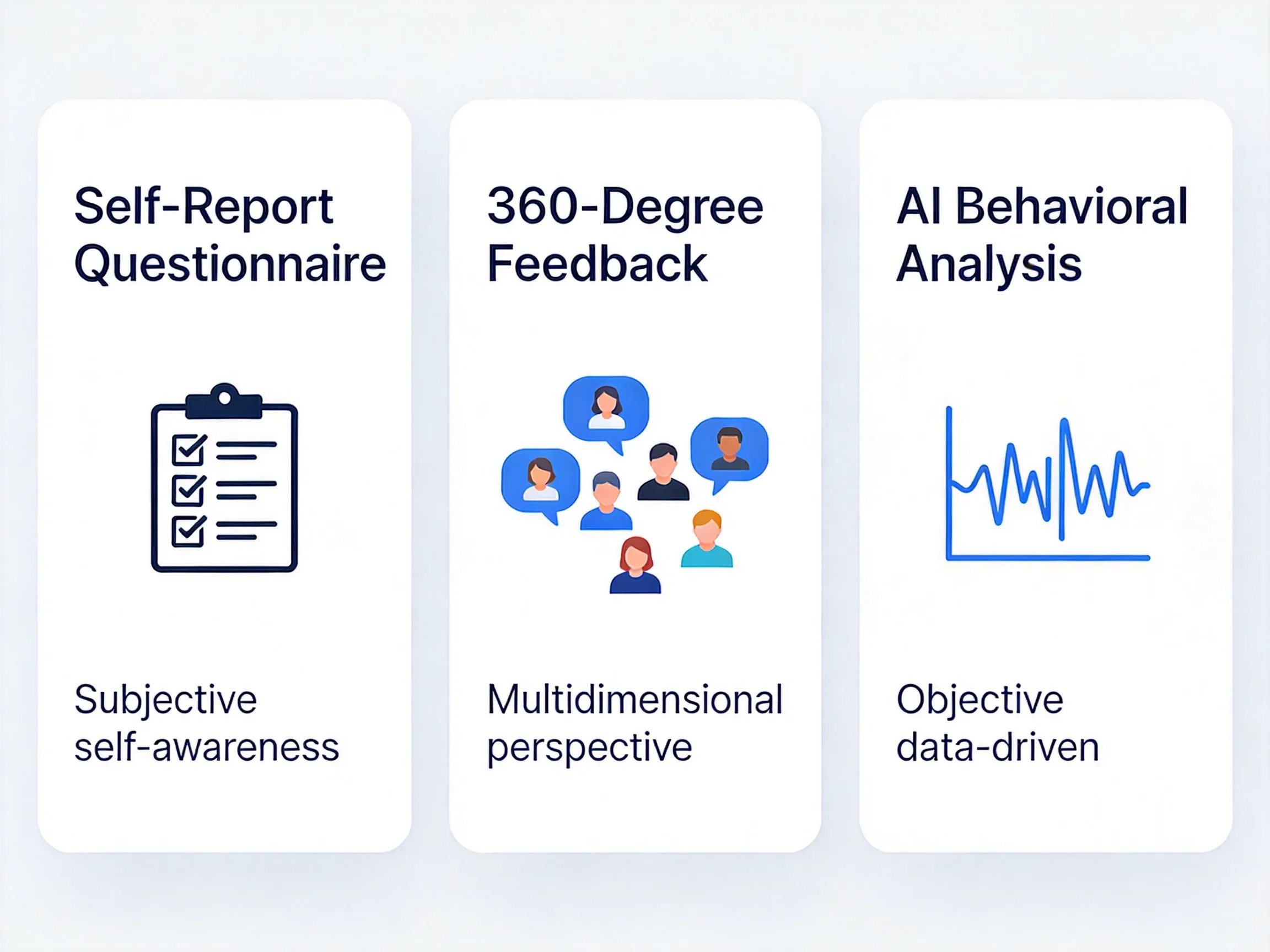
Three types of assessment
Self-report questionnaires (DISC, MBTI, Big Five) ask you to choose between statements or rate your preferences. They're fast and accessible, but they measure self-perception, not behavior. Research shows that self-reports in personnel selection are often biased by social desirability; applicants tend to overstate knowledge or traits to make a favorable impression. The same dynamic applies when you're assessing yourself.
360-degree feedback collects observations from colleagues, managers, and direct reports. It introduces multiple perspectives and catches blind spots that self-assessment misses. The tradeoff: it takes weeks to set up, requires trust across the team, and results can be shaped by relationships.
AI behavioral analysis skips self-report entirely. Instead of asking how you behave, it reads what you actually said and did. TicNote Cloud analyzes your meeting transcripts to surface concrete patterns: who talked most, who asked questions, who built on others' ideas.
Why use them at work
Used well, personality tests for work improve hiring decisions, reduce team friction, guide leadership development, and help individuals grow. Used poorly, they pigeonhole people and create bias. The method you choose matters as much as the tool itself.
7 Best Personality Tests for Work (Including AI-Based Analysis)
TicNote Cloud Meeting Personality Test
Best for: Professionals who want objective insight from real meeting behavior, not self-report.
Website: ticnote.com | Pricing: Free (300 min/month), Professional $12.99/month
Key features:
- AI analyzes meeting transcripts for communication patterns and behavioral tendencies
- No questionnaire; just upload a recording or transcript
- Scores talk share, question frequency, ownership signals, and collaboration style
- Generates a named personality archetype (e.g., "The Chaos Agent") with a shareable HTML report
- Surfaces your "toxic superpower," the defining behavioral pattern others notice most
- Available on web, iOS, Android, and Chrome extension
Limitations:
- Requires meeting recordings or transcripts to run analysis
- Newer than traditional questionnaire-based tools
Why it stands out: The only workplace assessment that measures your actual behavior from real conversations instead of asking you to describe yourself.
How to run TicNote Cloud's Meeting Personality Test (step-by-step)
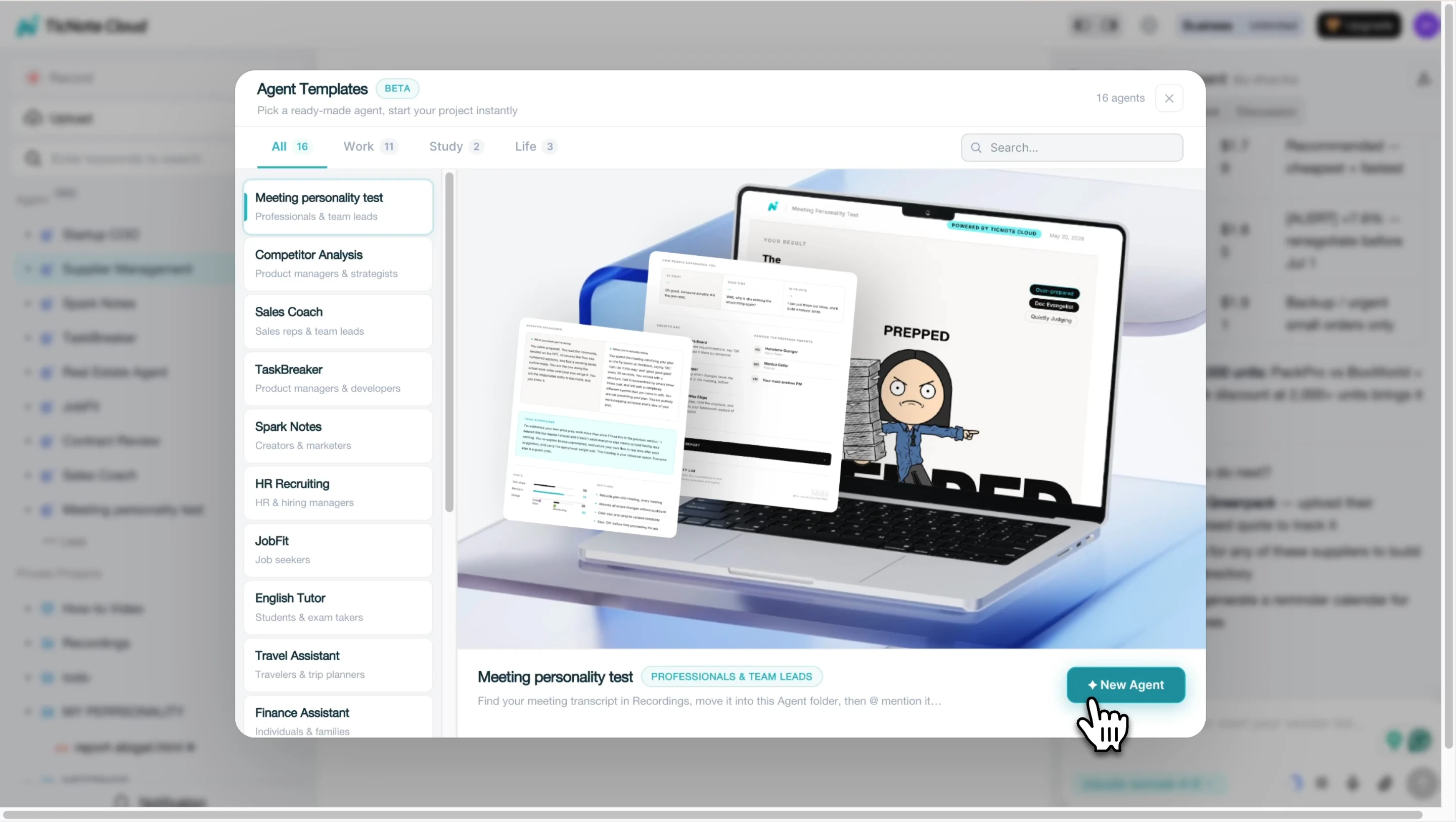
Step 1. Add the Meeting Personality Test skill agent on TicNote Cloud
In TicNote Cloud, click Add Agent and browse the Skill Agent library. Select the Meeting Personality Test skill to add it to your workspace — no configuration required.
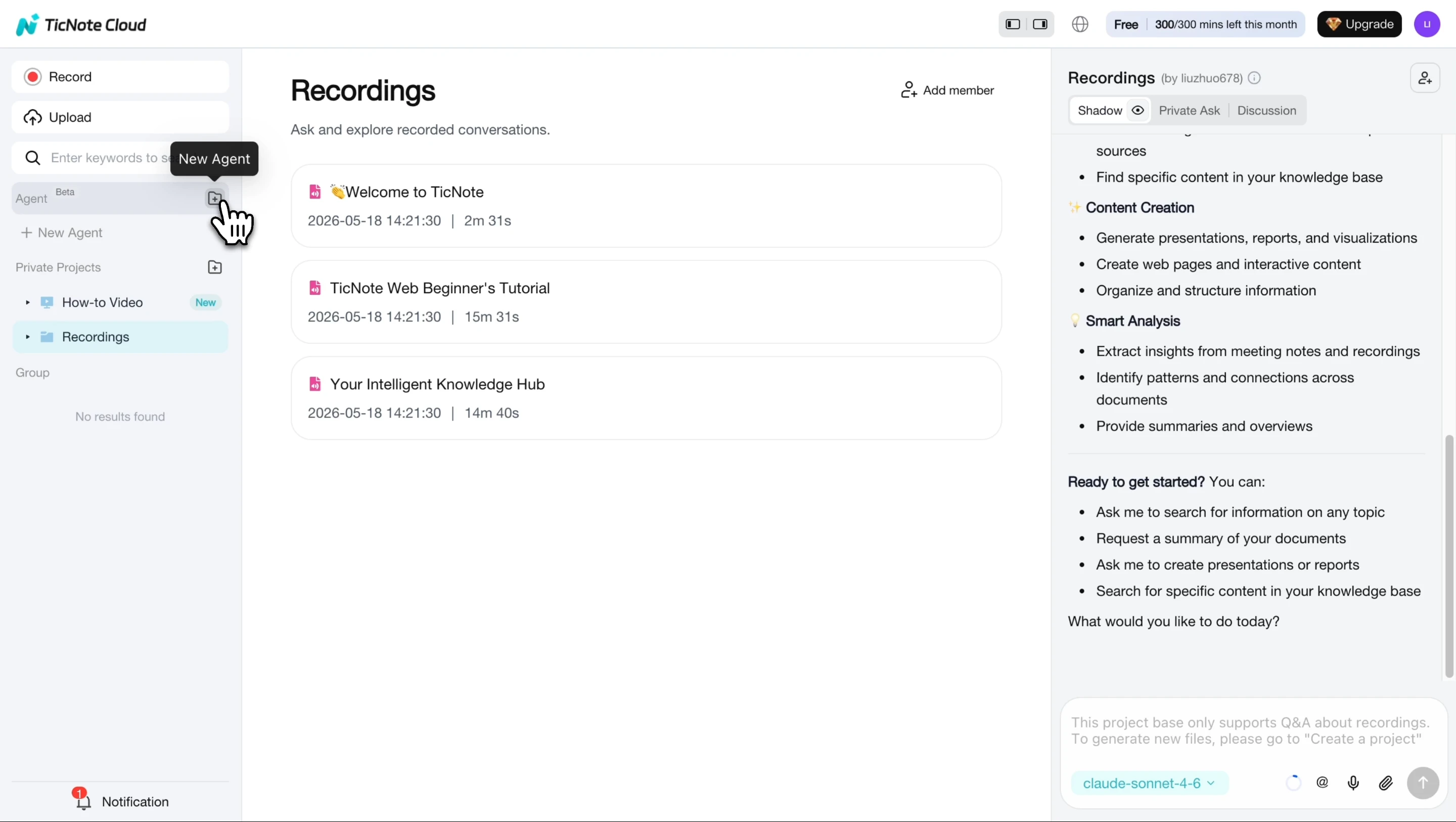
Once added, the skill agent appears in your agent list and is ready to use immediately.
Step 2. Upload your meeting recording, audio, or transcript
Attach a meeting recording, audio file, or transcript to the chat. Tell the agent the names and genders of the participants so it can attribute behaviors accurately. The skill reads who said what and how — the more transcript you give it, the sharper the analysis.
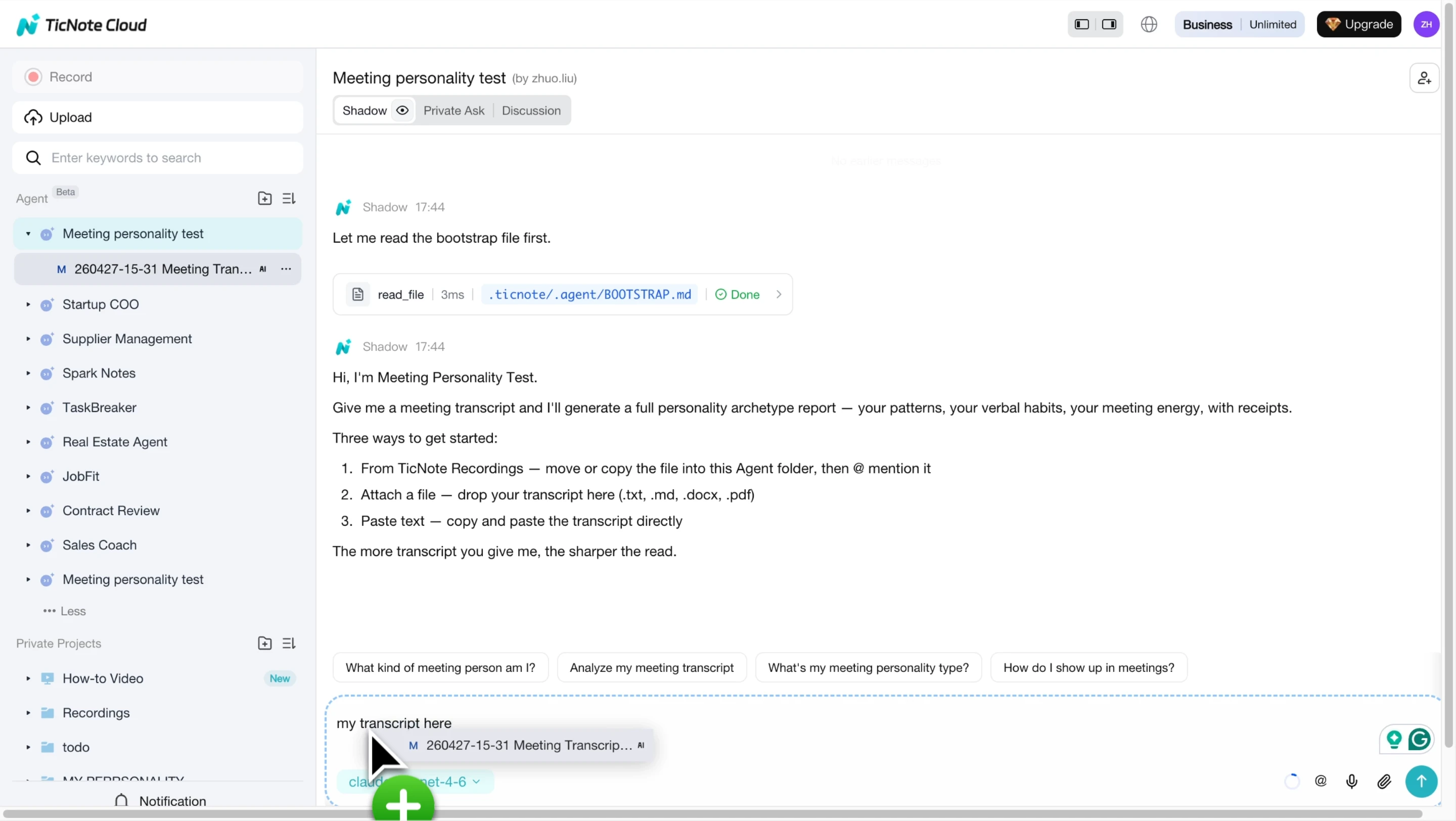
Step 3. Review the personality category result
The skill generates an HTML report and names your personality archetype. Open it to see your type — complete with a mascot illustration, archetype title, and tag labels summarizing your meeting presence at a glance.
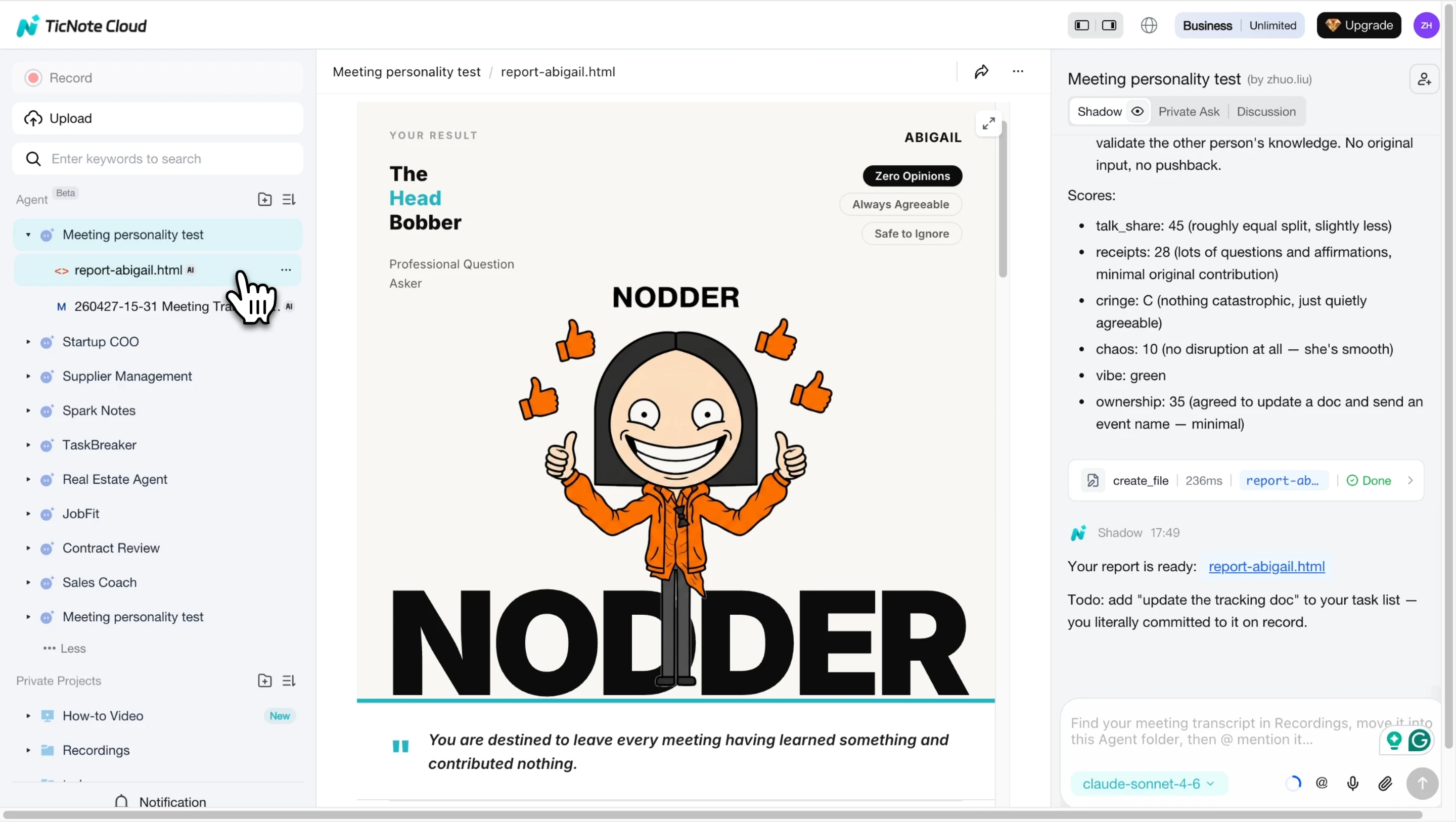
Step 4. Read the full personality analysis
Scroll through the report for the full breakdown: your toxic superpower, behavior stats with bar indicators, red flag checklist, and how people experience you across three timeframes. Each section is grounded in actual transcript moments — no generic feedback.
DISC Assessment
Best for: Teams that need practical communication training fast.
Website: discprofile.com | Pricing: $30-$100 per assessment
Key features:
- Four behavioral styles: Dominance, Influence, Steadiness, Conscientiousness
- Takes 15-20 minutes to complete
- Clear, actionable communication tips for each style combination
- Widely used across corporate training programs
- Results are easy to share and discuss in team settings
Limitations:
- Oversimplifies personality into four categories
- Self-report bias affects accuracy, especially in high-stakes contexts
Why it stands out: Simplest model to implement and discuss in a team workshop.
Myers-Briggs Type Indicator (MBTI)
Best for: General self-awareness and team-building conversations.
Website: myersbriggs.org | Pricing: $50-$200 depending on provider
Key features:
- 16 personality types based on four dichotomies
- Extensive interpretive resources and community
- Widely recognized across industries
- Creates shared vocabulary for team communication discussions
- Good starting point for understanding introversion/extraversion dynamics
Limitations:
- Limited scientific validation for predicting job performance
- Binary classifications miss nuance and context
- Results can shift on retesting
Why it stands out: Brand recognition and the volume of available interpretive materials make it easy to use without specialist support.
Big Five (OCEAN)
Best for: Hiring contexts where predictive validity matters.
Website: Various providers (ipip.ori.org, truity.com) | Pricing: Free to $50
Key features:
- Five spectrum-based traits: Openness, Conscientiousness, Extraversion, Agreeableness, Neuroticism
- Strongest scientific validation of any major personality model
- Conscientiousness predicts job performance consistently across occupational groups, making it useful in selection contexts
- Spectrum format captures nuance that binary models miss
- Used extensively in academic research and industrial-organizational psychology
Limitations:
- Less immediately actionable than DISC
- Interpretation requires more expertise
- Not as well-known outside HR and psychology
Why it stands out: The most scientifically valid model available. If you need to justify your assessment choice, Big Five has the research behind it.
CliftonStrengths (StrengthsFinder)
Best for: Strengths-based development and coaching.
Website: gallup.com | Pricing: $20-$50 for top-5 results
Key features:
- Identifies your top 5 of 34 talent themes
- Positive psychology focus: builds on what you do well
- Actionable development tips per strength
- Team strengths reports available for group analysis
- Widely used in executive coaching and HR development programs
Limitations:
- Ignores weaknesses and development areas
- Commercial model requires purchasing access
- Top-5 results can feel generic without professional debrief
Why it stands out: Reframes development conversations around strengths rather than gaps, which improves engagement with feedback.
Enneagram
Best for: Deep personal growth and leadership development.
Website: enneagraminstitute.com | Pricing: Free (basic) to $15 (full report)
Key features:
- Nine personality types with core motivations and fears
- Addresses stress responses and growth directions
- Deep psychological insight into underlying drivers
- Useful for understanding conflict patterns
- Growth-oriented: each type has a clear development path
Limitations:
- Complex system that takes time to learn well
- Spiritual or philosophical origins may not fit all workplace cultures
- Subjective interpretation varies widely
Why it stands out: Goes deeper than behavioral preferences to address why people act the way they do, which makes it useful for leadership development and conflict resolution.
Predictive Index (PI) Behavioral Assessment
Best for: Hiring decisions and talent optimization at scale.
Website: predictiveindex.com | Pricing: Enterprise pricing (contact sales)
Key features:
- Measures four workplace behavioral drives
- Takes approximately 6 minutes to complete
- Job-specific fit analysis based on role requirements
- Team analytics available for managers
- Scientifically validated for selection contexts
Limitations:
- Enterprise pricing limits access for smaller teams
- Requires organizational purchase; not available to individuals
- Less well-known outside HR departments
Why it stands out: Purpose-built for talent decisions, not general self-awareness; it connects assessment results directly to job requirements.
How to Choose the Right Personality Test for Work
The right test depends on what you need to learn and how you plan to use the results.
By use case
- Immediate self-awareness: TicNote Cloud (objective, from real behavior) or MBTI (fast, shared vocabulary)
- Hiring and selection: Big Five (predictive validity) or Predictive Index (job-specific fit)
- Team communication training: DISC (simple, fast, practical)
- Leadership development: Enneagram (deep insight) or CliftonStrengths (strengths-based coaching)
- Performance management: 360-degree feedback combined with Big Five or TicNote Cloud
By budget
- Free: TicNote Cloud (300 min/month), Big Five (various free providers), Enneagram (basic online version)
- Under $50: DISC, MBTI, CliftonStrengths, Big Five paid reports
- Enterprise: Predictive Index, custom 360 feedback programs, TicNote Cloud Business tier
How Personality Tests for Work Are Used
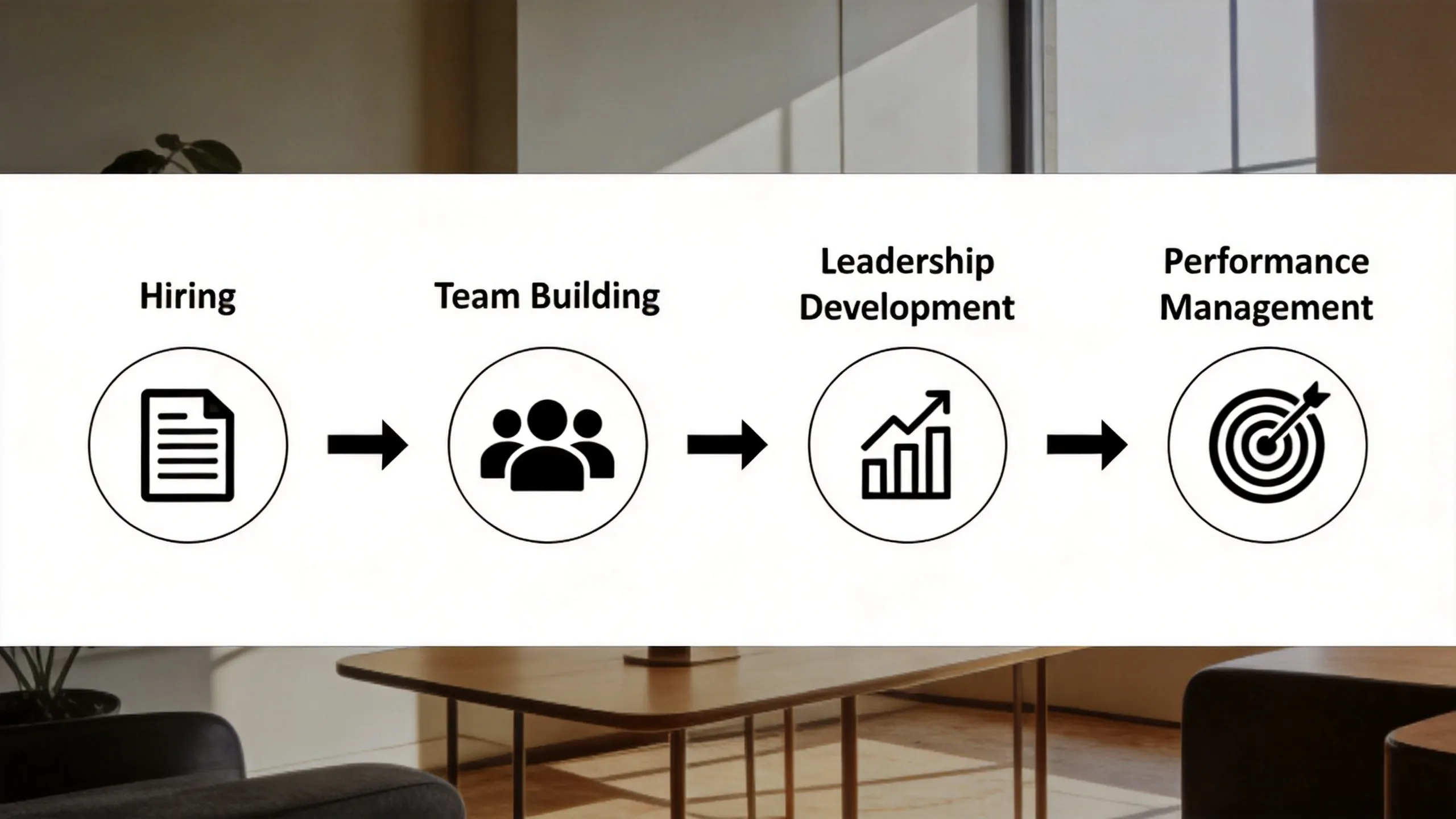
Hiring and recruitment
Tests like Big Five and Predictive Index help assess cultural fit and predict job performance alongside skills-based interviews. The key rule: never use personality tests as the sole hiring criterion. They inform conversation; they don't make the decision. Some jurisdictions have legal restrictions on personality testing in hiring, so check local employment law before implementing.
Team building
DISC and MBTI are most commonly used here, typically in workshops where teams discuss their results together. The value isn't in the accuracy of any individual result; it's in the shared language. When a team can say "you're an S-type and I'm a D-type, here's how we bridge that," it converts abstract friction into a solvable problem. Understanding how meeting data reflects team dynamics adds a behavioral layer to what self-report tests show.
Leadership development
Enneagram and CliftonStrengths are well-suited here because they go deeper than surface behaviors. Leadership development isn't just about knowing your style; it's about understanding what drives you and where your blind spots are under pressure.
Performance management
Combining meeting insights and analytics with personality data gives managers a fuller picture. Behavioral data from TicNote Cloud shows how communication patterns actually play out across meetings, which is more useful than a static assessment result from six months ago.
Common Mistakes with Personality Tests
Treating results as fixed labels. Personality tests describe tendencies at a point in time. People grow, adapt, and change contexts. A result from two years ago may not reflect how someone operates today.
Using self-report tests in high-stakes hiring. Research shows that personality faking in assessments is driven by social desirability and impression management, reducing predictive validity in exactly the situations where it matters most. If you're making a consequential hire, supplement self-report with behavioral interviews, work samples, and reference checks.
Choosing by popularity instead of fitness. MBTI is the most famous personality test. It's also the least scientifically validated for predicting job performance. Popularity and validity are different things. Match your tool to your actual use case.
Sharing results without consent. Personality data is sensitive. Don't circulate individual results without explicit permission. In some team settings, voluntary sharing works well; mandatory sharing backfires.
Conclusion
The best personality test for work is the one that matches what you actually need to learn. For objective behavioral insight, TicNote Cloud's Meeting Personality Test delivers the most accurate picture because it works from real transcripts, not self-perception. For scientific validity in hiring, use the Big Five. For practical team communication training, DISC is hard to beat.
Start with TicNote Cloud for free and run your first meeting personality analysis without a questionnaire.