


 Extension
TL;DR: A Skill Agent Contract Review Checklist for Safer Deals
Try a meeting-centered AI workspace for free to run a contract review checklist that verifies parties, scope, dates, exhibits, ownership, and approvers first.
Contract risk grows when drafts, calls, and clause notes sit in separate tools. Teams then approve "final" terms without seeing why language changed. A project-based AI workspace keeps files, review meetings, and decisions tied to each clause.
Next, check liability, indemnity, IP, confidentiality, privacy, termination, and disputes. Compare every revision, record each approval, and label remaining risk as must-fix, negotiable, or monitored.
Contract Review Checklist: What Should You Verify Before Signing?
Before you sign, use this contract review checklist to confirm the deal on paper matches the deal in your head. A first-pass review should answer four questions: who is bound, what is included, when things happen, and how money or exit rights work.
Confirm the parties and full contract package
Start with the basics. Small naming errors can create large disputes later.
- Identify each party exactly: Check legal entity names, addresses, affiliates, and definitions like "Customer" or "Provider." Make sure the wording doesn't pull in extra entities by accident.
- Check signer authority: Confirm the signer can bind the company. Flag deals that may need board, finance, procurement, or executive approval.
- Verify the full document set: Collect the main agreement, order form, SOW, exhibits, data processing addendum, security schedule, and service levels. Mark any referenced document that is missing.
- Find the order of precedence: This is the rule that says which document wins if terms conflict. Confirm whether the MSA, SOW, or order form controls.
Match scope, deliverables, and dates
Next, compare the contract against the commercial notes, proposal, and meeting record.
- Scope: Does the written scope match what was sold or negotiated? Watch for weak language like "reasonable efforts" where you expected a firm duty.
- Deliverables and acceptance: List what must be delivered, the format, the deadline, the testing window, and what happens if acceptance is delayed.
- Dates: Check the effective date, start date, milestones, renewal date, and termination notice deadline. Conflicting dates need review before signature.
- Dependencies: Identify customer duties, such as data access, approvals, or content delivery, and the effect of late performance.
Review money, renewal, exit, and changes
Finally, test the operating terms.
- Payment: Confirm fees, currency, taxes, invoice triggers, payment periods, late fees, and price increases.
- Renewal: Check renewal length, auto-renewal language, notice windows, and required notice method.
- Termination: Separate termination for cause from termination for convenience. Note cure periods, refunds, wind-down help, and data return or deletion.
- Amendments: Confirm changes must be written and approved by authorized people. Flag clauses that allow emails, purchase orders, or informal approvals to change the deal.
This checklist is a first-pass workflow for non-lawyers. It helps teams spot issues early, but it doesn't replace legal advice.
Which Clauses Create the Highest Contract Risk?
Highest-risk clauses are the ones that can turn a routine deal into uncapped costs, lost ownership, or a dispute in the wrong place. In a contract review checklist, review these terms first because they control downside when the relationship breaks, not when everything goes well.
Limit liability before it expands
Check the cap structure: total cap vs. per-claim, and whether it ties to fees paid in the last 3, 6, or 12 months. Then test the carve-outs. A cap means little if "any breach" or "any confidentiality issue" sits outside it.
Damages language also matters. Indirect and consequential damages waivers should be mutual. For liquidated damages, remember that Restatement (Second) of Contracts § 356 (1981) states that a term fixing unreasonably large liquidated damages is unenforceable as a penalty.
Keep indemnity tied to third-party claims
Indemnity should match the business role. Watch for one-way promises that make you defend issues you didn't cause. Stronger wording limits indemnity to third-party claims and fault-based triggers, such as breach, negligence, or willful misconduct. Also check who controls counsel, settlements, and any "duty to defend."
Protect IP, data, and enforcement rights
Confirm who owns deliverables, pre-existing IP, improvements, and licenses. For confidentiality, test term length, exclusions, return or destruction duties, and residual knowledge language. For privacy, check processing rights, subcontractors, cross-border transfers, breach notice timing, and named security standards.
Dispute clauses decide leverage. Remote venue, one-sided injunctive relief, or mandatory arbitration with high fees can make a small claim uneconomical.
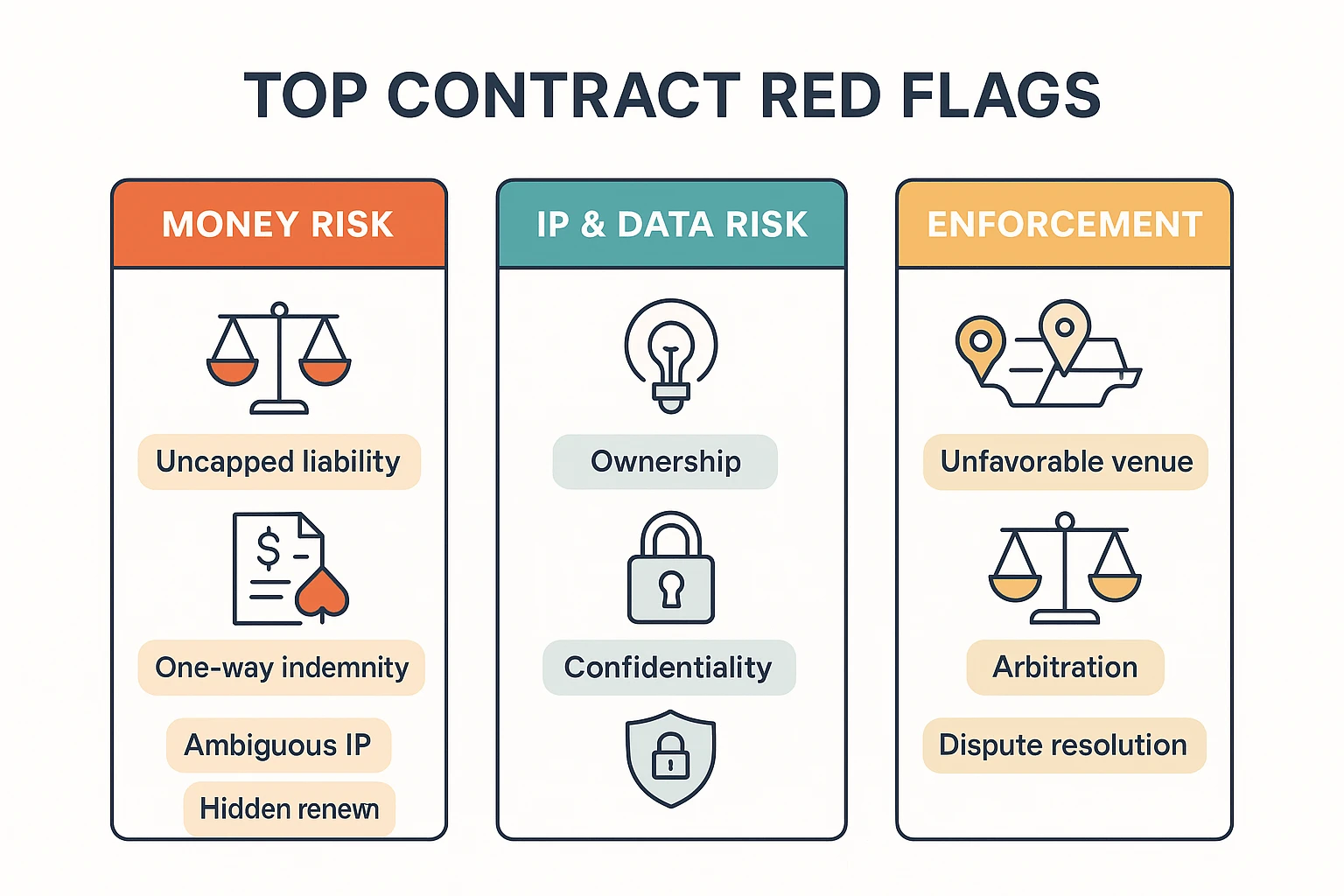
Contract red flags:
- Uncapped liability
- Vague scope
- One-way indemnity
- Hidden auto-renewal
- Excessive audit rights
- Ambiguous IP ownership
Use a Risk-Tier Table to Decide What to Fix First
A contract review checklist works best when every issue has a priority. Sort clauses into three tiers: must-fix, negotiate, and acceptable/monitor.
Must-fix terms can create existential, compliance, or deal-breaking risk. Escalate to legal or an executive immediately if a clause creates uncapped exposure, transfers core IP, requires impossible service levels, breaches privacy duties, or removes termination rights.
Negotiate terms are important but usually movable. Use fallback positions to keep the deal alive. Acceptable/monitor terms can be signed if you track the owner, due date, and post-signature evidence.
| Clause area | What to verify | Common risk / contract red flags | Reviewer owner | Fallback position |
| Scope | Deliverables, exclusions, acceptance | Vague work, hidden obligations | Sales/ops | Add clear scope and acceptance criteria |
| Payment | Fees, taxes, timing | Late payment, unclear expenses | Finance | Net 30, defined expenses |
| Liability | Cap, carve-outs | Uncapped or indirect damages | Legal | Cap tied to 12 months of fees |
| Indemnity | Who covers what | One-way duty to defend | Legal | Mutual, third-party claims only |
| IP | Ownership and licenses | Broad assignment of all work | Legal/ops | Keep pre-existing IP; license tools |
| Confidentiality | Mutual duties, term | One-way or unlimited duties | Legal | Mutual, defined exceptions |
| Privacy | Data use, security, subprocessors | Missing breach notice | Legal/procurement | Add DPA and notice window |
| Termination | Exit rights, cure periods | No termination for breach | Sales/legal | 30-day cure; immediate for material breach |
| Disputes | Venue, law, fees | Distant venue, one-sided fees | Legal | Neutral venue; each side pays own fees |
Micro-examples:
- Risky: "Uncapped liability." Safer: "Cap = fees paid in the last 12 months, with narrow carve-outs."
- Risky: "Indemnify for any and all claims." Safer: "Indemnify for third-party claims caused by breach, negligence, or willful misconduct."
- Risky: "All work product owned by Client." Safer: "Vendor retains pre-existing IP; Client gets a license; custom deliverables are assigned as agreed."
How Should Teams Review, Approve, and Preserve Contract Context?
A contract review checklist works only when every reviewer knows their lane. Treat review as a controlled handoff, not a comment free-for-all. That keeps the business terms, legal risk, and approval evidence in one clear path.
Assign review roles by function
Use role-based review to cut delays and missed issues:
- Business owner: scope, deliverables, timelines, acceptance.
- Finance: pricing, invoices, taxes, credits, late fees, revenue recognition limits.
- Procurement: vendor onboarding, insurance certificates, security questionnaires, PO match.
- Security/IT: data access, security schedules, breach notice.
- Legal: liability, indemnity, IP, confidentiality, dispute terms.
- Executive approver: large spend, unusual terms, or high-risk exceptions.
Set hard escalation triggers. For example, any uncapped liability, one-way indemnity, missing data protection terms, or auto-renewal over 12 months should go to legal and the executive approver.
Preserve the decision trail
Keep one source of truth. Use clear version names, assign one redline owner, and run a comparison check before sign-off to confirm the final draft matches agreed changes.
Store negotiation notes with the contract: why terms changed, which concessions were accepted, open issues, approval thresholds, and final sign-off evidence. Meeting notes and call summaries should live in the same project folder so future reviewers can interpret ambiguous clauses.
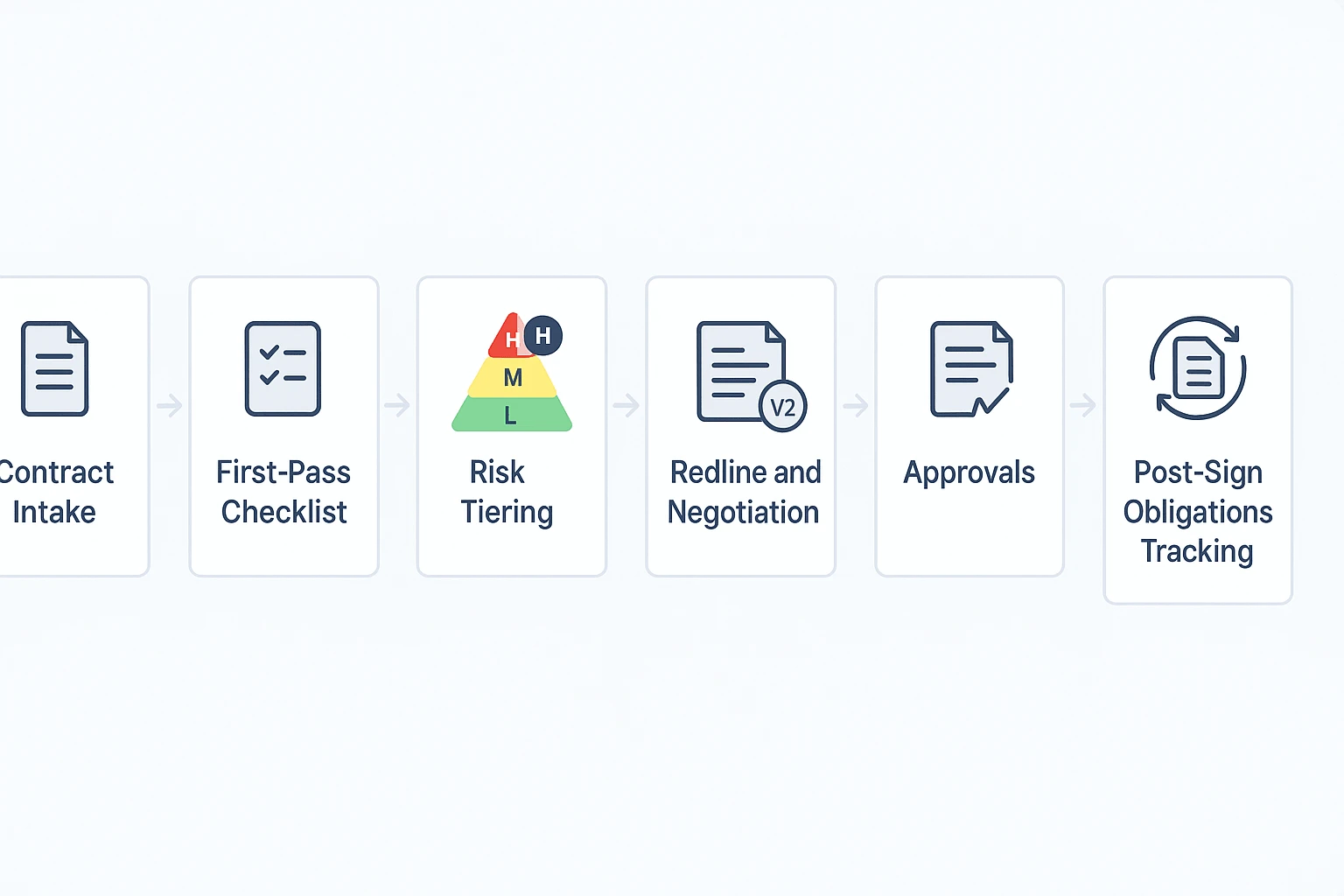
Workflow: intake → first-pass checklist → risk tiering → negotiate → legal review → approvals → signature → post-sign monitoring.
A Step-by-Step AI Contract Review Workflow (Example: TicNote Cloud)
TicNote Cloud is a meeting-centered AI workspace, and its Contract Review skill agent can turn a standard contract review checklist into a role-based risk workflow. Instead of asking a generic chatbot, you review the deal from your side, capture the negotiation context, and generate a contract risk report from your next review meeting.
Run the web workflow
- Create a Project for the deal, such as "Vendor MSA — Q3." Keep the contract, drafts, meeting notes, and approval questions in one place. If your review connects to revenue teams, this also pairs well with a broader sales enablement stack.
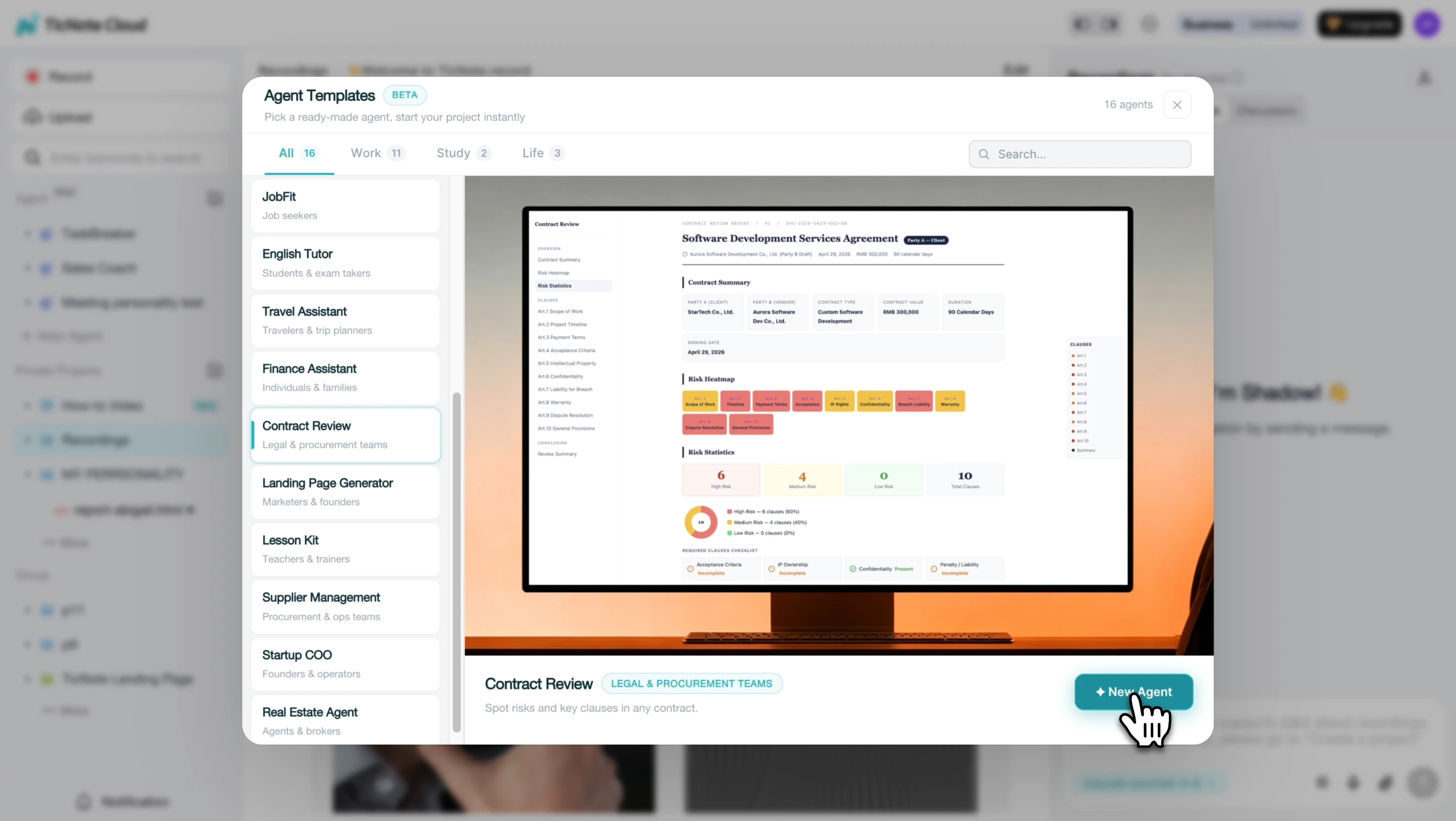
- Add the Contract Review skill agent from the Skill Agent library.
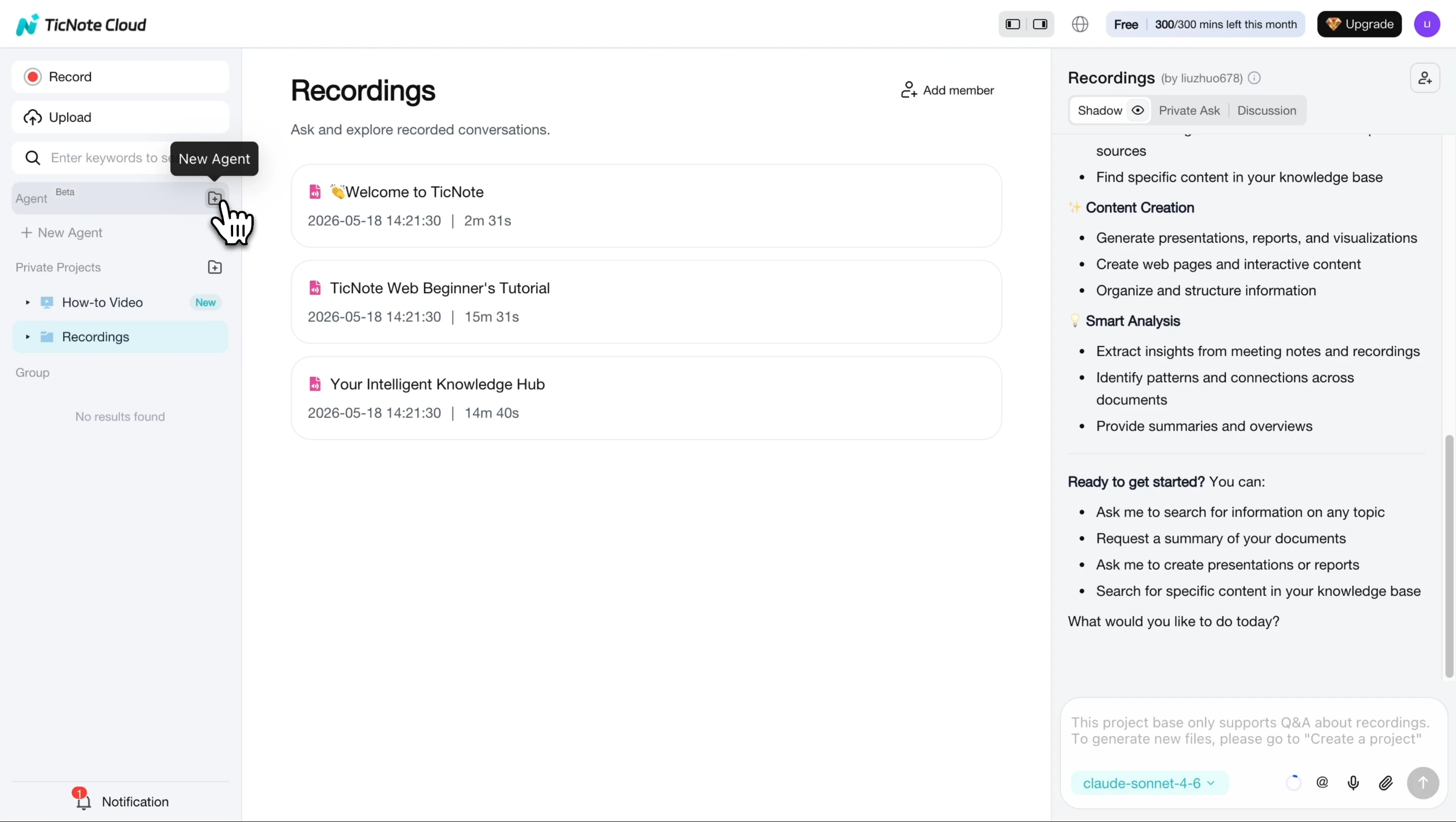
Once added, choose the Contract Review skill so it appears in your agent list.
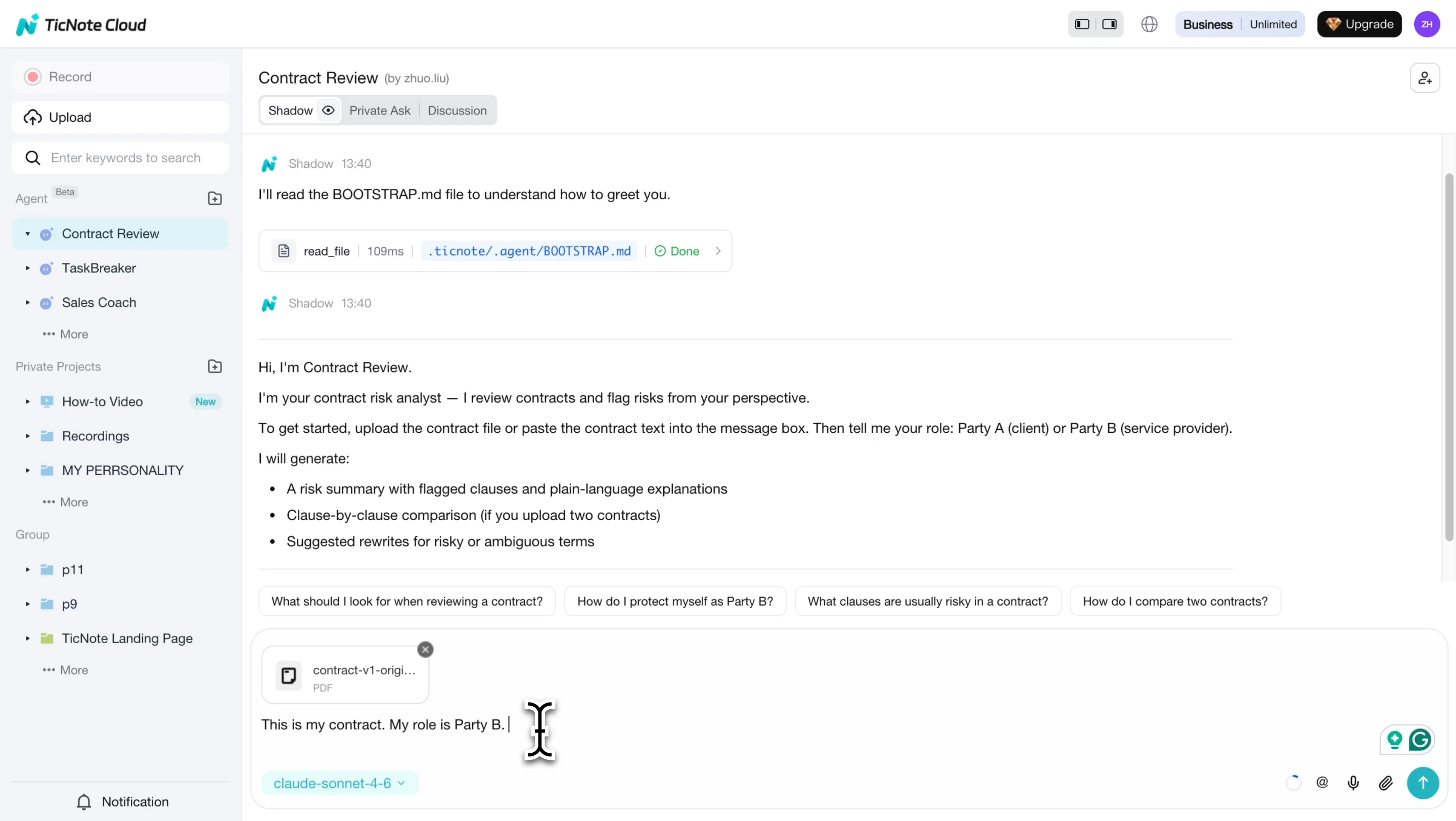
- Upload the contract file and specify your role: Party A or Party B. This matters because risk changes based on your side of the deal.
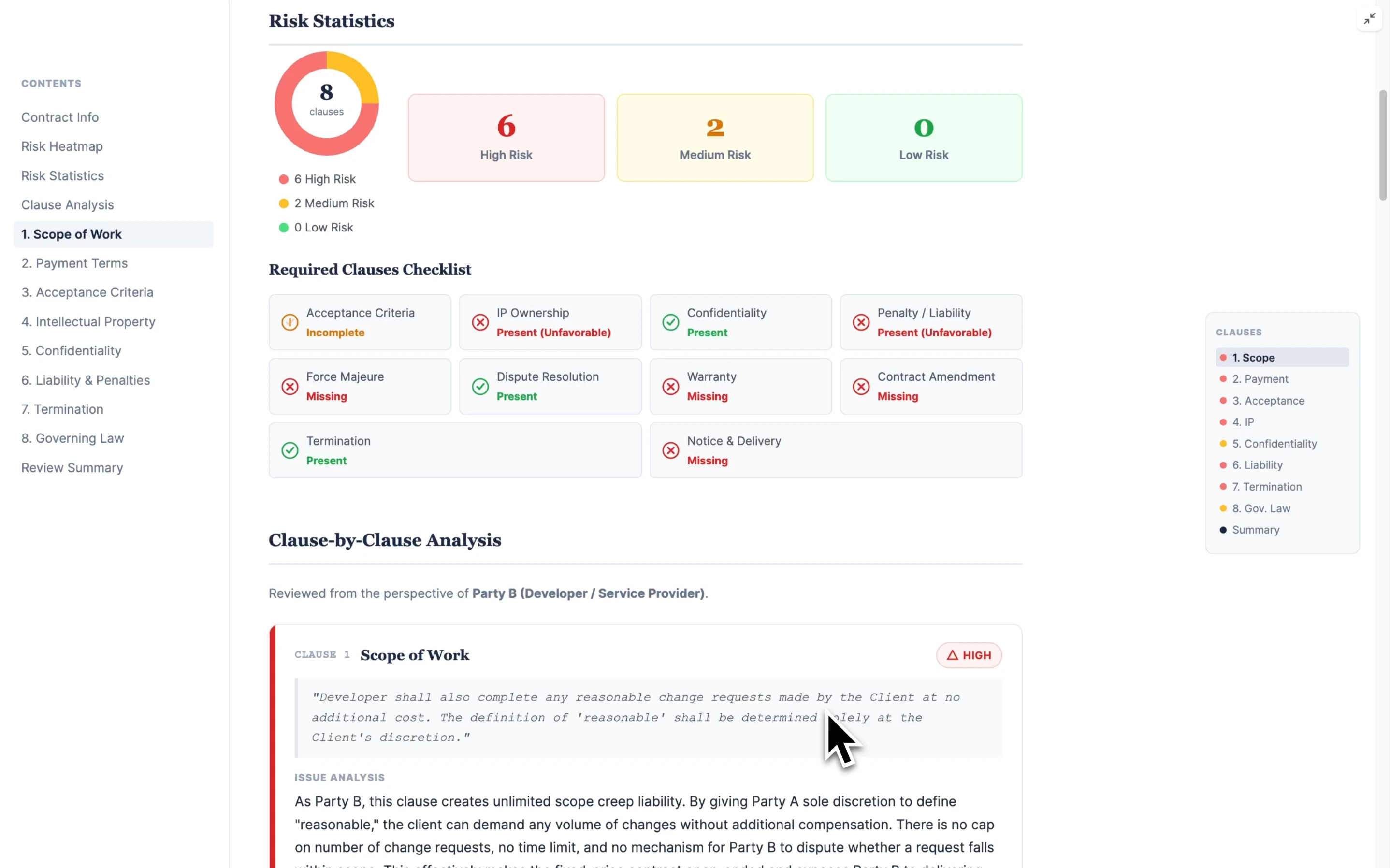
- Review the visual HTML report. Start with the heatmap, then check HIGH / MED / OK clause notes and the required-clause checklist for items that are present, missing, or incomplete.
- Convert findings into action items: must-fix terms, fallback wording, and questions for legal, finance, or ops.
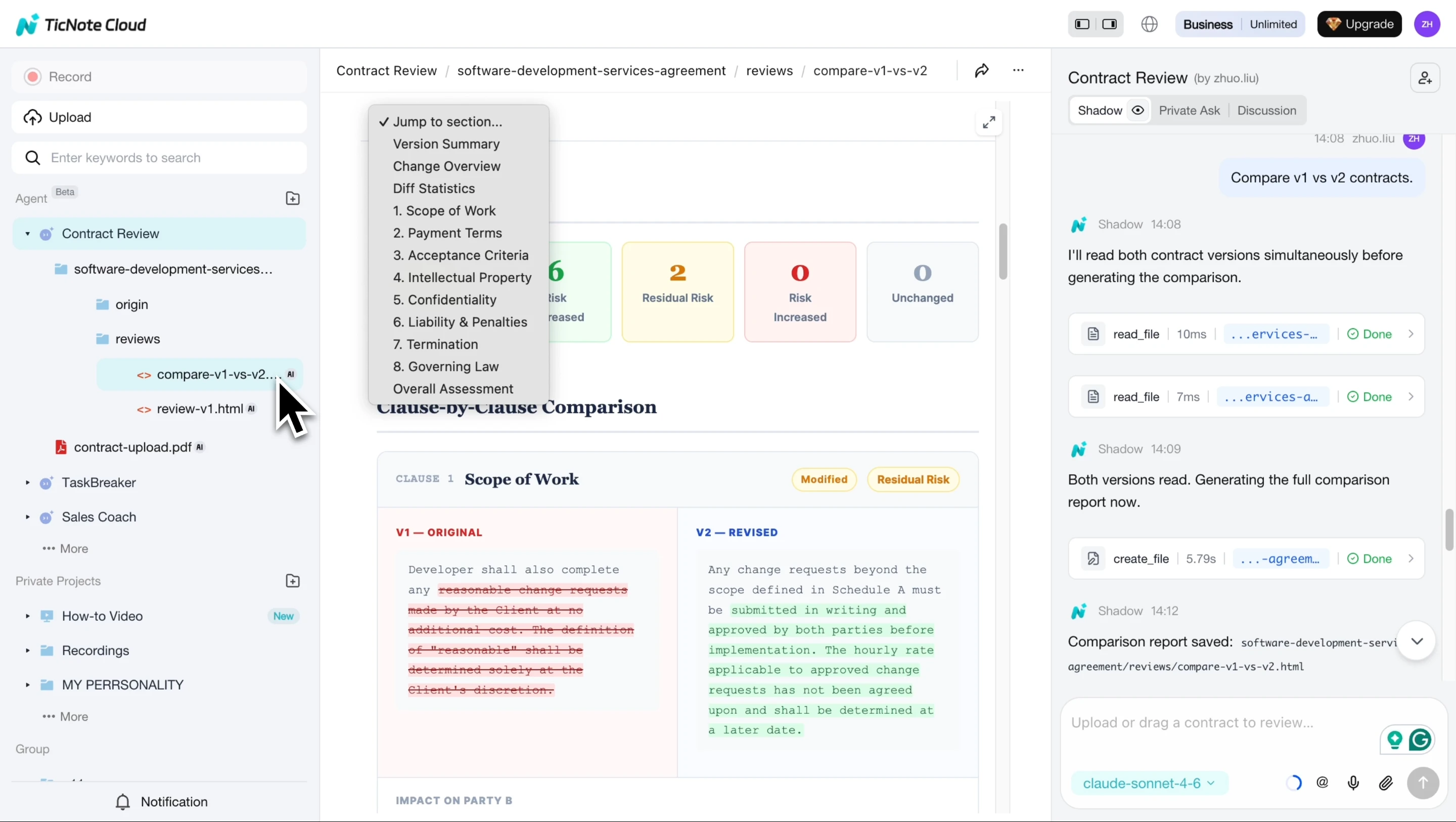
- Upload version 2 and run the clause-by-clause comparison. The agent shows added, deleted, and modified clauses, plus whether risk increased, decreased, or stayed the same.
Reuse these sample prompts
- "Summarize the top 10 contract red flags for Party A and propose safer fallback wording."
- "List missing clauses we require for vendor agreements and draft questions for legal."
- "Compare v1 vs v2 and explain risk impact in plain English for finance and ops."
On mobile, open the same Project, upload the file, scan the report, and share must-fix items with stakeholders.
Final Thoughts
A contract review checklist isn't legal advice, and it shouldn't replace counsel on high-stakes or complex deals. It does give business teams a faster, more consistent first pass: verify business terms, review clause risk, tier issues, route approvals by role, then compare each version before sign-off.
The real advantage is context. Save the call notes, emails, redlines, and reasons behind language changes so future teams can audit decisions and manage obligations without guessing.
On your next agreement, run the checklist before legal review. If the review depends on multiple drafts, stakeholder calls, and side notes, use a Project-based workspace such as TicNote Cloud to keep every source connected.