


 Extension
TL;DR
A startup roadmap is a prioritized plan showing what you're building over the next 6-12 months and why each item made the cut. This guide walks through 5 concrete steps to create one, covers how to present it differently to engineers versus investors, and includes an inline template you can fill in today.
Try TicNote Cloud for Free and generate your first startup roadmap from a conversation in minutes.
Most non-technical founders spend hours on roadmap slides that engineers ignore and investors don't trust. The real problem isn't effort, it's structure: without a clear format, every planning session starts from scratch. TicNote Cloud's Startup COO skill turns a founder's scattered notes and priorities into a structured, shareable roadmap, grounded in your actual company context.
What Is a Startup Roadmap (and What It's Not)
If you've ever tried to explain your product plan to an engineer and watched their eyes glaze over, you may have had the wrong kind of document. Here's how to tell the difference.
What a startup roadmap actually is
A startup roadmap is a prioritized list of what you're building, by when, and why - ordered by impact, not effort. It answers three questions: What matters most right now? What comes next? What are we deliberately not doing yet? Think of it as a living decision log, not a schedule. A good product roadmap for early stage startup teams is typically one page long and fits inside a single slide or spreadsheet.
Three things a good roadmap does
- Aligns the team on priorities - Engineers and designers stop asking "what should I work on next?" because the answer is visible and documented.
- Communicates progress to investors - A clear roadmap shows traction and direction without requiring a full board deck every month.
- Forces hard sequencing decisions - When you write out what comes first, you expose hidden assumptions and dependencies you hadn't thought through.
What a roadmap is NOT
- Not a sprint plan. A roadmap works at initiative or milestone level, not task level. Leave the tickets in your project management tool.
- Not a promise. Dates are directional. A startup roadmap that changes every quarter is a healthy one.
- Not a static document. If your roadmap hasn't changed in three months, you're either a planning genius or you're not using it.
How to Create a Startup Roadmap in 5 Steps
According to U.S. Bureau of Labor Statistics, The Economics Daily (2024), only 34.7% of businesses born in 2013 were still operating a decade later, with the steepest drop happening in the very first year. A structured plan doesn't guarantee survival, but it does force you to make the decisions that matter most before the market makes them for you.
Here's how to build a startup roadmap that your team will actually use.
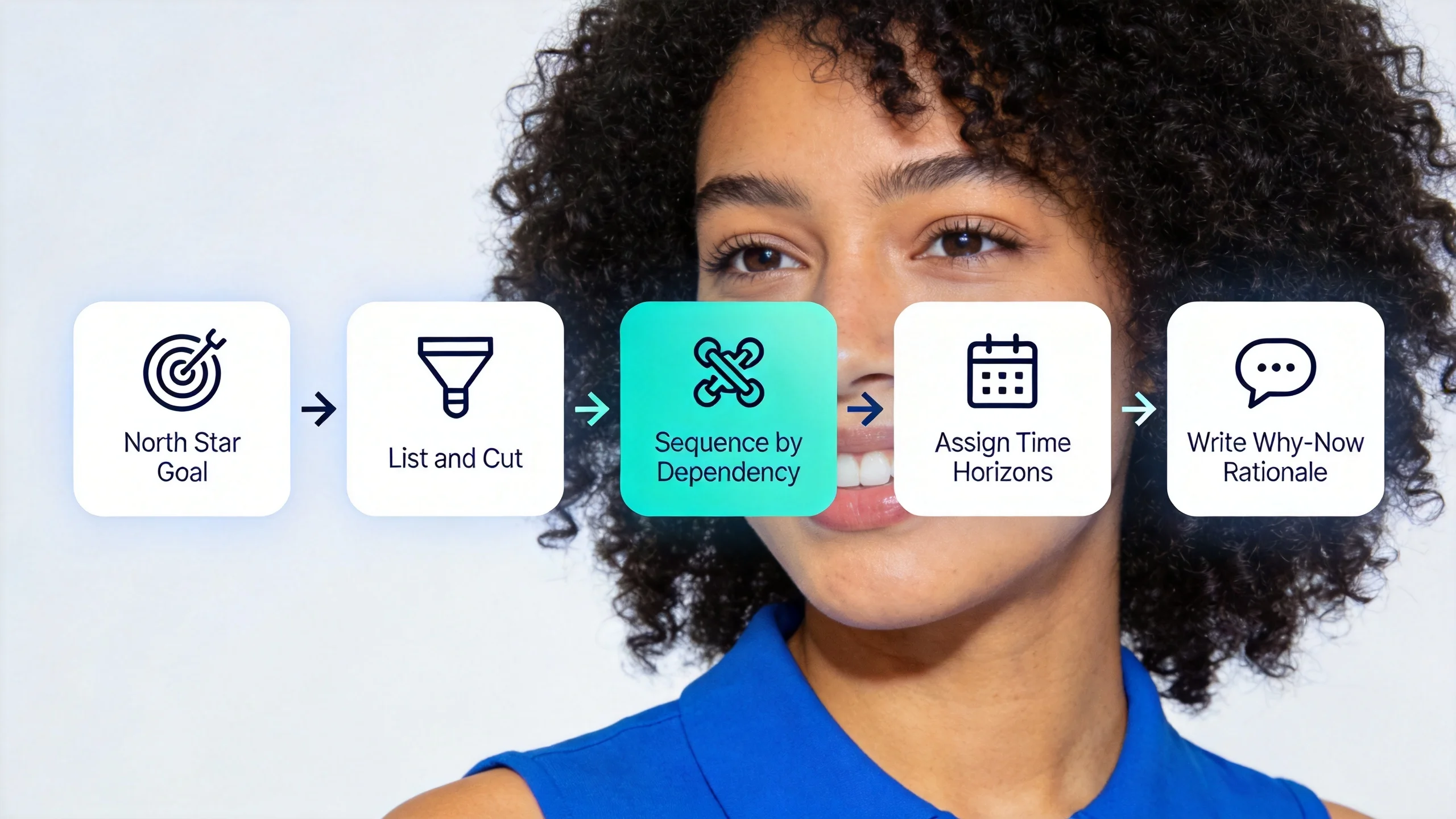
Step 1: Define your North Star goal
Start with one outcome the next 6-12 months is building toward. Not a feature list, not a revenue target - a single directional statement: "Launch a paid tier and hit 100 paying customers by Q4." Every initiative on your roadmap should connect back to this. If you can't trace the connection, the item doesn't belong.
Step 2: List every initiative, then cut ruthlessly
Write down everything your team could build in the next 12 months. All of it. Then cut down to the top 3-5 initiatives that move you directly toward the North Star goal. The purpose here isn't to say no forever - it's to say not yet. Knowing what you're not doing is just as valuable as knowing what you are.
Step 3: Sequence by dependency and impact
Reorder your short list by asking: what must come first for anything else to work? Some items unlock others. A payment integration has to go before a paid tier launch. A customer interview sprint has to precede a major feature bet. Map the dependencies explicitly - it's how you spot sequencing mistakes before your engineers do.
Step 4: Assign rough time horizons
Don't use exact dates. Use time horizons instead: Now (this quarter), Next (next quarter), Later (6+ months out). Anything beyond three months is directional anyway - and treating it as a hard deadline creates false precision that burns trust with your team. You can convert horizons to rough quarters (Q1/Q2/Q3) when communicating with investors, but keep the internal version flexible.
Step 5: Write one "why now" sentence per initiative
For each item, write one sentence that explains why it belongs in the current window. This is the most underrated step. It forces you to defend the prioritization out loud, which exposes weak reasoning before your roadmap lands in front of engineers or investors. If you can't write the sentence, the initiative isn't ready to be on the roadmap yet.
Your startup action plan template
Use this as your starting point. Copy it into a spreadsheet or doc:
| Initiative | Time Horizon | Owner | Why Now |
| Payment integration | Now (Q2) | Engineering lead | Unblocks paid tier launch; required before any monetization |
| User onboarding flow | Now (Q2) | Product | Activation rate is below 40%; must improve before scaling |
| Mobile app MVP | Next (Q3) | Engineering | Required for enterprise pilot commitments in Q4 |
| Public API v1 | Later (Q4) | Engineering | Enables partner integrations; not urgent until pilot closes |
| Referral program | Later (Q4) | Growth | Nice-to-have; no evidence yet that referral is a key channel |
Keep each row to one initiative. If you need sub-rows, the initiative is too large - break it down.
How to Present Your Roadmap to Engineers vs. Investors
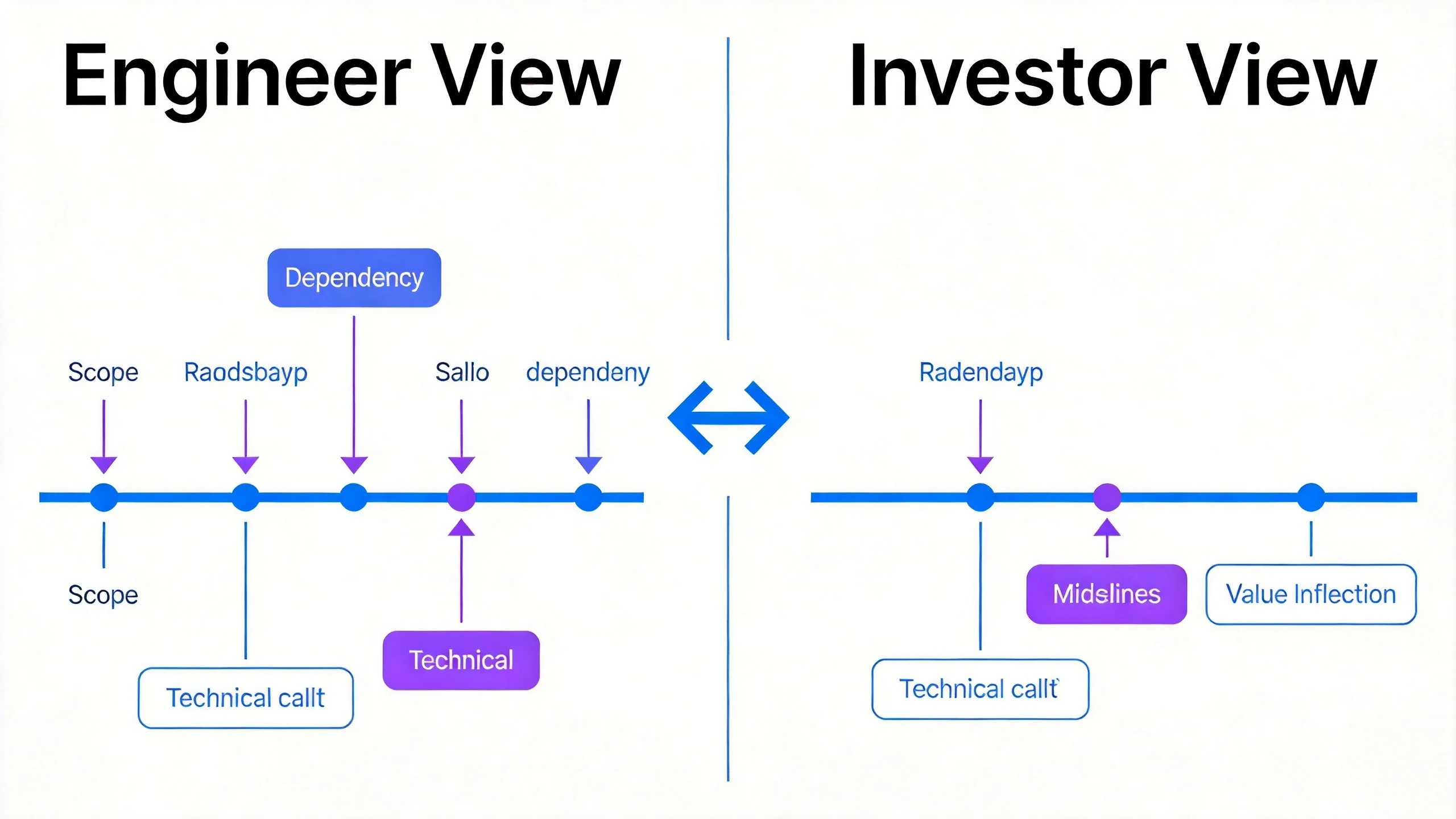
The same roadmap, read by an engineer and an investor, will raise completely different questions. Engineers want to know if the sequencing is sane and if the scope is realistic. Investors want to know if you're building toward a fundable outcome. The good news: you don't need two separate documents, just two views of the same one.
What engineers need to see
When you share a roadmap with your engineering team, they're scanning for three things:
- Why is this prioritized? Engineers build better when they understand the user pain or business impact behind an item - not just what to build but why it ranked above something else.
- What are the dependencies? If feature B can't ship until feature A is done, that needs to be visible. Engineers catch sequencing problems early when the logic is explicit.
- What are we NOT building? Explicitly listing out-of-scope items prevents scope creep and stops engineers from over-engineering features you don't need yet.
A useful approach: add a "Not this quarter" section at the bottom of your roadmap. It signals that you've made a deliberate decision, not an oversight.
What investors need to see
Investors aren't reading your roadmap for technical accuracy - they're reading it for narrative coherence. They want to know:
- Do the milestones map to value inflection points? First paying customer, $50k MRR, first enterprise contract - these are the moments that justify the next funding round. Your roadmap should show the path to them.
- Do the time horizons connect to how you're using the money? If you're in a seed round, your Q2-Q3 roadmap should reflect what that capital is actually buying.
- How confident are you in each item? Some founders find it useful to add a confidence rating (High / Medium / Low) per row. It shows self-awareness, which investors appreciate more than false precision.
The one-source-of-truth rule
Don't maintain a separate "investor version" of your roadmap. That's how documents drift and how you end up contradicting yourself in a board meeting.
Instead, use PRD templates to document feature scope clearly for your engineering team, and then derive a simplified investor view from the same data by filtering to milestone-level rows and removing technical implementation detail. One underlying doc, two filters. This keeps your communication honest and your workload manageable.
Common Startup Roadmap Mistakes to Avoid
According to CB Insights, The Top 9 Reasons Startups Fail (2026), 43% of 431 failed VC-backed startups shut down due to poor product-market fit - the leading cause across all failure types. A roadmap alone doesn't prevent that outcome, but the four most common roadmap mistakes actively accelerate it by locking in the wrong priorities or hiding misalignment until it's too late.
Mistake 1: Over-committing to hard dates
A roadmap with specific delivery dates becomes a liability the moment something changes - and something always changes. Engineers start sandbagging estimates to avoid looking late. Founders stop updating the roadmap to avoid explaining why dates slipped. The fix: use time horizons (Now / Next / Later) internally and reserve quarter-level precision for investor communications only.
Mistake 2: Building the roadmap in a vacuum
Founders who create roadmaps alone - without engineering input on feasibility or customer input on priority - are essentially writing fiction. Breaking work into clear tasks and dependencies before adding an initiative to the roadmap forces you to pressure-test assumptions before they become commitments. A 30-minute roadmap review with your first two engineers catches more problems than three weeks of solo planning.
Mistake 3: Too much detail too far out
Anything beyond the current quarter is directional. Spec-level detail for Q4 initiatives is wasted effort - the context will shift before you need it. Keep "Now" items well-defined, "Next" items milestone-level, and "Later" items as one-sentence descriptions. If someone asks for more detail on a Later item, that's a signal to have a conversation, not to write a PRD.
Mistake 4: Treating the roadmap as a static document
A roadmap that hasn't changed in eight weeks isn't being used - it's being preserved. A healthy product roadmap for early stage startup teams updates every 4-6 weeks: after a major customer feedback session, after a sprint retrospective, or after a significant market development. If updating the roadmap feels like extra work, it's a sign the document isn't connected to how your team actually makes decisions.
How to Build a Startup Roadmap Using AI
Starting a roadmap from a blank slide deck is one of the most common ways non-technical founders waste an afternoon. You know what you want to build - you just don't have a clean way to structure it. TicNote Cloud's Startup COO skill turns a founder's raw context into a structured, shareable roadmap without requiring a PM background or a template library. Here's exactly how it works.
Step 1: Add the Startup COO skill in TicNote Cloud
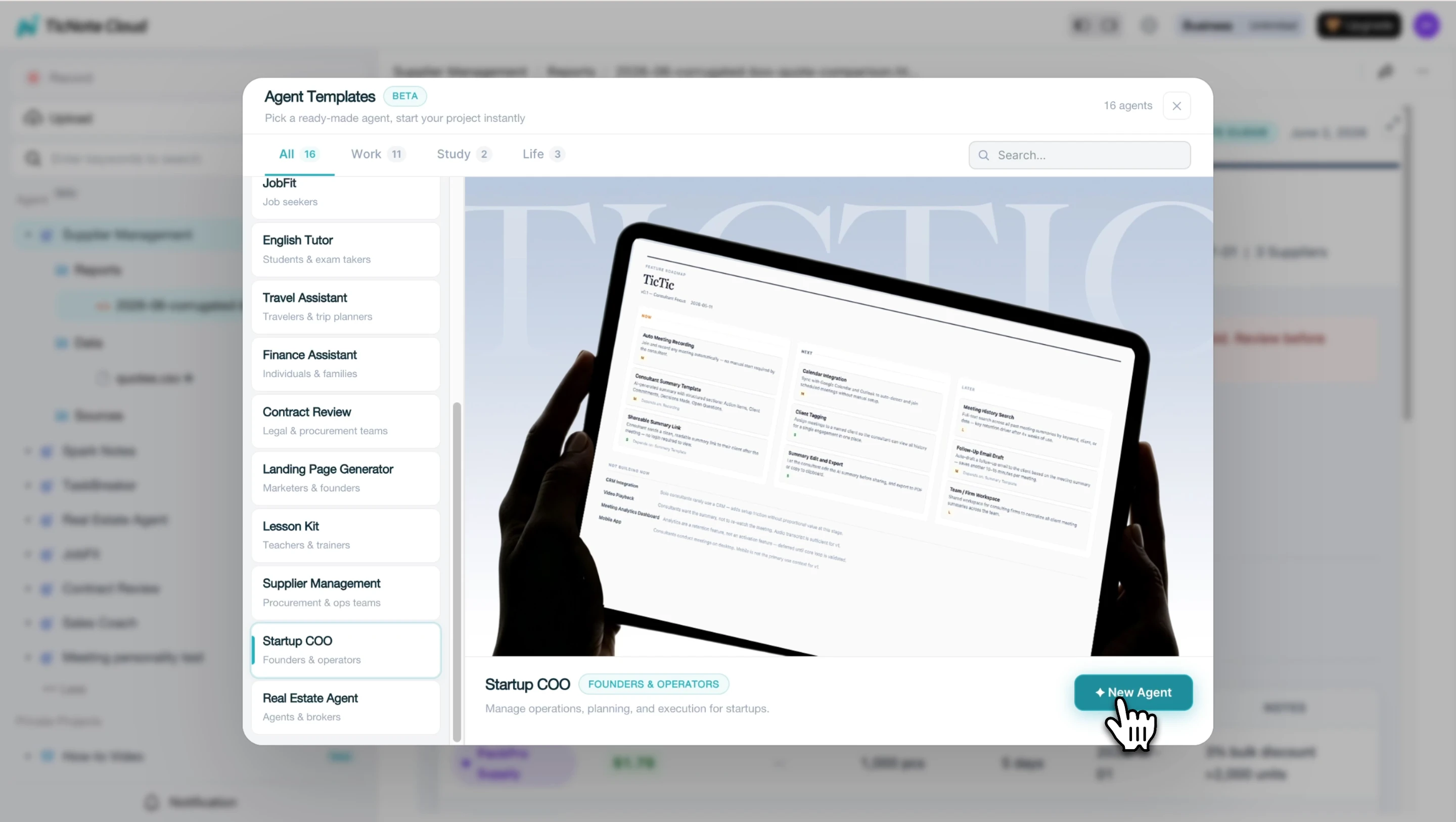
In TicNote Cloud, click Add Agent and browse the Skill Agent library. Find the Startup COO skill and select it - no configuration needed. The skill appears in your agent list and is immediately ready to use.
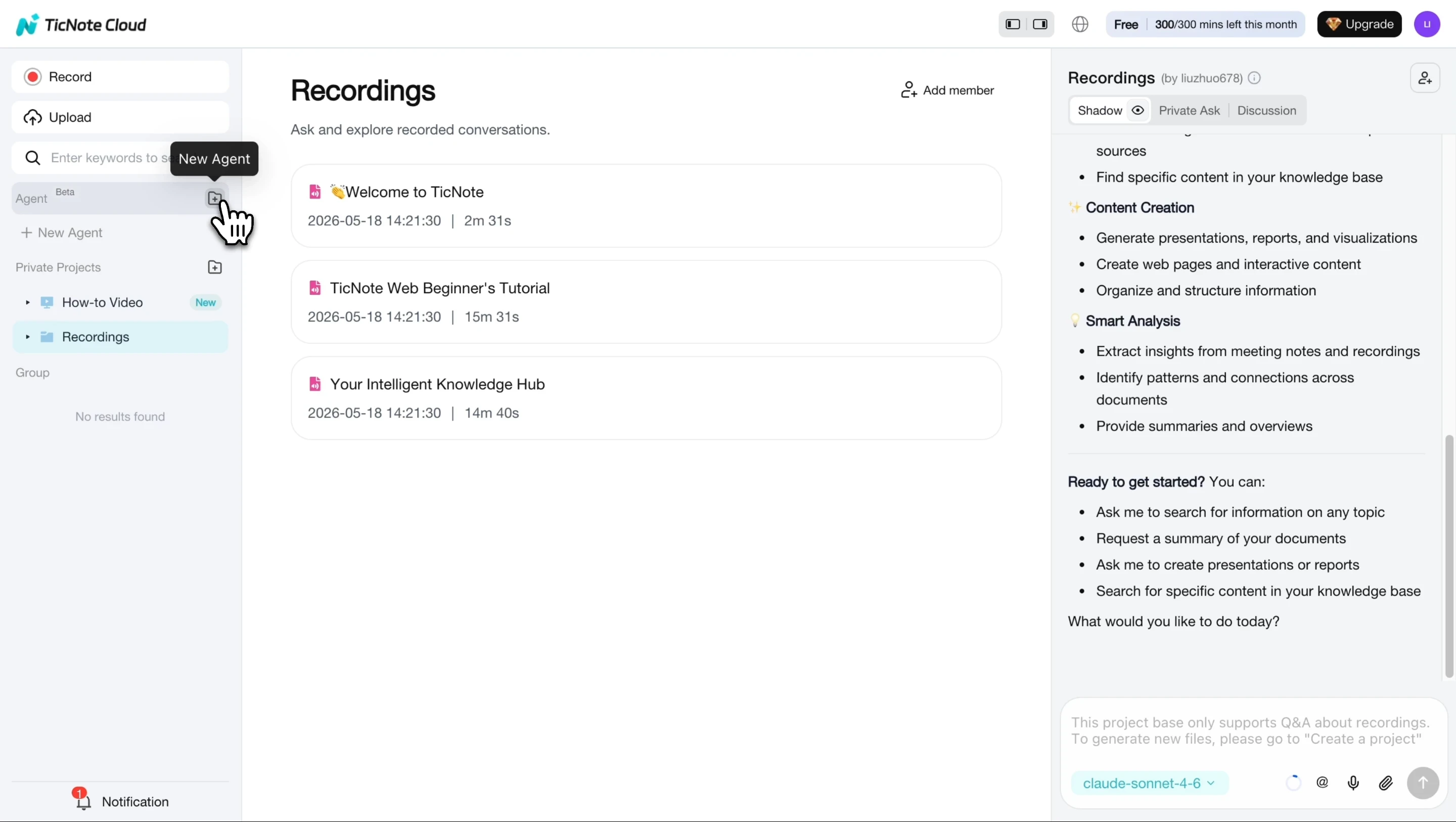
Once added, it appears in your agent list alongside your other workspace tools.
Step 2: Describe your company and what you need to build next
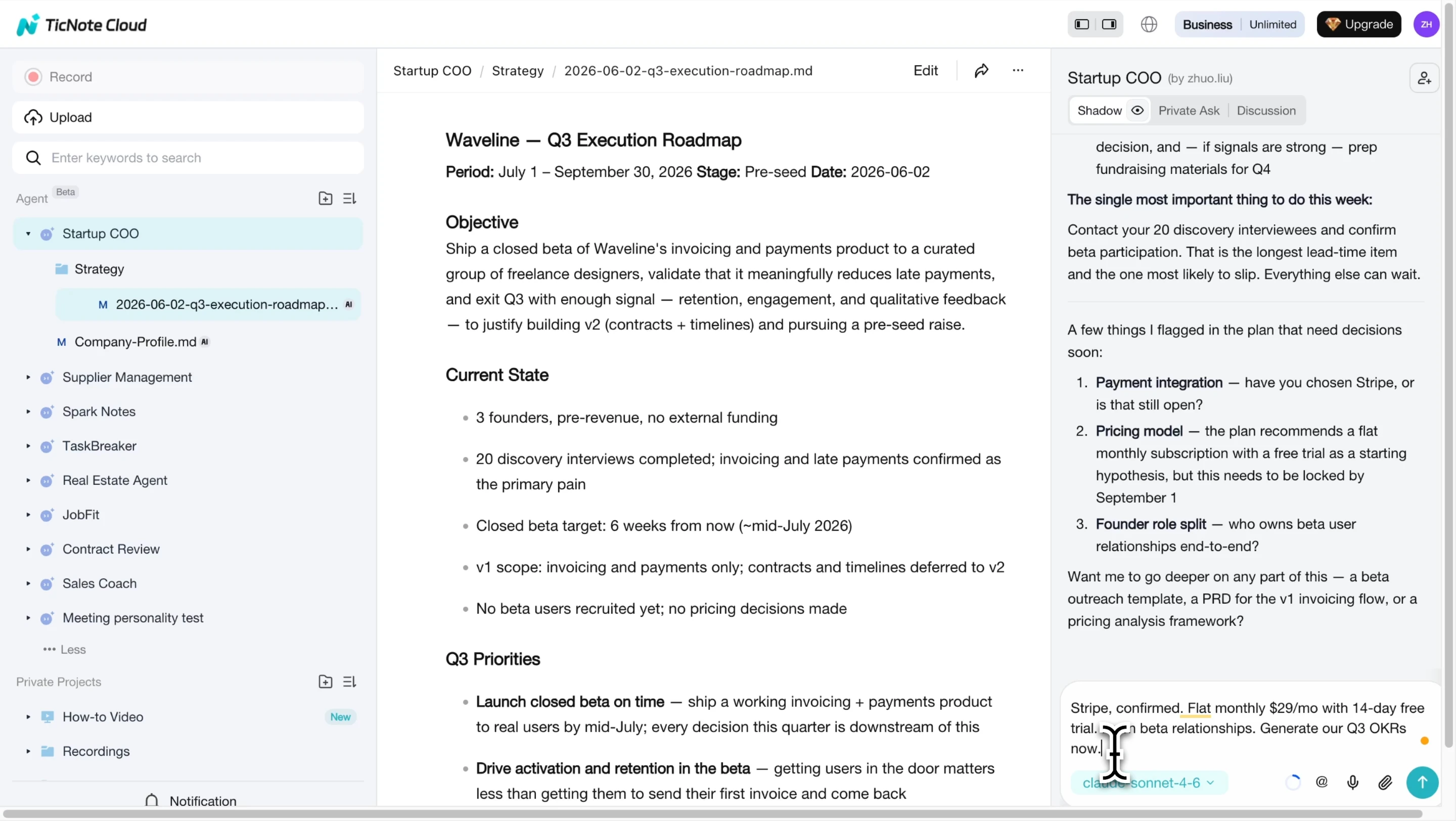
Tell the agent about your company - what you do, who your customers are, and where you are in development. The skill saves this as a persistent Company Profile, which it uses as the source of truth for every document it generates afterward. Then ask for a roadmap: describe your current priorities, constraints, and the time frame you're planning for.

Step 3: Review the draft and answer clarifying questions
The skill generates an initial roadmap draft and may ask follow-up questions - about dependencies, team structure, or specific feature details. Review the draft, answer its questions, and the output becomes progressively more accurate to your actual situation. This is where the company-specific context pays off: the roadmap reflects your stage and constraints, not a generic template.
Step 4: View the final roadmap as a visual HTML file
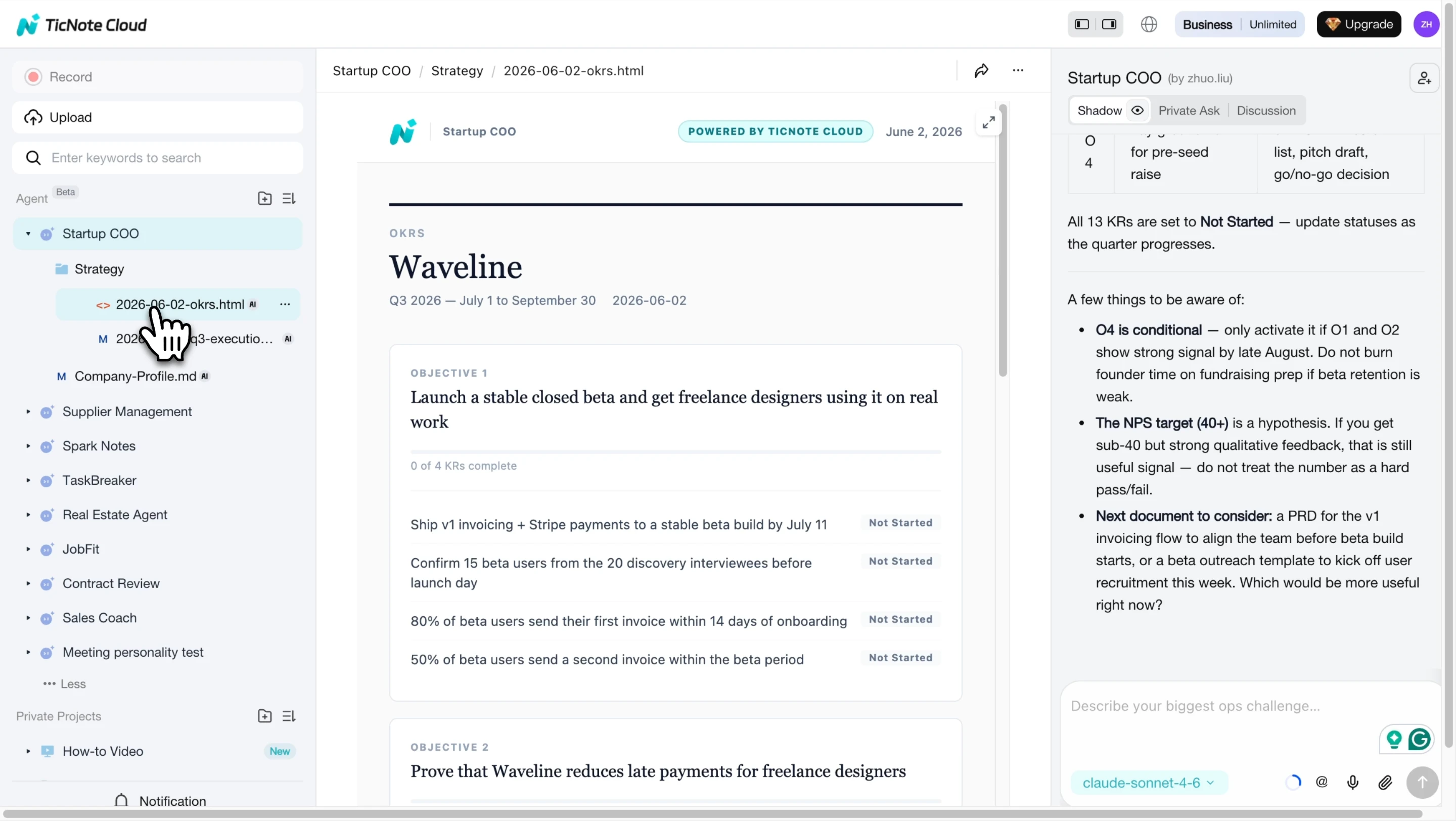
Once you've provided full context, the skill renders the final roadmap as a visual HTML file - ready to open in a browser, share with your team, or embed in a board deck. OKR boards and roadmaps are always rendered this way, which makes them readable for non-technical stakeholders without any formatting work on your end.
Beyond roadmaps, the Startup COO skill can generate PRDs, investor updates, pitch narratives, and SOPs - all grounded in the same Company Profile. Each document ends with a concrete next action, not a summary, which keeps the output actionable rather than decorative.
Try TicNote Cloud for Free and generate your first startup roadmap from a conversation.
Conclusion
A startup roadmap is a communication tool first. It tells your team what matters right now and tells your investors what you're building toward. The 5-step process in this guide - North Star goal, cut to the top 5, sequence by dependency, assign time horizons, write the why-now - gives you a structure that's honest about uncertainty without being vague about direction.
Use the inline template to get started today. Revisit and update it every 4-6 weeks. When it stops changing, it's stopped working.
Try TicNote Cloud for Free and generate your first structured roadmap from a conversation with the Startup COO skill.