


 Extension
TL;DR
An investor update is a regular email you send to your investors covering financial performance, highlights, lowlights, and asks. Most founders know they should send them. Most founders don't, or they stop when things get hard. That's the exact wrong time to go quiet.
Try TicNote Cloud for Free and use the Startup COO skill to draft your next investor update from your meeting notes and company context.
Investors don't expect every month to be a record month. They do expect to hear from you consistently. Founders who stop sending updates when growth slows are the ones who get less support when they need a bridge round or a warm intro. TicNote Cloud's Startup COO skill generates investor updates from your actual company context, so staying consistent doesn't mean spending two hours writing.
What Is an Investor Update and Why It Matters
Knowing how to write an investor update isn't just a compliance task -- it's one of the most important relationship management tools a founder has.
What an investor update actually is
An investor update is a regular, structured email (or short document) from a founder to investors summarizing company progress. It's not a pitch and it's not a board report -- it's a relationship maintenance tool. Its job is to keep your investors informed and positioned to help you. Formats vary: most are emails, some are shared PDFs, a few founders use a web page or Notion doc.
Monthly vs. quarterly: which cadence to choose
The general rule is straightforward:
- Early-stage (pre-seed, seed): monthly updates
- Growth stage (Series A and beyond): quarterly updates, supplemented by board meetings
The rationale: early-stage investors have less information and more uncertainty about your trajectory. Monthly touchpoints give them the context they need to be helpful. At later stages, board meetings serve a similar function and quarterly updates fill the gaps.
What investors actually look for
Not just metrics. Investors are reading for trajectory: are you building momentum, approaching product-market fit, or quietly running out of runway? They want to understand your thinking, not just your numbers. Are you adapting when things break? Are you asking for help when you need it? The update is your opportunity to show that you're on top of the business, even in a tough month.
For a deeper look at how product requirements documents and structured specs can complement your investor narrative, the linked guide covers the spec format that keeps investors aligned on product direction.
What to Include in an Investor Update: Section-by-Section Breakdown
Every investor update covers the same six sections. Founders who skip sections, especially lowlights and asks, are leaving the value of the update on the table.
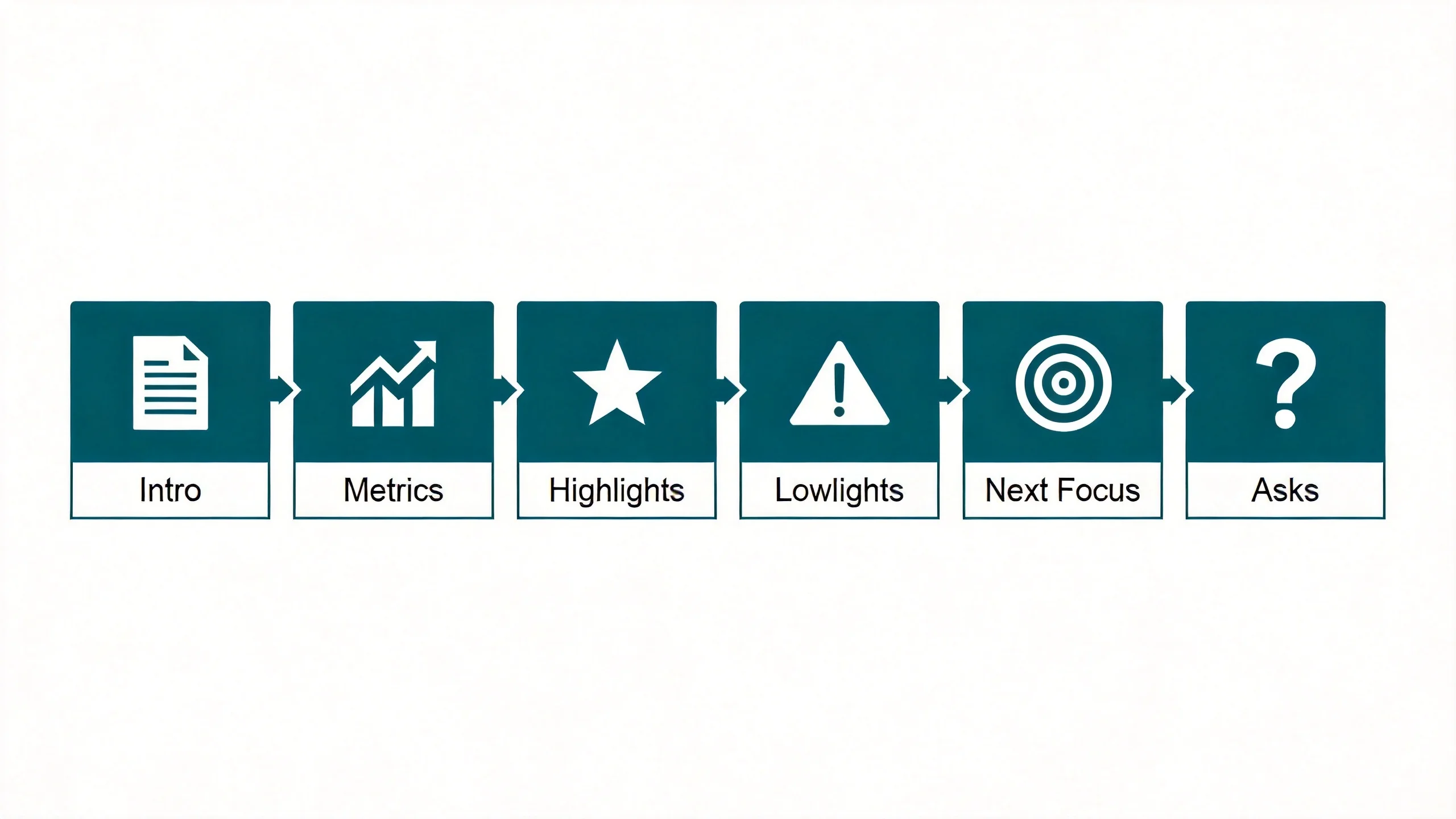
1. Introduction and summary (2-3 sentences)
Set the tone of the month upfront. Good, bad, or mixed -- state it clearly. Don't bury the lede. If revenue is flat and you've just made a key hire, say both. Investors read dozens of these; they appreciate a clear opening that tells them what to focus on.
2. Key metrics and financial performance
Include MRR or ARR, month-over-month growth rate, burn rate, and cash runway. Use a bullet list or a simple table. The most important rule: pick three to five consistent metrics and report them the same way every month. Don't swap metrics when results aren't favorable -- investors notice immediately.
3. Highlights
What went right. New customers, partnerships, key hires, product launches, PR wins. Use bullets. If you have a lot of wins across different functions, organize them by category: product, sales, operations.
4. Lowlights
This is the section most founders skip -- and the most valuable one. Lowlights build trust; hiding problems erodes it. Include one or two things that didn't go as planned, and briefly explain what you're doing about each. Investors who know you have a plan respond with help. Investors who find out six months later that something was quietly breaking respond with concern.
5. Next period focus
What you're prioritizing next month or quarter. Not forecasts, not aspirational targets -- actual initiatives and decisions. What is the team working on? What is being deprioritized? This section helps investors understand your judgment.
6. Asks
Specific, actionable requests. Examples: an intro to a VP of Sales at a mid-market SaaS company, feedback on your pricing model, help closing a partnership. For OKR frameworks that connect your asks to your quarterly priorities, the linked guide covers how structured goals can anchor your investor asks in a clear execution plan.
Investor Update Template (Copy-Ready)
Copy this investor update template and adapt it for your company. Every field is intentional -- fill each one with real numbers.
Subject: [Company Name] -- [Month YYYY] Investor Update
Hi [Investor First Name],
[1-2 sentence intro: state the overall tone of the month -- strong, mixed, or challenging, and one headline fact.]
Metrics
- [Metric 1, e.g., MRR] -- $[X] ([+/-X%] vs last month)
- [Metric 2, e.g., ARR] -- $[X]
- Burn: $[X]/month | Runway: [X] months
Highlights
- [Win 1]
- [Win 2]
- [Win 3]
Lowlights
- [Challenge 1 -- what happened and what you're doing about it]
- [Challenge 2]
Next Month
- [Priority 1]
- [Priority 2]
Asks
- [Specific ask 1 -- ideally with a name, role, or company type]
- [Specific ask 2]
Thanks,
[Your Name]
Filled-in example: Waveline, April 2025
Subject: Waveline -- April 2025 Investor Update
Hi Sarah,
April was our strongest sales month to date, though we took a setback on the engineering side that pushed our Series A timeline back by four weeks.
Metrics
- MRR: $74K (+19% vs March)
- ARR: $888K
- Burn: $58K/month | Runway: 14 months
Highlights
- Closed Draftbit ($32K ACV), our largest deal to date
- Hired Dave Okafor as CTO -- starts May 6
- Featured in TechCrunch's 'Startups to Watch' list
Lowlights
- Lead backend engineer resigned unexpectedly; delayed CRM v2 launch by 3 weeks. Dave's hire closes this gap.
- Churn: 2 customers (both small, pre-product-fit accounts from 2023)
Next Month
- Launch CRM v2 to existing customers by May 22
- Close 3 pipeline deals currently in legal review
- Begin Series A roadshow prep with updated deck
Asks
- Intro to VP Sales at any mid-market SaaS (50-500 employees) -- strong pipeline fit
- Feedback on our updated pricing page before it goes live
Thanks,
Sara Kim
For a startup SOP template that documents your investor update process itself -- cadence, ownership, and review steps -- the linked guide covers how to structure recurring operational workflows.
Write Your Monthly Investor Update Email Faster With AI
Most updates get ignored because they're vague. AI helps you pull in the right metrics and structure each section so investors actually respond.
The steps below use TicNote Cloud's Startup COO skill as an example, available on both Web and App.
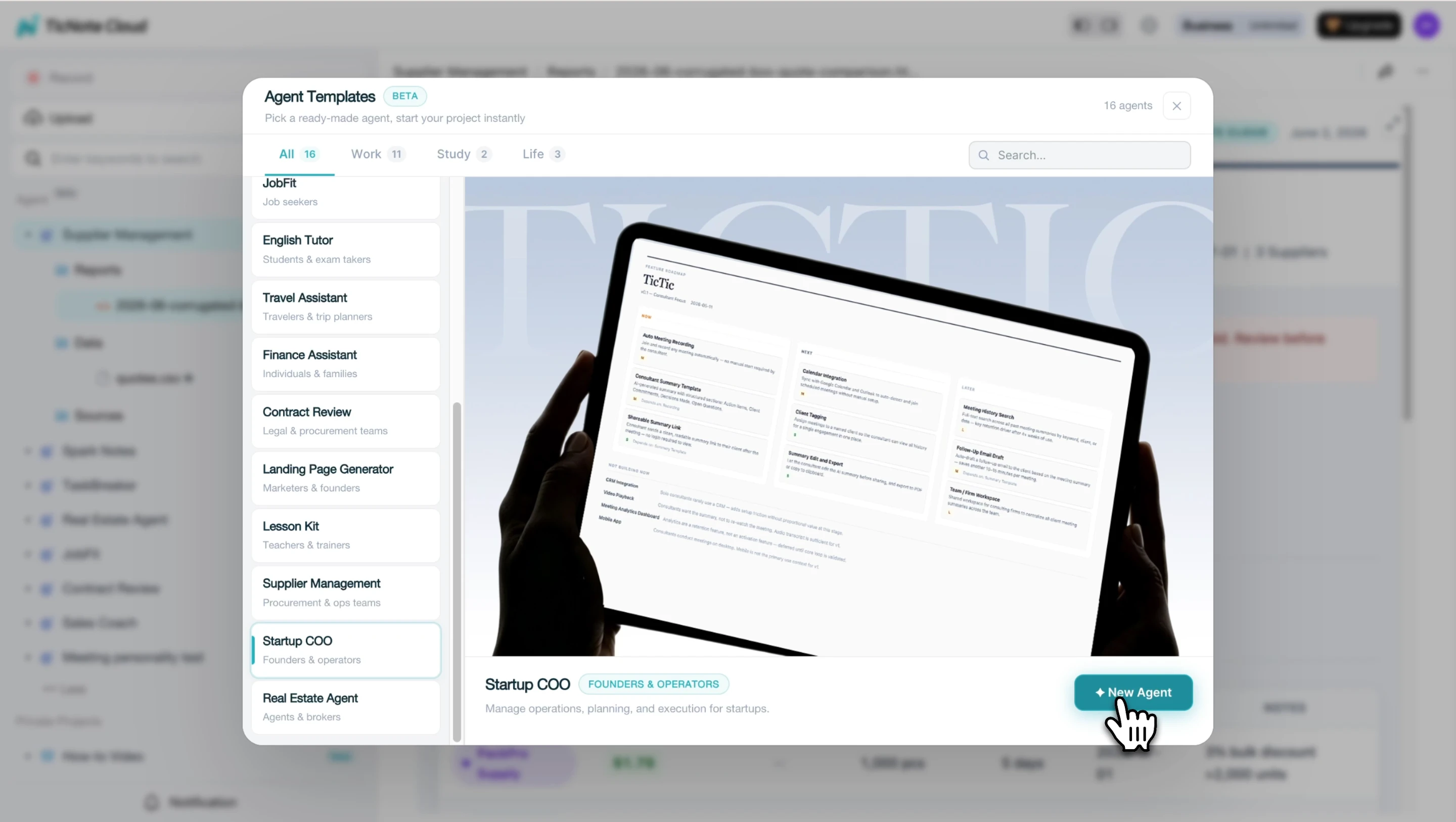
Step 1: Add the Startup COO skill agent
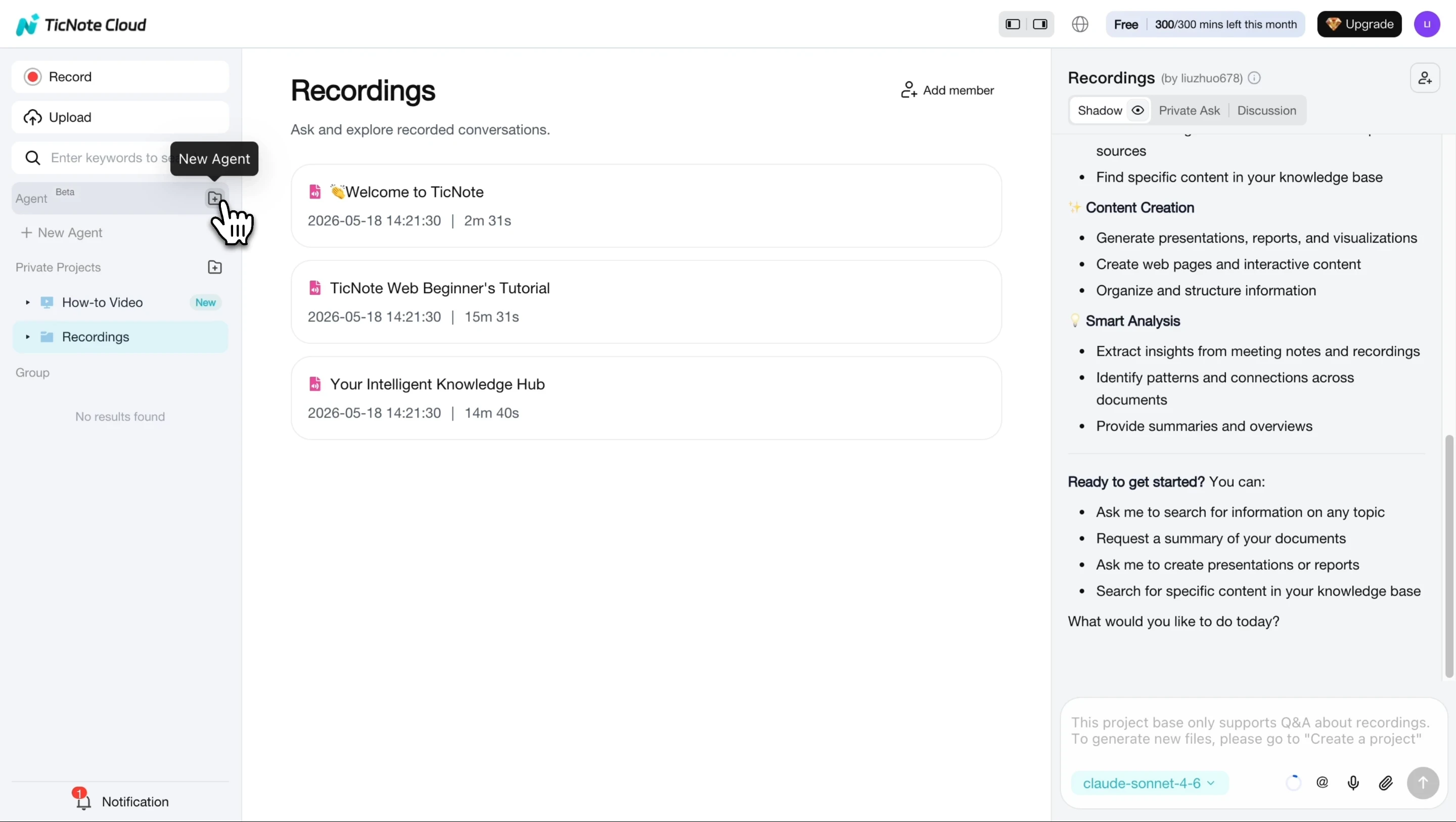
In TicNote Cloud, click Add Agent and browse the Skill Agent library. Select the Startup COO skill to add it to your workspace.、
Step 2: Give the agent your company context and monthly data
Tell the agent about your company, then paste in your monthly metrics: MRR, burn, runway, and any highlights or lowlights you've noted during the month. The Startup COO skill builds a Company Profile from this and uses it as the source of truth for the update draft.
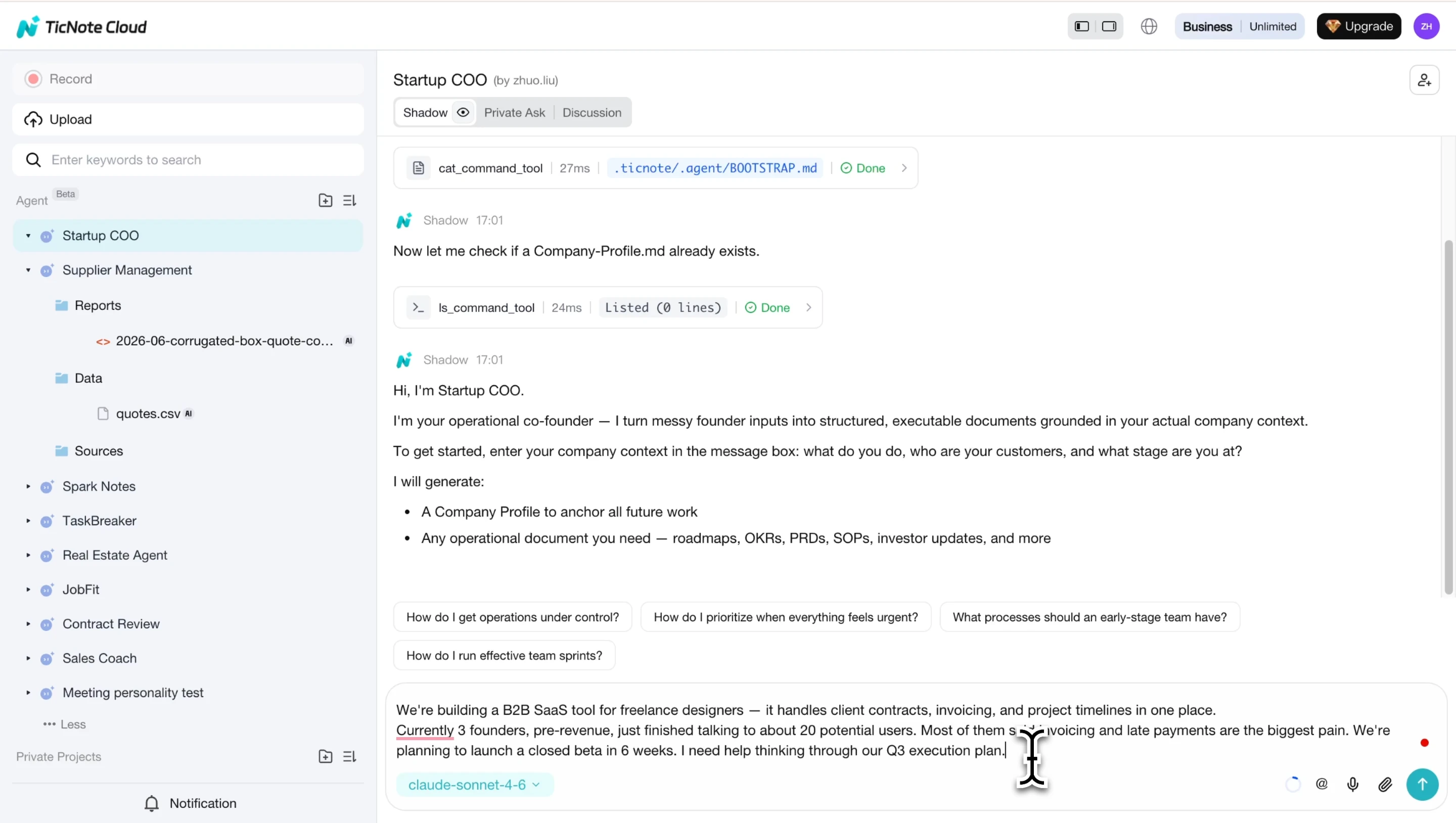
Step 3: Review the draft and answer any clarifying questions
The Startup COO skill generates a structured investor update covering all six sections. Review the draft and answer any follow-up questions from the agent -- it may ask about the cause of a lowlight, your specific ask format, or the investor's background to personalize the tone.
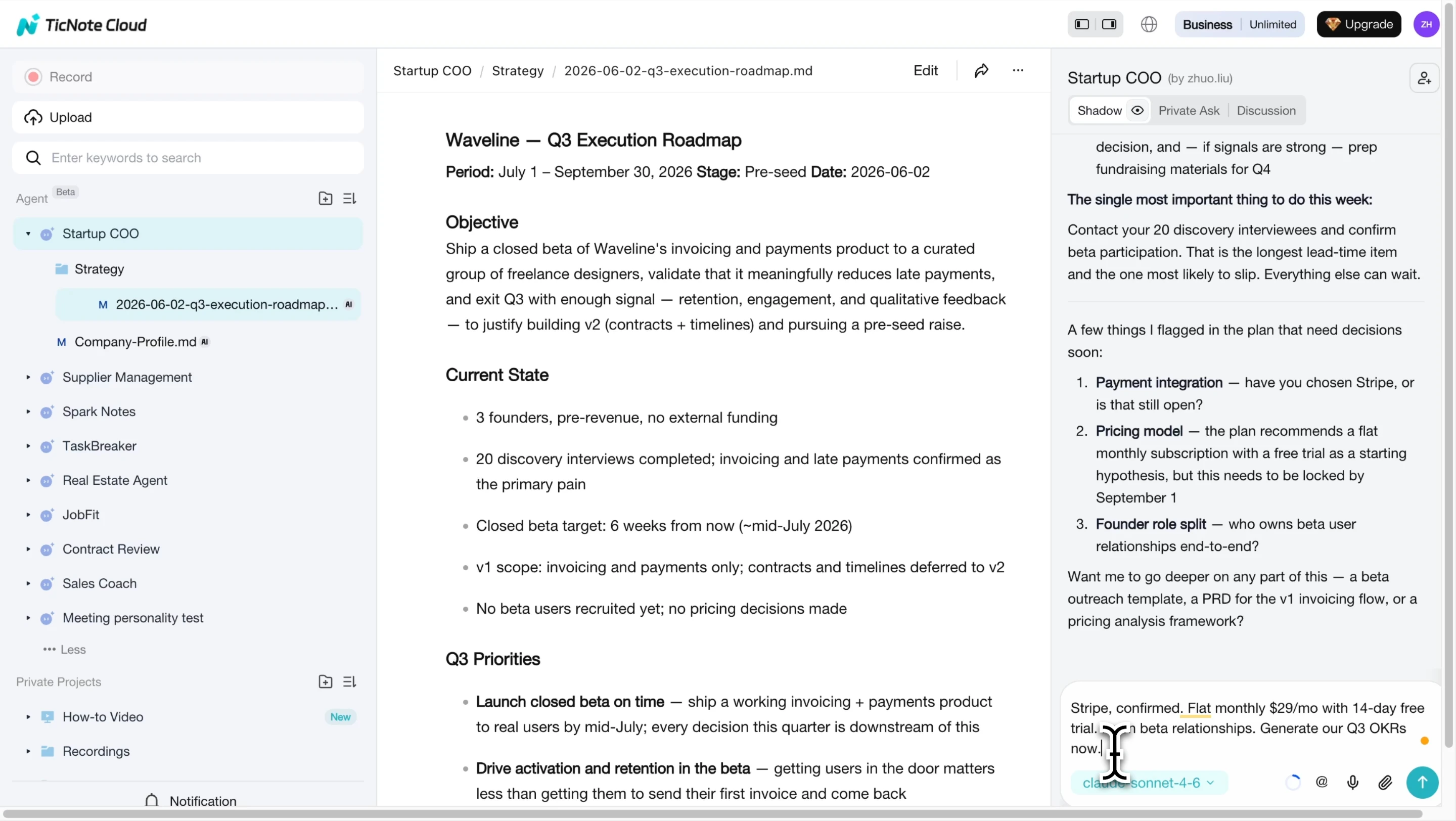
Step 4: Export and send
The Startup COO skill renders the final investor update as a visual HTML file, ready to review and share directly with investors, or to copy into an email. The structured format ensures every section is present and readable.

App workflow: The same process is available on iOS and Android. Launch the Startup COO skill agent, describe the month in plain language, paste in your numbers, and receive a drafted investor update ready to review and send.
How to Write Investor Updates When Things Are Going Badly
The months when you most need investors in your corner are the months most founders go quiet. That's the worst possible timing.
The instinct to go quiet and why it backfires
When growth is flat, a key hire leaves, or a deal falls through, founders naturally want to wait until there's better news to share. Silence feels safer than admitting a bad month. But investors interpret silence as disarray, not discretion. A founder who stops communicating when things get hard is the founder who gets less help when they actually need it.
What to say when the month was bad
Use this framework:
- State the situation directly, early in the update. Don't bury bad news under highlights. Example opening: "October was our toughest month since launch."
- Explain what you believe caused it. One to two sentences. Investors want to see that you understand the problem, not just that you're aware of it.
- Describe what you're doing about it. Concrete actions, not aspirations. "We're pausing hiring for 60 days and shifting the engineering focus to churn reduction" is useful. "We're working on it" is not.
- Make a specific ask. If you need a warm intro, a referral, or a second opinion on pricing, this is the time to ask. Investors can only help if you tell them what you need.
As First Round Review puts it: "Investors can only help if you are transparent all the time, not just in good times."
The compounding trust benefit
Founders who communicate honestly through bad patches build long-term investor trust faster than those who only send updates when things are good. Consistency and candor compound. Investors who've seen you handle a difficult quarter with transparency are the ones who respond fastest when you need a bridge round, a reference, or a critical intro.
For resources on how to build a team knowledge base that keeps your investor context organized alongside your operational notes, the linked guide covers how knowledge management compounds over time.
Investor Update Best Practices and Common Mistakes
The difference between an update that gets read and one that gets archived is usually execution, not content.
Best practices
- Commit to a send day. Pick a consistent day each month (e.g., first Tuesday) and stick to it. Reliability is itself a signal.
- Keep it under 500 words. Investors are busy. A long, dense update gets skimmed. A tight 400-word update gets read.
- Use the same metrics every time. Build a familiar rhythm so investors can track progress at a glance.
- Write to inform, not to impress. Skip the preamble and the victory lap. Get to the numbers and the ask.
Common mistakes
- Changing metrics when results are bad. Investors notice. If you switch from MRR to "total contract value" in a down month, that's a red flag.
- Covering only highlights. An update with no lowlights reads as either dishonest or out of touch. Both are bad.
- Waiting until you have something to show. Every month is a valid update month. Silence is not a neutral position.
- Burying the asks. If your specific requests are at the bottom of a long update, they'll be skipped. Make asks visible.
How often to update
- Seed-stage: monthly
- Series A and beyond: quarterly, supplemented by board meetings
- Angels who received quarterly updates: an annual summary is appropriate
For investor update best practices tailored to startup teams building their communication systems, the startup roadmap planning guide covers how to align your investor narrative with your quarterly execution priorities.
Conclusion
The best investor update is the one you actually send: consistently, honestly, and in a format your investors can read in under five minutes. Use the template above as your starting point. Pick a send day. Keep your metrics consistent. Include the lowlights.
Try TicNote Cloud's Startup COO skill for free to write investor updates from your actual context, not a blank template.