


 Extension
TL;DR
Supplier relationship management (SRM) is the practice of building structured, data-driven connections with your vendors: tracking performance, managing contracts, and catching price changes before they affect your bottom line. Strong SRM means fewer supply disruptions and better negotiating leverage over time.
Try TicNote Cloud for Free and generate a live vendor database from your supplier documents in minutes, no spreadsheet required.
Most small procurement teams manage supplier relationships through a mix of emails, shared drives, and memory. When a contract lapses or a price quietly increases 8%, you find out too late. TicNote Cloud's Supplier Management skill centralizes every supplier interaction, parsed from your actual documents, so nothing slips through.
What is supplier relationship management?
Supplier relationship management, or SRM, is more than just staying on good terms with your vendors. According to the Chartered Institute of Procurement & Supply (CIPS), SRM is "the management and maintenance of the relationship between a buyer and supplier," where the type of working relationship you build depends on the criticality of the goods or services being purchased.
In practice, SRM spans the full supplier lifecycle: initial onboarding, day-to-day operations, contract management, performance monitoring, and eventual offboarding. It's the strategic layer that sits on top of the transactional work.
SRM vs. procurement vs. vendor management
These three terms get used interchangeably, but they cover different ground:
- Procurement is the buying process: sourcing options, negotiating terms, issuing purchase orders.
- Vendor management handles the operational day-to-day: POs, invoices, delivery tracking.
- SRM is the strategic relationship layer built on top of both: performance evaluation, risk management, and long-term supplier development.
Think of procurement as the entry point, vendor management as the ongoing operations, and SRM as the strategy that makes both more effective over time.
Why SRM matters for small teams
Large enterprises can absorb a supplier failure, a missed renewal, or a 10% price increase. Small and mid-size teams can't. A single bad delivery or expired contract can halt operations before anyone realizes what happened.
The good news: structured SRM doesn't require enterprise software. It requires consistent habits around four operational areas, applied before problems emerge, not after.
What breaks in supplier relationships (and why it happens)
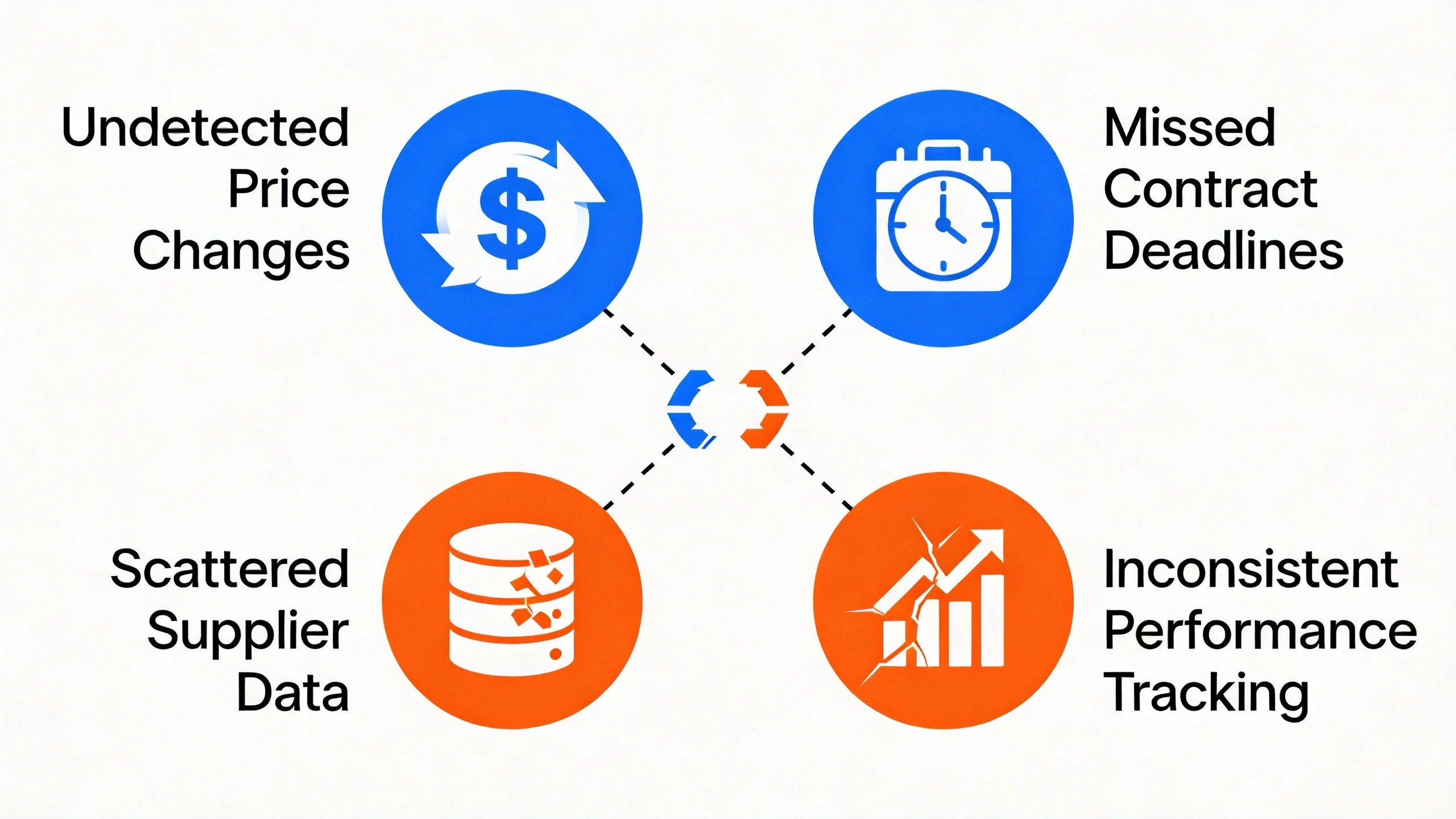
Most supplier relationship failures aren't caused by vendors acting in bad faith. They're caused by information gaps, scattered data, and missing processes on the buyer's side. Here are the four most common failure points.
Price changes go unnoticed
Suppliers update pricing in new quotes. Without side-by-side comparison against archived records, a 6% increase gets approved by default, because no one checks the previous price. Over several order cycles, this compounds into a significant cost overrun.
The fix isn't manual review of every quote: it's a system that flags the change automatically before anyone signs off.
Contract deadlines are missed
Renewal dates are buried in PDF contracts. Without an alert system, you stay on expired terms or lose negotiated pricing, not because anyone made a decision, but because no one noticed the date had passed. Many purchase order cycles begin without verifying whether the underlying contract is still valid.
Supplier data lives in too many places
Contact in email, pricing in a spreadsheet, contract in Google Drive, delivery records in someone's inbox. No single source of truth means onboarding a new team member takes hours, and answering a basic question like "what did we pay PackPro last quarter?" requires digging through three tools.
Performance isn't tracked consistently
Without a structured review cycle, underperforming suppliers keep getting orders because switching costs feel too high to quantify. When the data doesn't exist, the default is always inertia.
How to build a supplier relationship management process
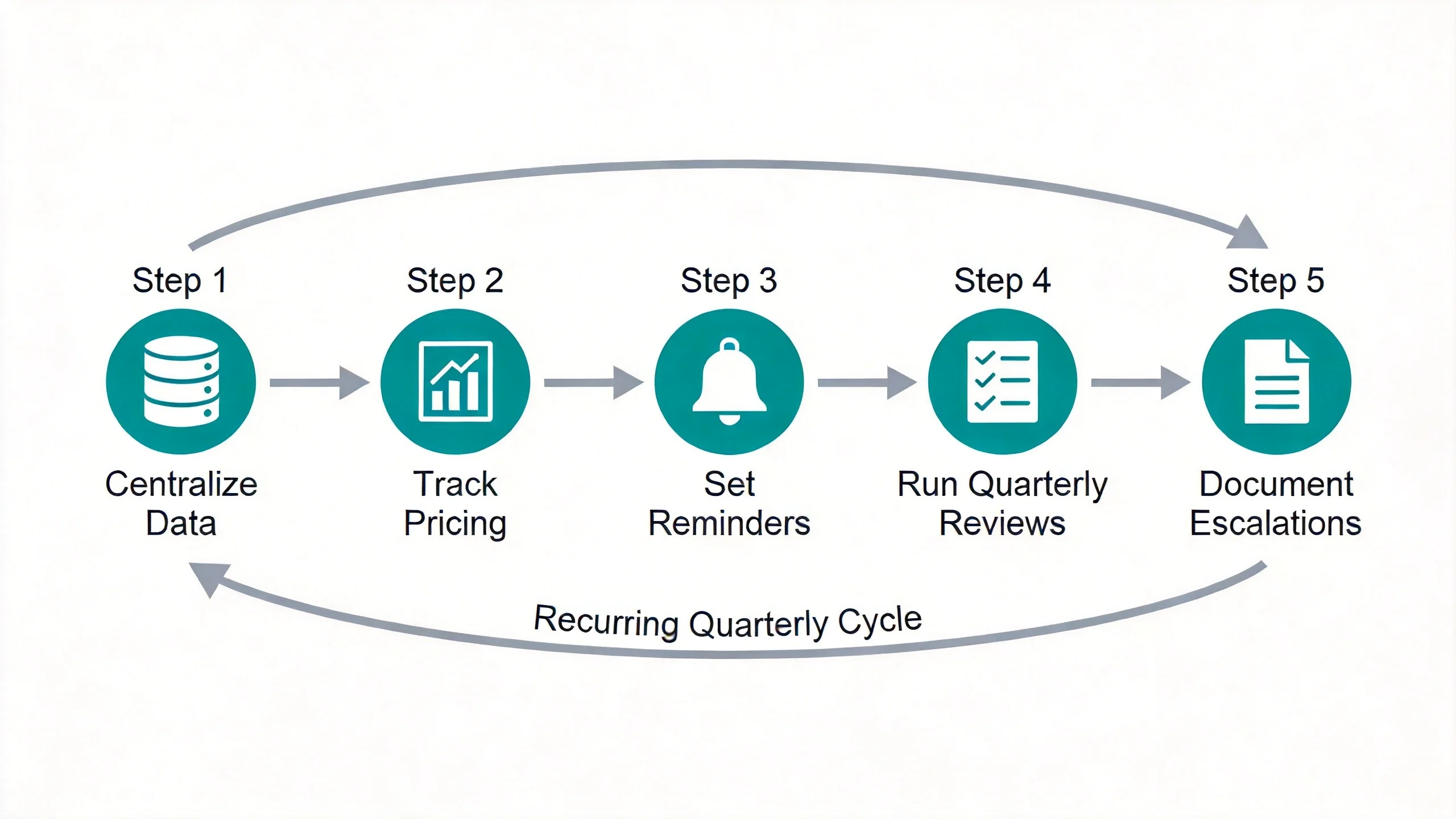
A working SRM process doesn't require enterprise software. It requires consistent habits around four operational areas. Here's how to build each one.
Centralize supplier data from day one
One master record per supplier: vendor ID, contact details, category, payment terms, contract dates. Update it on every interaction. Avoid parallel files per department.
The master record doesn't need to be complex, just consistent. If three people have three different spreadsheets with three different versions of the same supplier's pricing, you don't have a database: you have organized chaos.
Track pricing history across quotes
Archive every quote with date, unit price, MOQ (minimum order quantity), and lead time. Compare new quotes against the previous record before approving. Flag any change above 5%.
This is the single most high-value habit in supplier management. Price changes are rarely dramatic enough to trigger alarm bells, but a pattern of 3-5% increases every two cycles adds up fast.
Set contract renewal reminders proactively
Extract expiry dates from contracts at signing. Surface deadlines at 90, 60, and 30 days. Don't rely on calendar entries that get ignored or deleted. The reminder system needs to run automatically on every session, not just when someone thinks to check.
Run structured performance reviews quarterly
Score delivery reliability, quality, responsiveness, and pricing competitiveness using consistent criteria across all suppliers. Make review results visible to the whole procurement team. The quarterly cadence matters: it's frequent enough to catch problems early and infrequent enough to be sustainable.
Respond to issues with documented escalation
Log every dispute, delay, or quality failure with date, supplier, and resolution. This paper trail has two functions: it improves the next negotiation, and it makes performance-based contract decisions defensible to anyone in the organization.
How to manage supplier relationships with AI step by step
TicNote Cloud's Supplier Management skill handles the operational side of SRM automatically: document parsing, price alerts, deadline reminders, and performance reports, all without manual data entry.
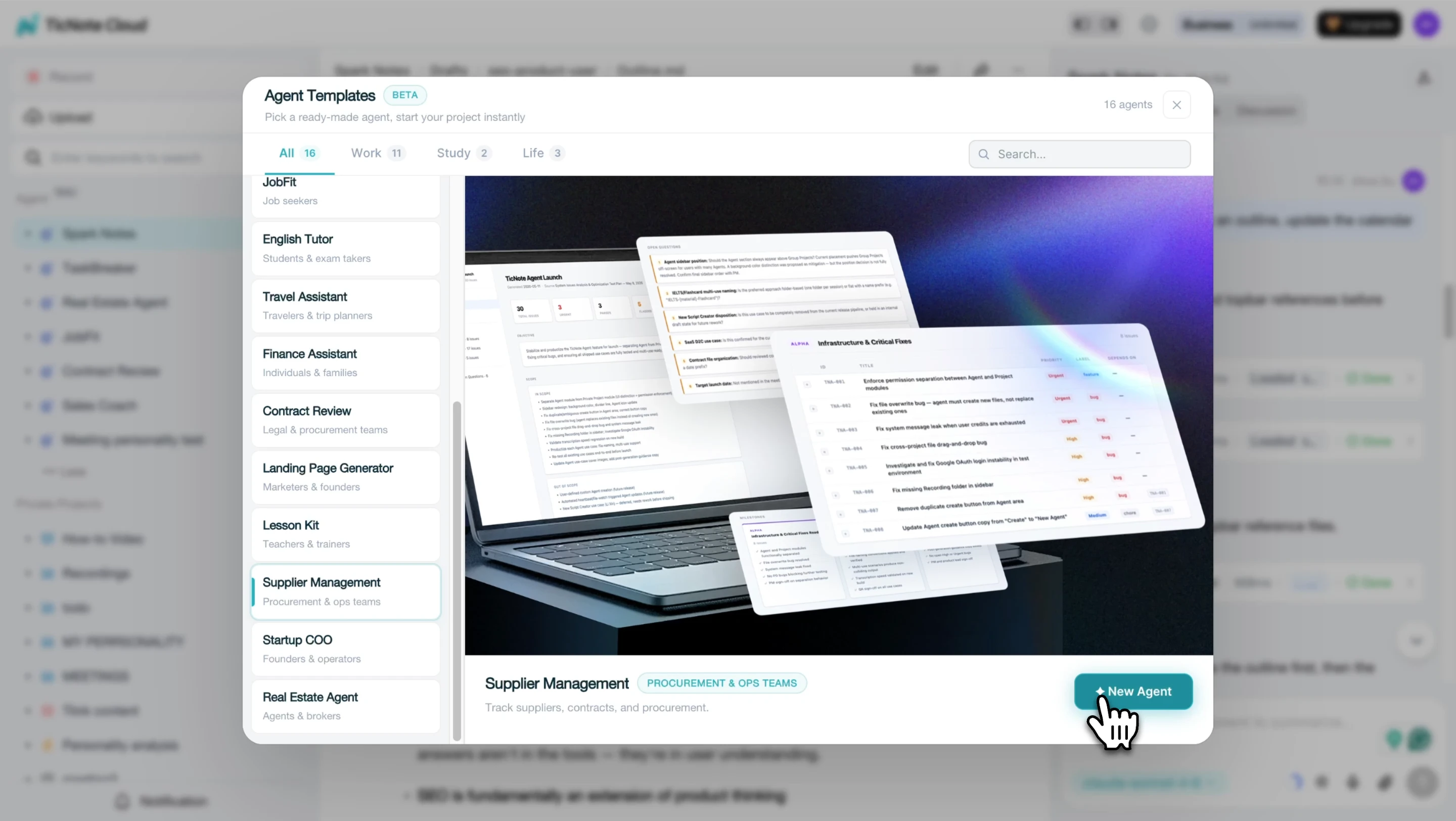
Step 1: Add the Supplier Management skill agent
In TicNote Cloud, click Add Agent and browse the Skill Agent library. Find the Supplier Management skill and select it: no configuration required.
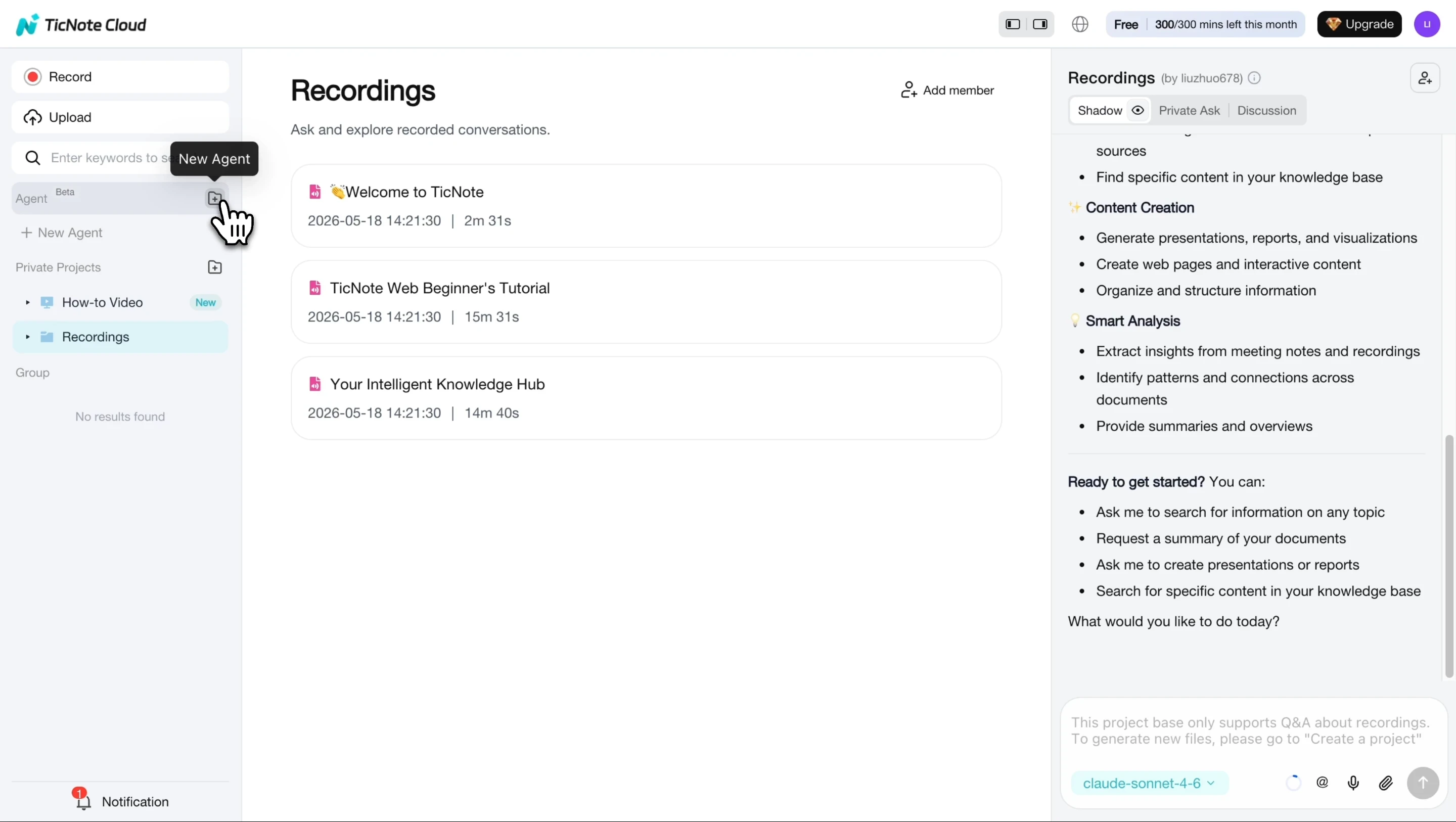
Once added, the Supplier Management skill agent appears in your agent list, ready to use immediately.
Step 2: Upload supplier documents and get price alerts
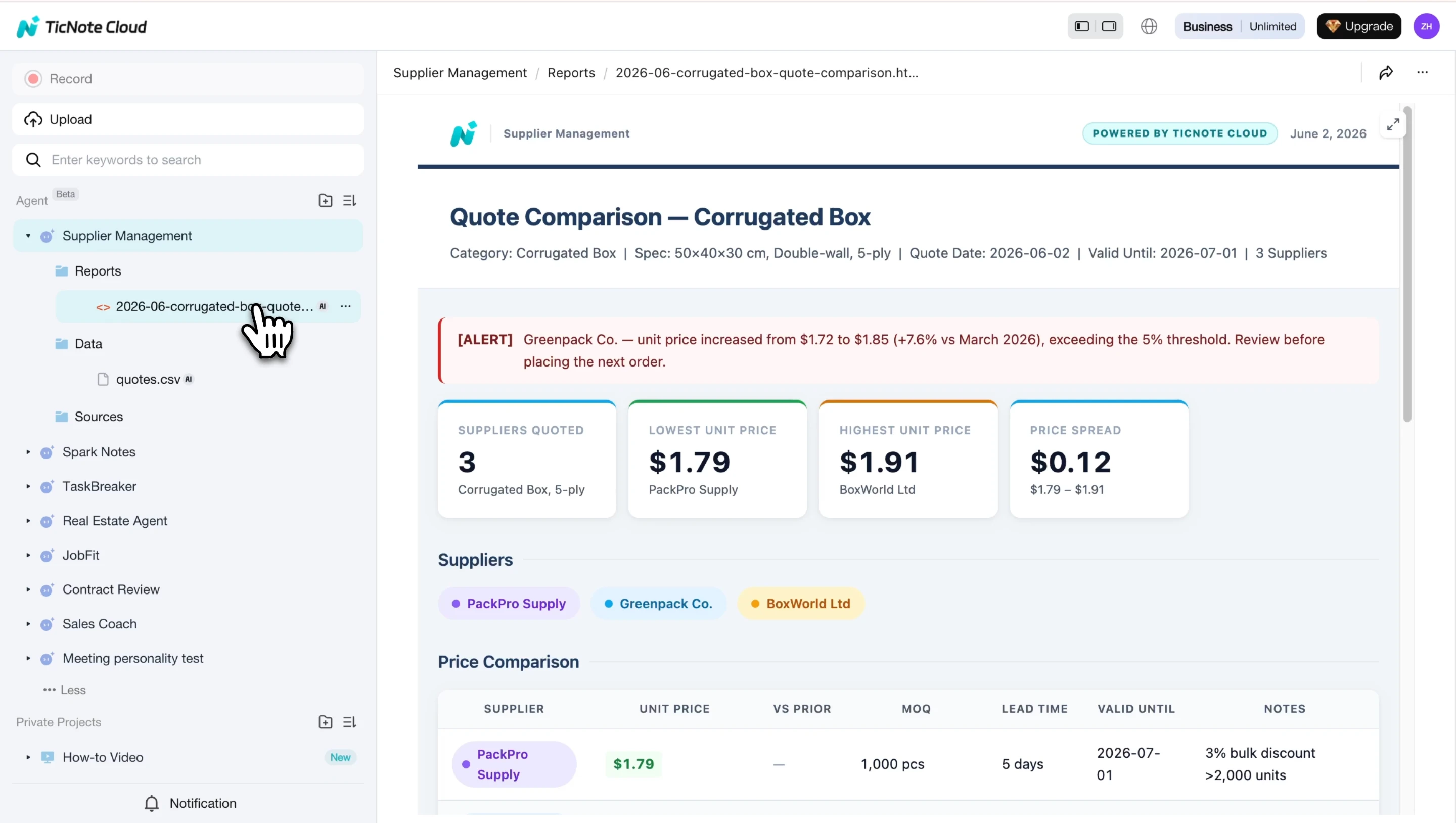
Attach a quote sheet, contract, or delivery note to the chat. The skill parses every field, normalizes dates, and archives the data. If a new quote shows a price change over 5% versus the previous record, you see an alert in chat immediately, before approving anything.

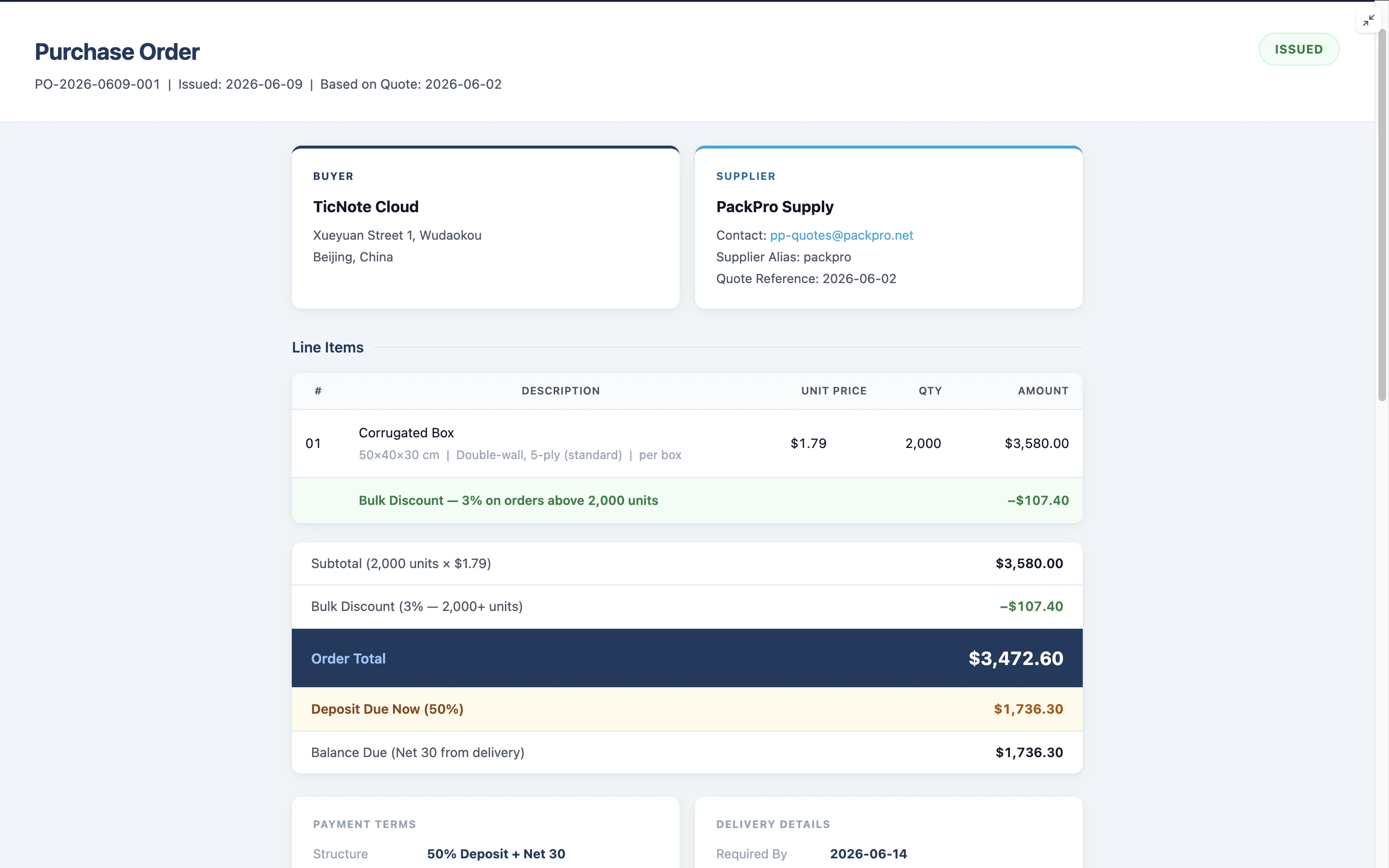
To generate a purchase order from an archived quote, type a prompt like "generate purchase order for [supplier name]." The skill identifies missing fields and asks you to confirm them before building the document.
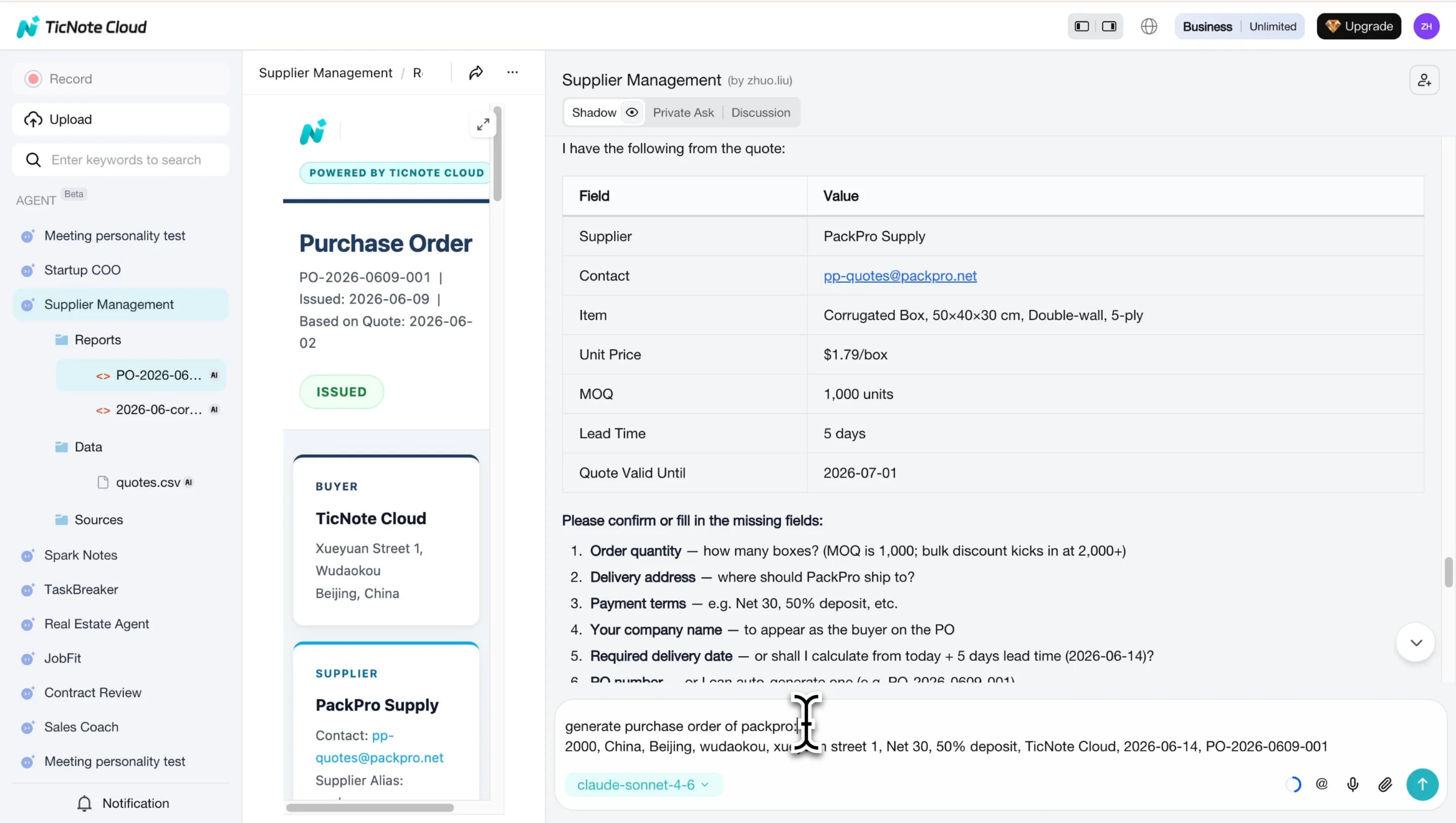
Once confirmed, the skill generates a complete purchase order with buyer and supplier details, line items, and payment breakdown, ready to share or export.
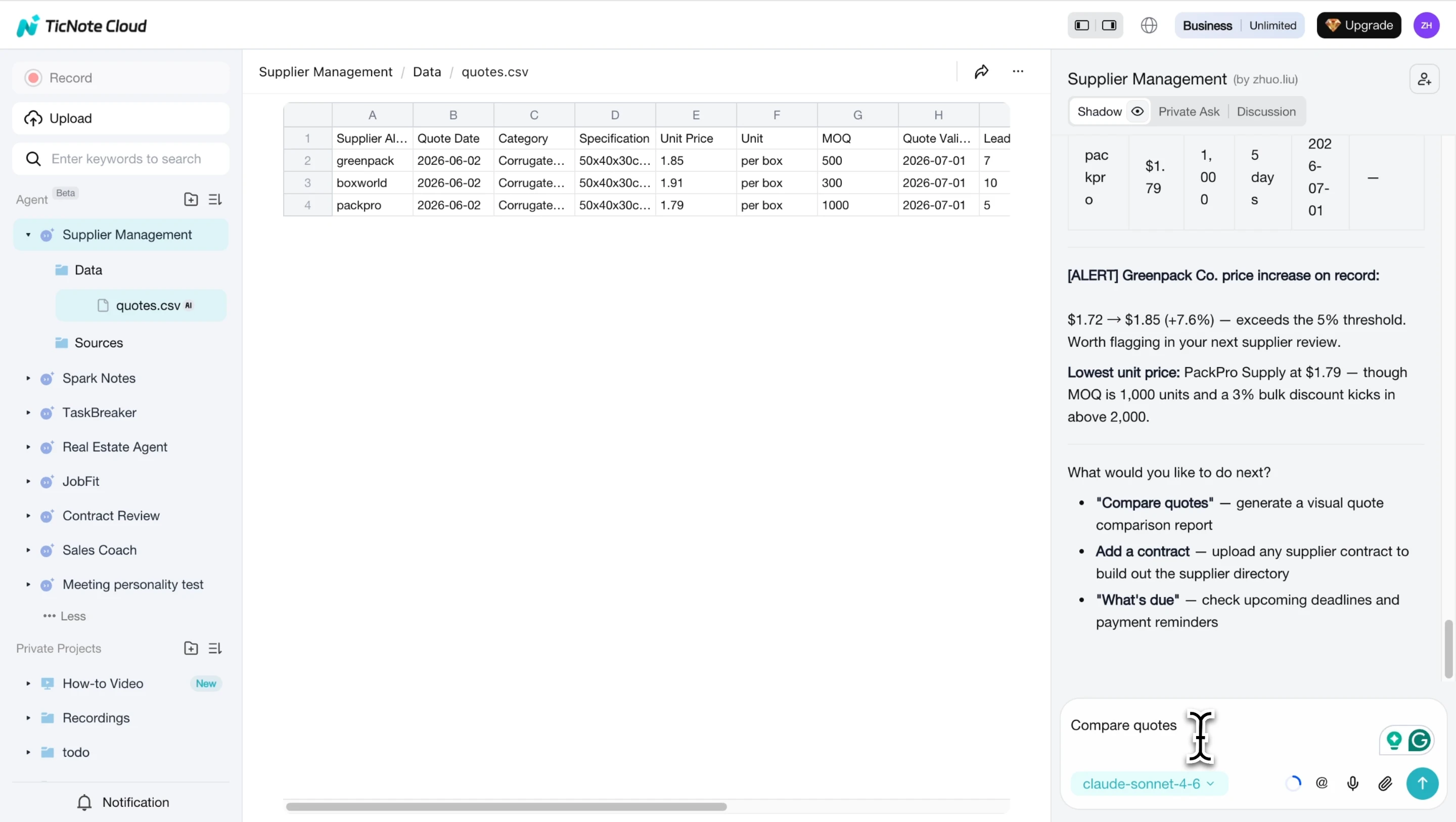
Step 3: Check archived data and request a comparison
After archiving several suppliers, open the data file to review what's stored: all suppliers normalized in one table with unit prices, MOQs, and lead times. The AI panel flags price anomalies and offers to generate a comparison report.
Step 4: Review the comparison report
The skill generates a self-contained HTML report with an alert banner, summary metric cards, and a full supplier price table, saved to your Reports folder and ready to share.
On mobile: Open the TicNote Cloud app, select the Supplier Management agent, and attach documents via the + button. The same parsing and alert workflow applies. You can also ask questions by voice: "What contracts are expiring this month?" works just as well as typing it.
Try TicNote Cloud for Free and connect your first supplier document today.
Supplier relationship management best practices
With the process in place, these four practices turn a functioning SRM system into a real competitive advantage.
According to Gartner, Supplier Relationship Management: A Complete Guide, supplier segmentation is a foundational pillar of effective SRM, yet only 35% of chief procurement officers have a formal segmentation strategy in place. Most teams treat all vendors the same, which means investing relationship time where it matters least.
Segment suppliers by strategic value
Not all vendors deserve the same attention. Tier your suppliers into strategic, preferred, and transactional. Strategic suppliers: highest spend, highest risk, or unique capabilities. Preferred: reliable, competitive, but interchangeable. Transactional: commodity purchases, low risk, low relationship investment needed.
Focus your SRM effort on strategic suppliers. Manage the rest efficiently, not intensively.
Communicate proactively, not reactively
Regular check-ins with key suppliers before problems arise. Share your upcoming demand forecast where possible. Treat strategic suppliers as partners, not order-takers. The supplier who knows your business 90 days ahead will prioritize your orders when capacity is tight.
Use data in negotiations
Price history, delivery performance scores, and contract terms are all negotiating leverage. Bring the last two quarters of scorecard data to renewal conversations. A supplier who knows you track performance closely negotiates differently than one who assumes you're operating on goodwill.
Automate the operational layer
Parsing documents, alerting on price changes, surfacing deadline reminders: these are tasks that should run automatically. The relationship-building conversation is where human time pays off. Automating procurement workflows for the data layer frees your team to focus on the decisions that actually require judgment.
Conclusion
Strong supplier relationship management comes down to consistent data practices: centralized records, tracked pricing history, proactive contract management, and structured performance reviews. The process doesn't need to be complex; it needs to be reliable.
Every renewal decision, every pricing conversation, and every performance issue is easier when you have data instead of memory. A well-maintained vendor list with current pricing and contract status is the foundation on which everything else builds.
TicNote Cloud's Supplier Management skill handles the operational layer automatically, so your team can focus on the strategic relationships that actually matter.