

 Extension
TL;DR
Vendor contract management is the process of storing, tracking, and reviewing supplier agreements so that key terms, renewal deadlines, and obligations stay visible throughout the contract's life. It's not just about where you save the file; it's about whether anyone is watching the deadlines and obligations inside it.
Try TicNote Cloud for Free and get an AI-generated risk report and renewal reminders from any uploaded vendor contract.
Most teams lose track of contracts after signing. Renewals get missed, auto-renewals lock in bad terms, and obligations go unmonitored until they become problems. A structured vendor contract management process gives every contract an owner, a deadline calendar, and a review trigger before the next renewal, so you're never scrambling when a supplier relationship is on the line.
What is vendor contract management?
Vendor contract management is the discipline of tracking, reviewing, and governing supplier agreements from the moment of signature through renewal or termination. The goal is simple: make sure key terms, deadlines, and obligations stay visible and acted on, not buried in a file somewhere.
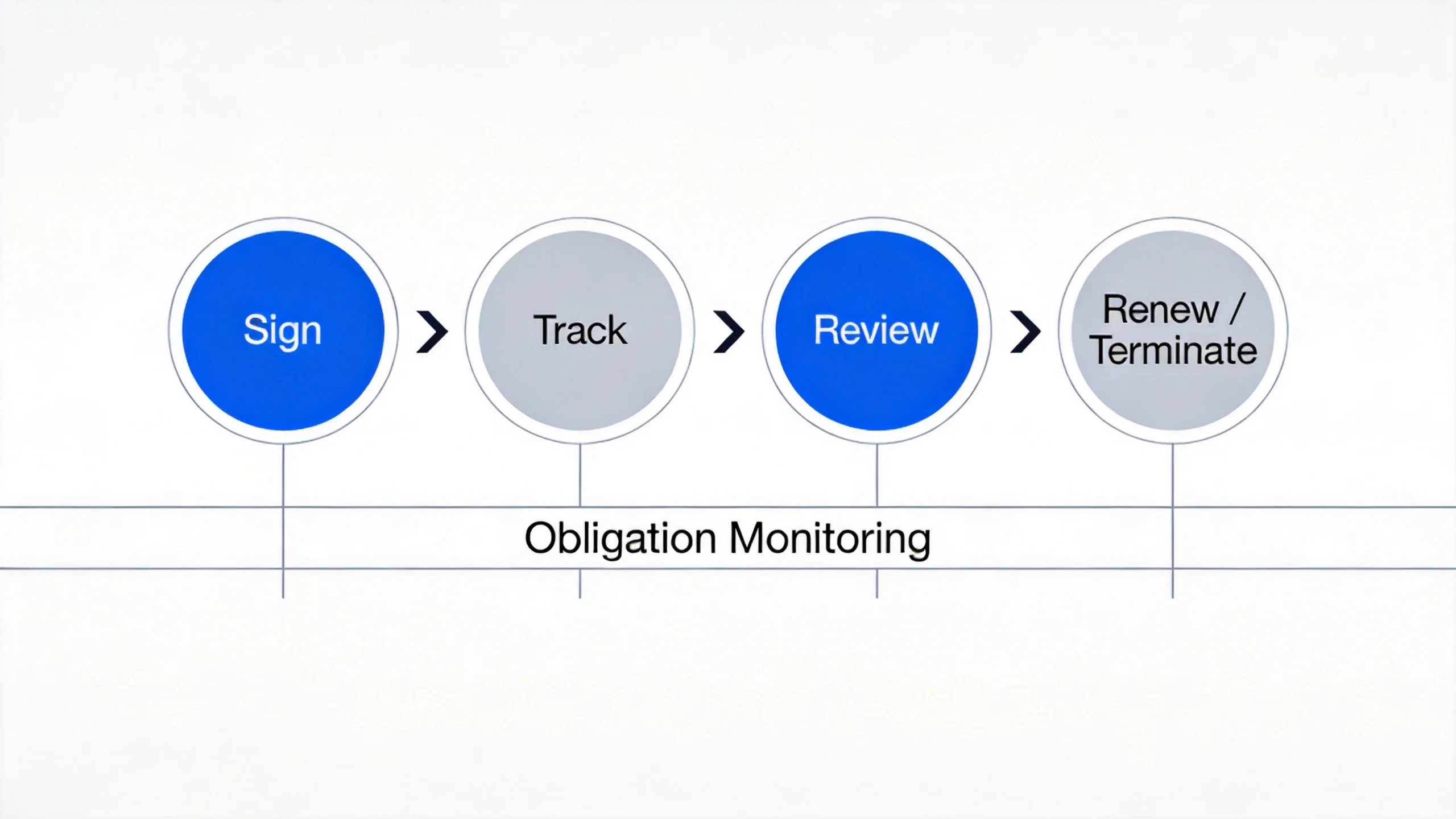
The scope is broader than most teams realize. It covers obligation tracking (what did you promise each other?), deadline monitoring (when does this auto-renew?), performance review (is the supplier meeting the SLAs?), and renewal decision-making (renew, renegotiate, or terminate?).
That's different from general vendor management, which covers the full supplier relationship including sourcing, onboarding, and day-to-day performance. Vendor contract management zooms in specifically on the legal agreement and its lifecycle.
It's also different from contract administration. Contract administration is the day-to-day execution of a signed agreement. Contract management is the system that ensures nothing falls through the cracks across all your vendor agreements at once.
Why vendor contract management breaks down in practice
Most teams have contracts. What they don't have is a contract management system. According to World Commerce & Contracting research on contract management losses, the average business loses almost 9% of annual value through poor contract management, with the worst performers losing up to 15%. The failure isn't usually a lack of intent; it's structural. Here are the four most common ways it breaks down.
Contracts get buried after signing
Once a contract is executed, it gets emailed to a shared drive or attached to a ticket and forgotten. There's no structured index, no owner assigned, and no way to surface it later without knowing exactly where to look.
No one owns the renewal calendar
Without a dedicated owner and a reminder system, renewals appear only when the auto-renewal clause has already triggered. By then, it's too late to negotiate better terms or source an alternative supplier.
Obligation tracking lives in someone's head
Deliverables, SLAs, and payment triggers are spelled out in the contract but not tracked anywhere separately. When the person who knows the history leaves, the institutional knowledge goes with them.
Version confusion
Redlines and amendments circulate over email. Without a single source of truth, teams aren't always sure which version is the live agreement, and this becomes a real problem when a dispute arises.
How to set up a vendor contract management process
The steps below will be demonstrated using TicNote Cloud's Contract Review skill agent as an example. The workflow covers the Web platform as the primary flow. App and mobile steps follow the same structure.
Step 1: Centralize all existing contracts
Start by collecting every active vendor agreement into one location, whether that's a shared folder, a drive, or a purpose-built tool. For each contract, note the supplier name, start and end date, and file format. This inventory becomes the foundation of everything that follows.
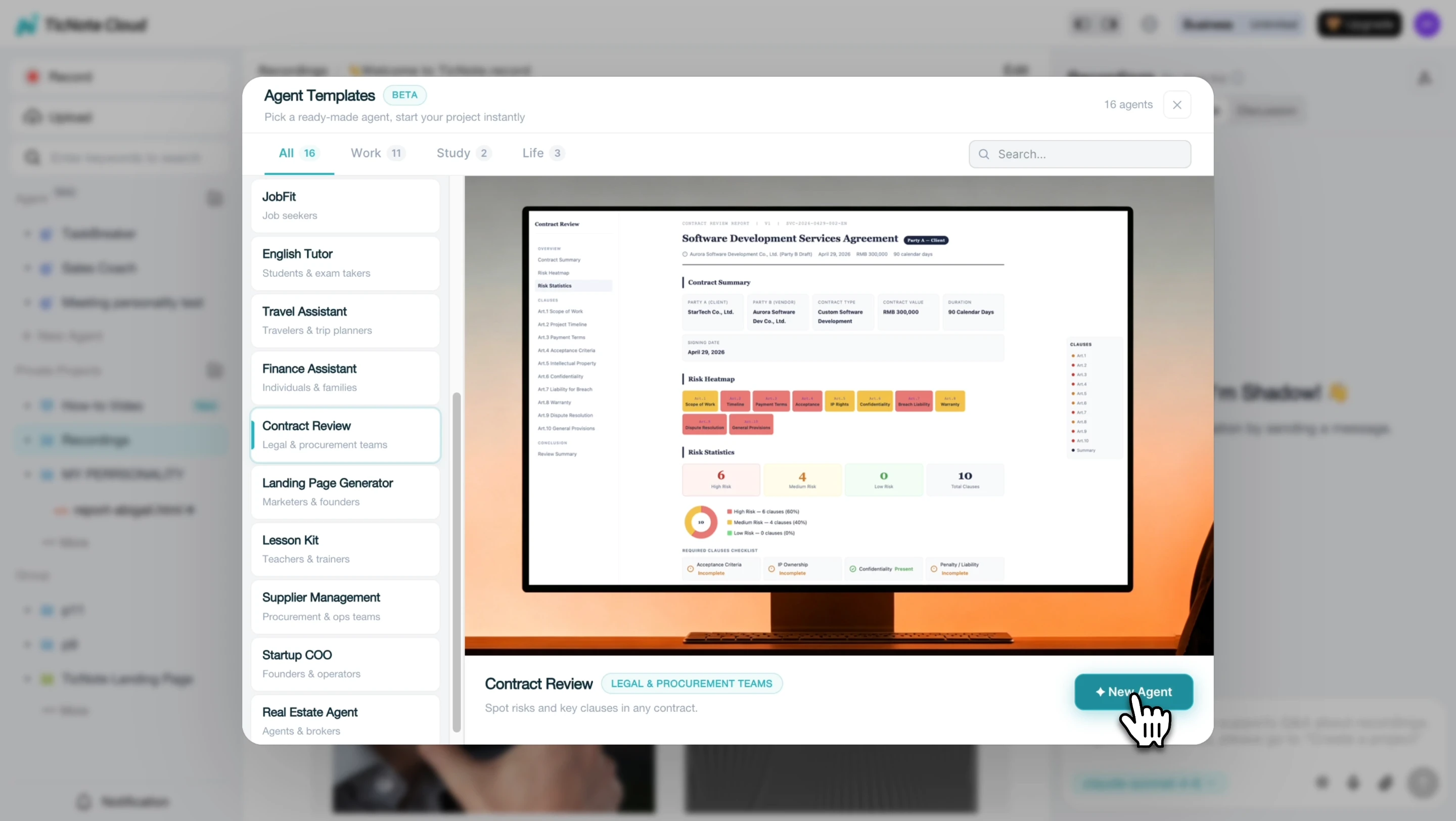
Step 2: Add the Contract Review skill agent on TicNote Cloud
In TicNote Cloud, click Add Agent and select Contract Review from the Skill Agent library. No configuration is required; the agent is ready to use as soon as it's added.
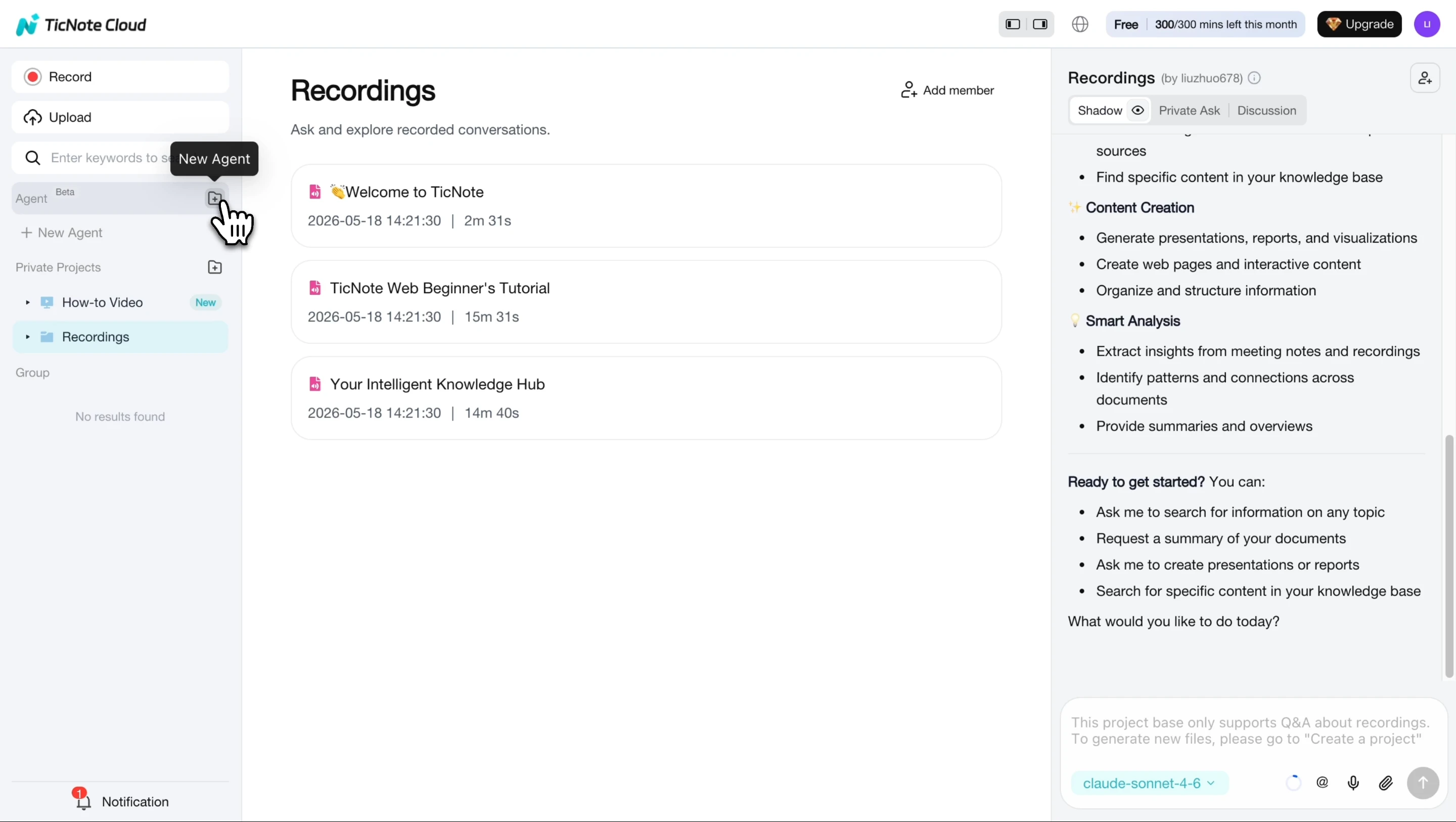
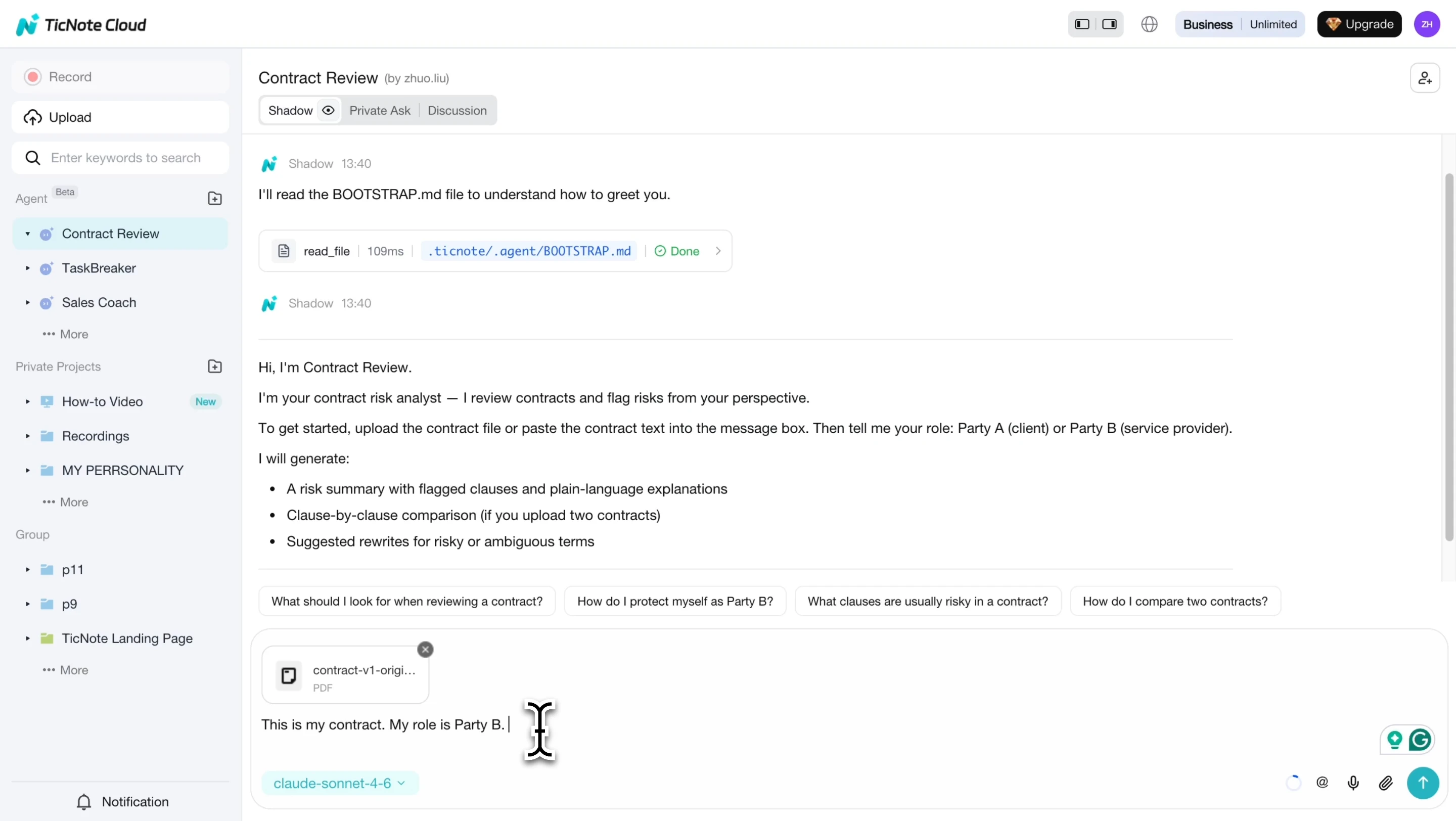
Step 3: Upload the contract and specify your role
Attach the contract PDF or DOCX to the agent chat. Tell the agent whether you are Party A or Party B. The agent parses the full document immediately.
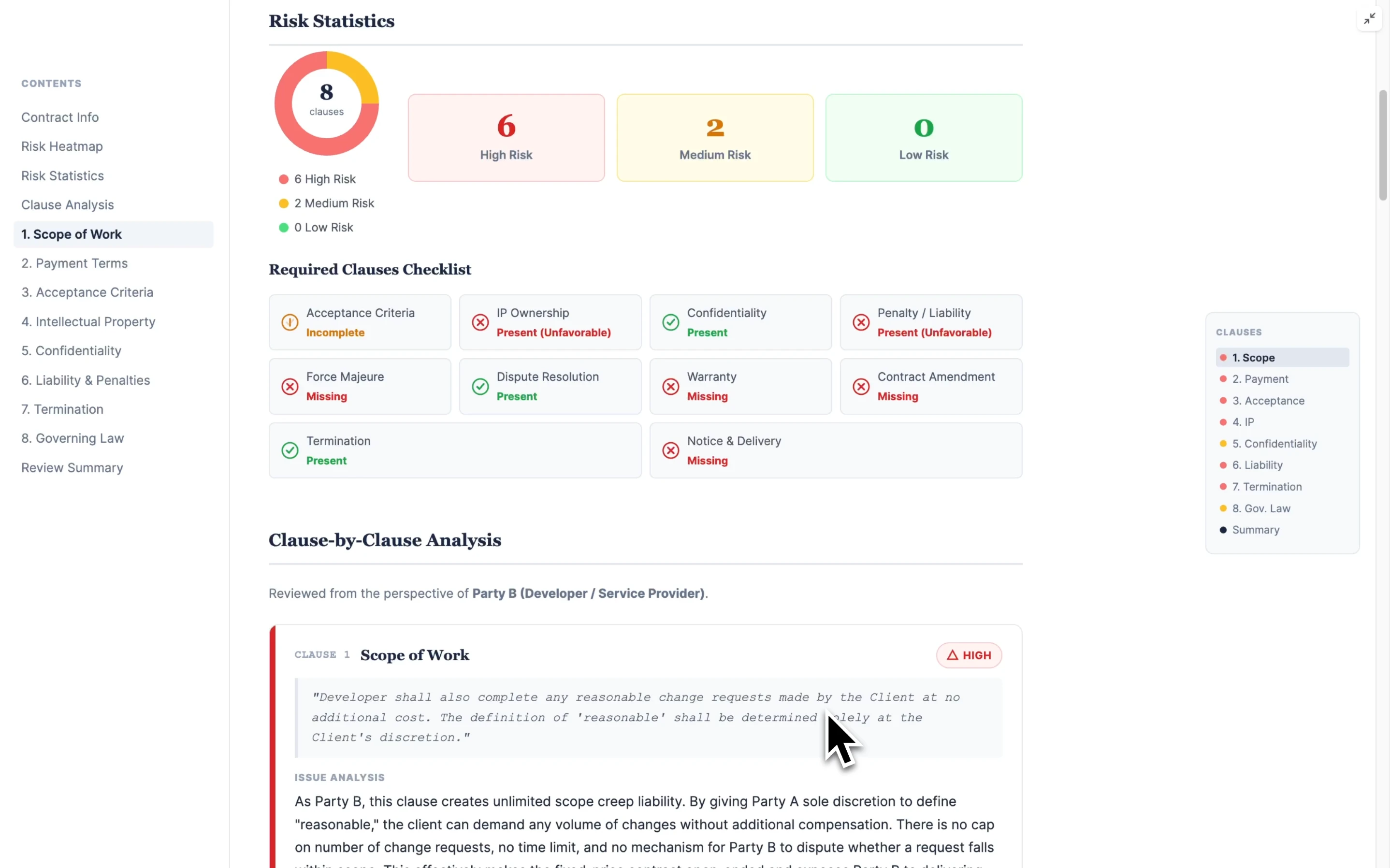
Step 4: Review the AI-generated risk report
The agent produces a visual HTML risk report with highlighted risk clauses and a heatmap showing where the highest-risk language sits in the document. Review the flagged terms before confirming the contract is live.
Before you do that, use a contract review checklist alongside the report to make sure you've covered the standard risk categories systematically.
Step 5: Compare two contract versions if renegotiating
If you have an amended version, upload both contracts to the agent. It generates a clause-by-clause comparison report showing exactly what changed between versions.

Step 6: Assign an owner and set renewal reminders
For every active contract, assign a named owner on your team who is responsible for monitoring it. Set a calendar reminder 60 to 90 days before the renewal or notice deadline, giving you enough lead time to evaluate and negotiate.
Step 7: Track obligations as live action items
Extract key deliverables, SLAs, and payment triggers from the contract and add them to your task or project management system. Obligations that live only in the contract document get missed; obligations that appear in your workflow get acted on.
Step 8: Store outcome decisions
After each review or renewal, log the decision (renew, renegotiate, or terminate) and the reasoning behind it alongside the contract record. The next reviewer will start with context, not from scratch.
What to track in every vendor contract
A short, consistent tracking record for each contract makes renewals and audits fast. You don't need a complex system; you need the same six fields filled in for every agreement.
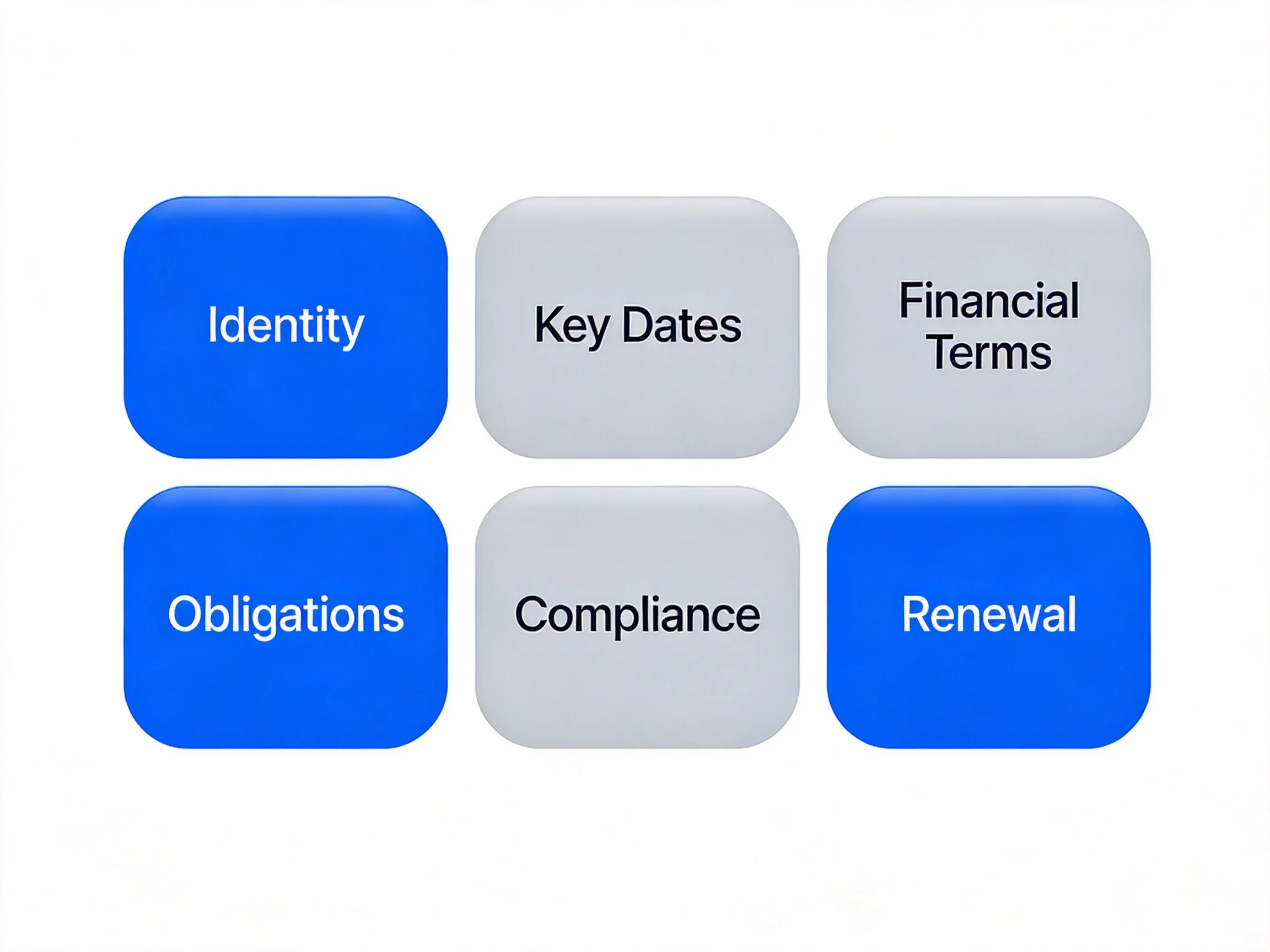
Identity fields
Supplier name, contract reference number, contract type (services, goods, or SaaS), and the owner's name on your team. These four fields let anyone on the team find the right contract and know who to call.
Key dates
Start date, end date, notice period deadline, auto-renewal date (if applicable), and the next scheduled review date. The notice period deadline is the most important field here. Miss it, and you lose the option to renegotiate or exit.
Financial terms
Total contract value, pricing model (fixed, time-and-materials, or subscription), payment schedule, rate escalation clauses, and any penalty or rebate triggers. Escalation clauses are easy to miss at signing and expensive to discover at renewal.
Performance obligations
SLA metrics, delivery commitments, quality standards, and any reporting requirements the supplier must meet. If it's not tracked, it won't be enforced.
Compliance and legal
Data handling requirements, confidentiality scope, liability cap, and any regulatory certifications the supplier must maintain (ISO 27001, SOC 2, or similar). These fields matter most when something goes wrong.
Renewal decision fields
Current performance rating, the reason to renew or renegotiate, and a note on any terms to push back on at the next renewal. Filling this in after each review cycle means you always start the next negotiation with a clear position.
How to review a contract before renewal
A pre-renewal review done 60 to 90 days before the deadline gives you enough time to negotiate better terms or source an alternative supplier. Here's a five-step process that works for most vendor contracts.
Check actual usage and performance
Compare the supplier's performance against the SLAs written in the contract. Note delivery failures, quality issues, and any support gaps from the past 12 months. If you haven't been tracking performance data, this is the step that shows you why you should start.
Benchmark the current price
Send one or two competing RFQs to alternative suppliers using the same specification. Compare the responses against your current contract rate. If the current price is already competitive, you have confirmation. If it's not, you have leverage.
Review the terms for risk
Re-read the auto-renewal clause, liability cap, data handling terms, and any clauses that have become more relevant since signing. Contracts signed two years ago may predate your current compliance requirements.
Identify negotiation levers
List two or three specific terms you want to improve: better unit pricing, a shorter notice period, updated SLAs, or removal of an unfavorable clause. Going into renewal with a prepared list is the difference between a renegotiation and a rubber stamp.
Make and document the decision
Decide: renew as-is, renegotiate specific terms, or terminate. Record the reasoning so the next reviewer understands the history. Contracts that get renewed without documentation just repeat the same cycle, with no institutional knowledge to show for it.
Conclusion
Good vendor contract management is less about where you store contracts and more about whether you have visibility into deadlines, obligations, and renewal triggers. A contract filed away in a shared drive with no owner and no reminder isn't managed; it's just stored.
TicNote Cloud's Contract Review skill agent makes it practical to bring AI analysis into the process: upload any vendor contract, get a risk report with highlighted clauses, and set up reminders so renewals don't sneak up on you. For teams managing an increasing number of supplier agreements, pairing that with procurement automation can close the loop from contract review through to purchase orders.