


 Extension
TL;DR
Vendor management is the end-to-end process of sourcing, onboarding, monitoring, and developing your supplier relationships: from the first quote to contract renewal. Done well, it reduces supply risk, controls costs, and gives you the data to negotiate from a position of strength.
Try TicNote Cloud for Free and build a live vendor database from your supplier documents in minutes, with automatic price alerts and contract reminders included.
Most small teams manage vendors through email threads and spreadsheets that nobody trusts. A price quietly increases. A contract renews on worse terms. You find out after the invoice arrives. TicNote Cloud's Supplier Management skill centralizes your vendor data from uploaded documents and alerts you before problems become costs.
What is vendor management?
Vendor management is the systematic process of selecting, onboarding, overseeing, and evaluating the suppliers and service providers your organization works with. It covers everything from initial sourcing through performance review and contract renewal.
According to the Institute for Supply Management (ISM), effective supplier relationship management is "the process by which an organization works with its suppliers to accomplish common goals or objectives," a definition that captures the full scope of what vendor management is trying to achieve.
What vendor management covers
Vendor management is broader than most people realize. It includes:
- Vendor selection and qualification: defining requirements, comparing quotes, checking references
- Contract negotiation and management: terms, SLAs, payment conditions, expiry dates
- Purchase order processing: issuing, tracking, and matching invoices to POs
- Performance monitoring: delivery rates, quality scores, responsiveness
- Risk assessment: single-source dependencies, financial stability, compliance
- Relationship development: proactive communication, demand forecasting, strategic alignment
Vendor management vs. procurement vs. SRM
These terms overlap but cover different scopes:
- Procurement covers buying decisions: sourcing options, budget approval, PO issuance.
- Vendor management is the ongoing operational relationship after a vendor is selected.
- Supplier relationship management (SRM) is the strategic layer: performance evaluation, risk management, long-term development.
Most small teams need all three. The distinction matters because each layer has different failure modes and different fixes.
Why vendor management matters more than ever
Supply chain complexity is increasing while headcounts stay flat. Small teams are managing more vendors, more documents, and more price change cycles with less capacity to track them. The cost of a failed vendor relationship, a missed renewal or an undetected price increase, consistently exceeds the cost of managing it properly.
The vendor management process: 5 stages
Effective vendor management follows a repeatable lifecycle. The same five stages apply whether you have 5 vendors or 50.
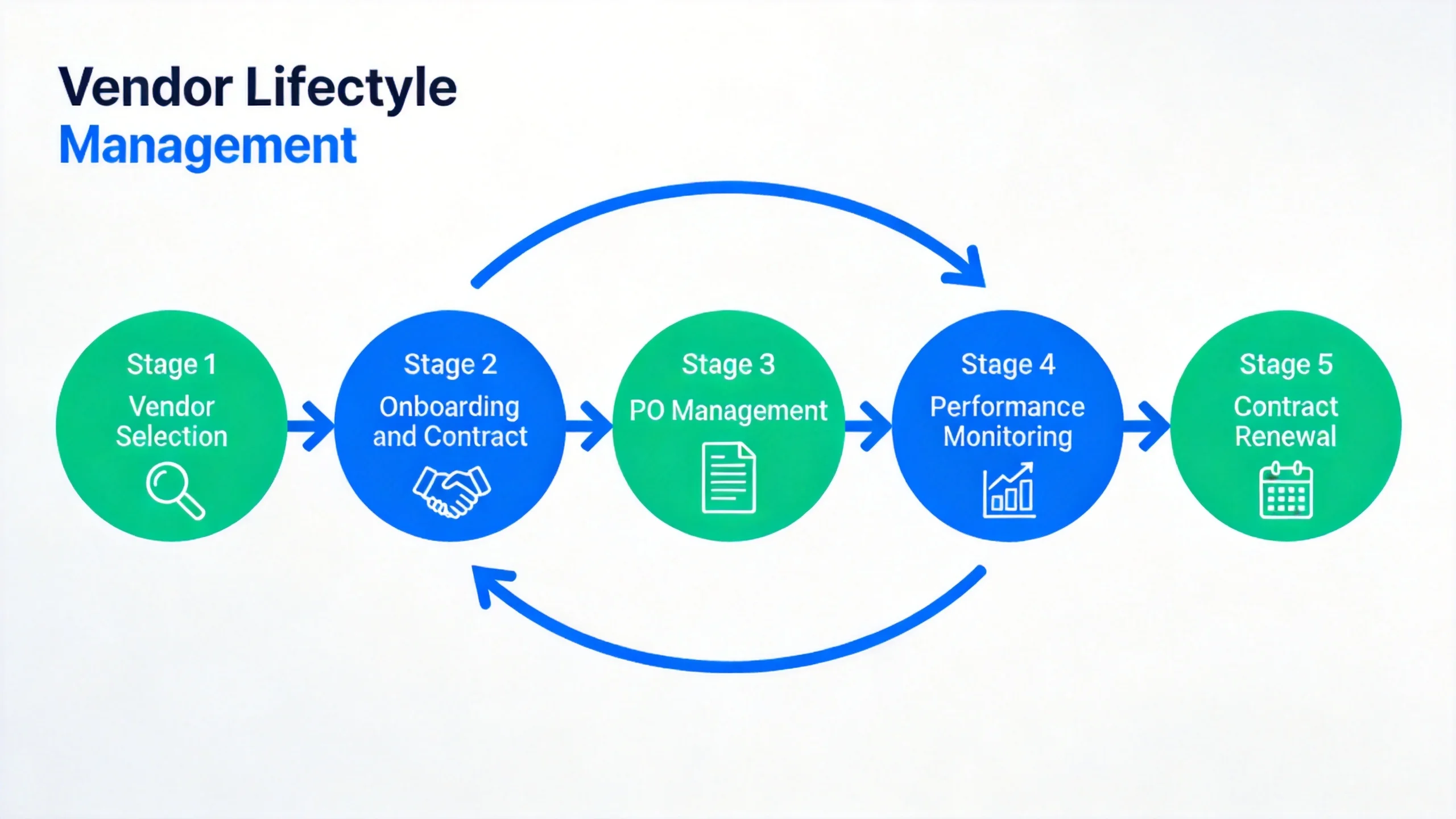
Stage 1: Vendor identification and selection
Define requirements before sourcing. Qualify vendors on capacity, compliance, pricing, and references. Request quotes in a standard format, using consistent line items and date fields, so you're comparing apples to apples.
Don't skip the reference check. A vendor who looks competitive on price but has a pattern of late deliveries costs more than the price difference.
Stage 2: Onboarding and contract setup
Collect all vendor information in one place: contact details, payment information, bank details, and insurance certificates. Sign a contract with clear terms covering pricing, SLAs, payment schedule, and dispute resolution. Archive the contract with the expiry date flagged.
Many purchase order cycles break down here because onboarding is treated as a one-time event rather than the foundation of the relationship. If the information is incomplete at this stage, everything downstream is slower.
Stage 3: Purchase order management
Issue POs with consistent numbering, line items, and payment terms. Archive every PO against the corresponding quote. Match invoices to POs before payment approval. This three-way match (quote, PO, invoice) is the primary defense against accidental overpayments and unauthorized charges.
Stage 4: Performance monitoring
Track delivery on-time rate, quality rejection rate, responsiveness to queries, and pricing stability. Review quarterly against defined benchmarks. Document issues with date and resolution. A vendor who knows you track performance closely behaves differently than one who assumes your reviews are informal.
Stage 5: Contract renewal and renegotiation
Review performance data 60-90 days before contract expiry. Use price history and delivery scores as negotiating leverage. Decide whether to renew, renegotiate, or switch before the deadline forces your hand. A renewal conversation supported by six months of performance data is a completely different conversation from one with no data at all.
Common vendor management challenges (and how to fix them)
McKinsey & Company, What is Supply Chain? research suggests that supply chain disruptions lasting one month or longer now occur every 3.7 years on average. Most of those disruptions are predictable: they stem from the same five failure modes that appear in vendor management programs at companies of every size.
Vendor data scattered across tools
Fix: Create one master vendor record per supplier: assign a vendor ID, store contact, payment terms, contract dates, and pricing history in the same place. Update centrally on every interaction. This single change eliminates most coordination failures immediately.
Price changes go undetected
Fix: Archive every quote with date and unit pricing. Compare new quotes against the previous record before approving. Flag changes above a threshold automatically, 5% is a reasonable starting point. A contract review process should always include a pricing comparison step.
Contract deadlines missed
Fix: Extract renewal dates at contract signing. Set tiered reminders at 90, 60, and 30 days. Never rely on manual calendar entries alone: they get deleted, ignored, or simply not created for contracts signed three years ago.
No consistent performance baseline
Fix: Score every vendor on the same 4-5 criteria every quarter. Document the data so renewal decisions are based on evidence, not memory. "We've had problems with them before" is not a negotiating position. "Their on-time delivery rate was 71% last quarter, down from 88% the quarter before" is.
Vendor onboarding takes too long
Fix: Create a standard onboarding checklist. Collect all required information in one step. Don't wait for the first invoice to discover missing banking details or an expired insurance certificate.
How to manage vendors step by step with AI
TicNote Cloud's Supplier Management skill handles the operational foundation of vendor management: document archiving, price monitoring, purchase order generation, and deadline tracking, demonstrated on both web and mobile platforms.
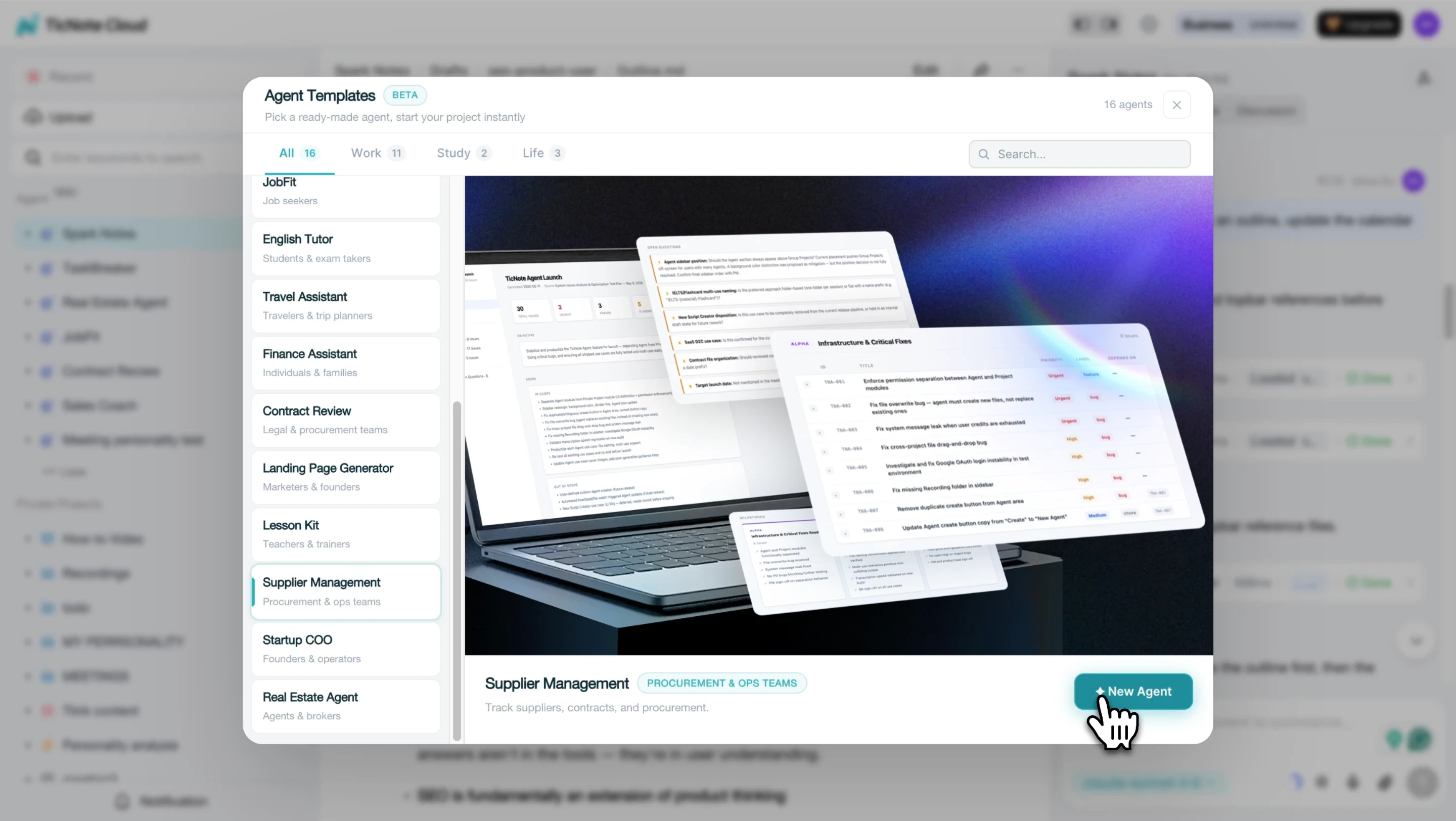
Step 1: Add the Supplier Management skill in TicNote Cloud
Click Add Agent in TicNote Cloud and browse the Skill Agent library. Select the Supplier Management skill to add it to your workspace, no configuration required.
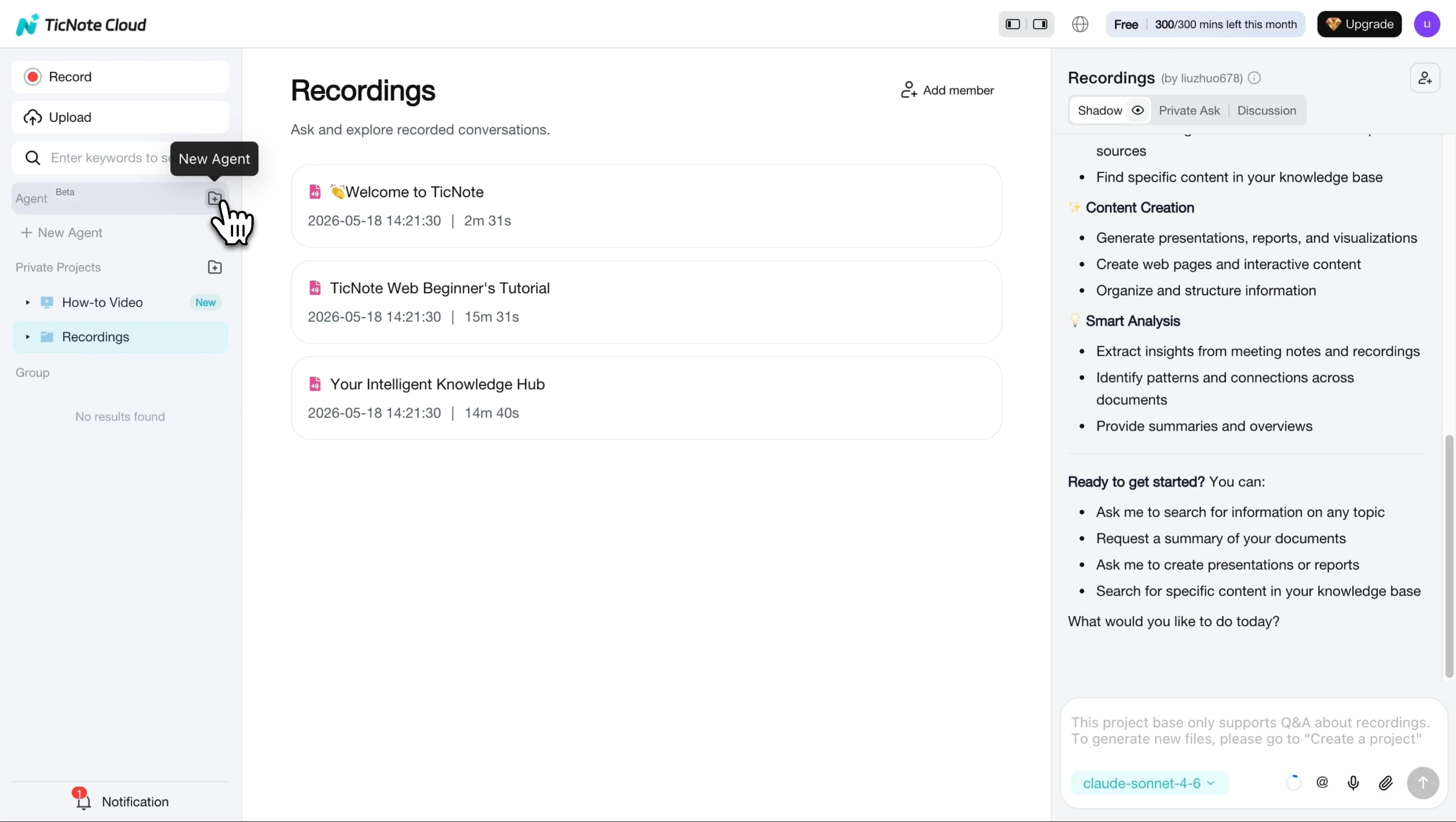
The skill appears in your agent list immediately, ready to use.
Step 2: Upload vendor documents and receive price alerts
Attach a quote sheet, contract, or delivery note to the chat. The skill parses every field, normalizes dates, and archives the data. If a new quote shows a price change over 5% versus the previous record, you see an alert in chat immediately, before any approval goes through.
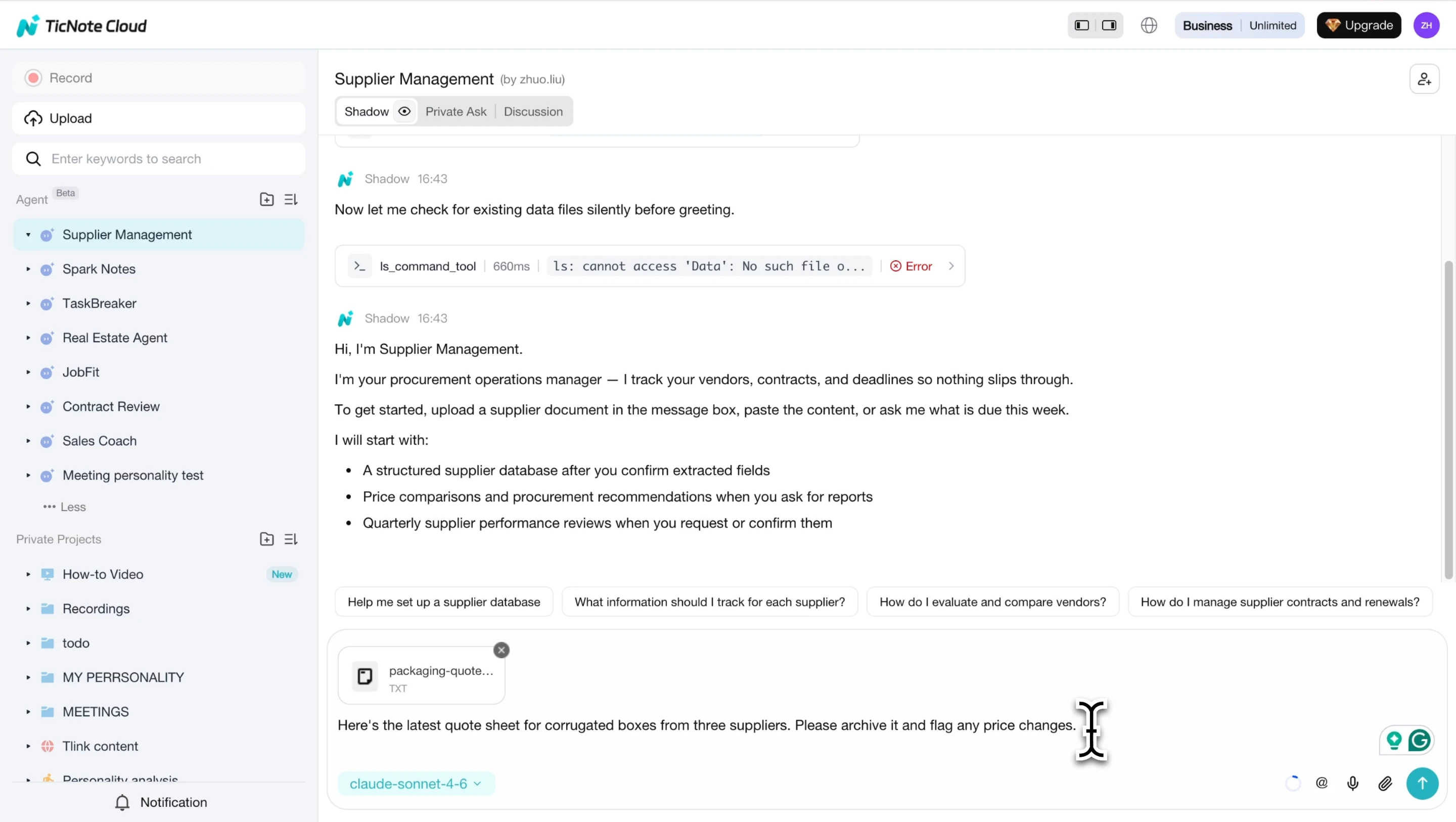
To generate a purchase order from an archived quote, type "generate purchase order for [supplier name]." The skill identifies missing fields and asks you to confirm them before building the document.
Once confirmed, the skill generates a complete purchase order with buyer and supplier details, line items, and payment breakdown.

Step 3: Review archived vendor data and request a comparison
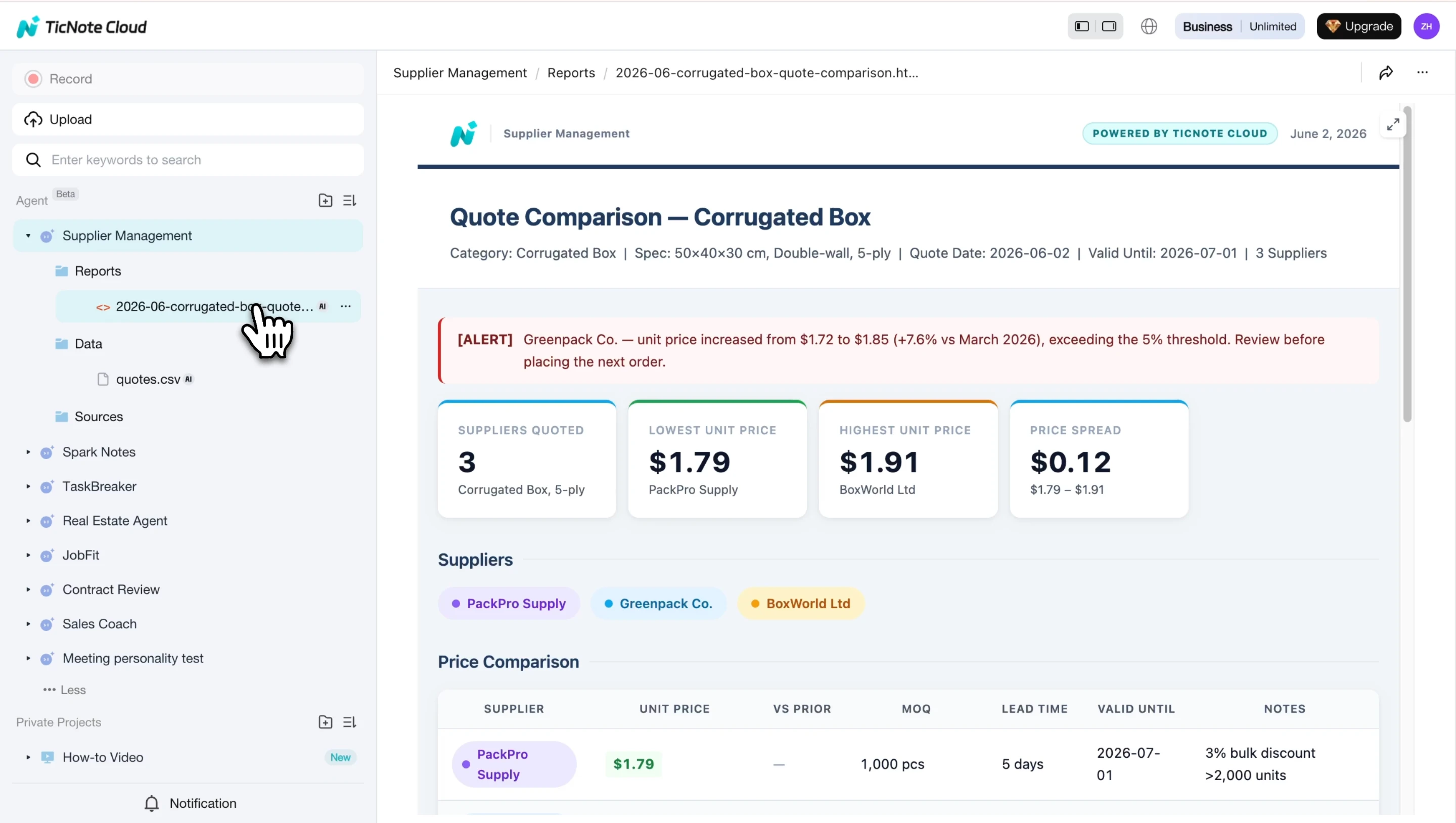
After archiving multiple suppliers, open the data file to see all vendors normalized in one table: unit prices, MOQs, lead times, and contract dates. The AI flags price anomalies and offers to generate a comparison report on demand.
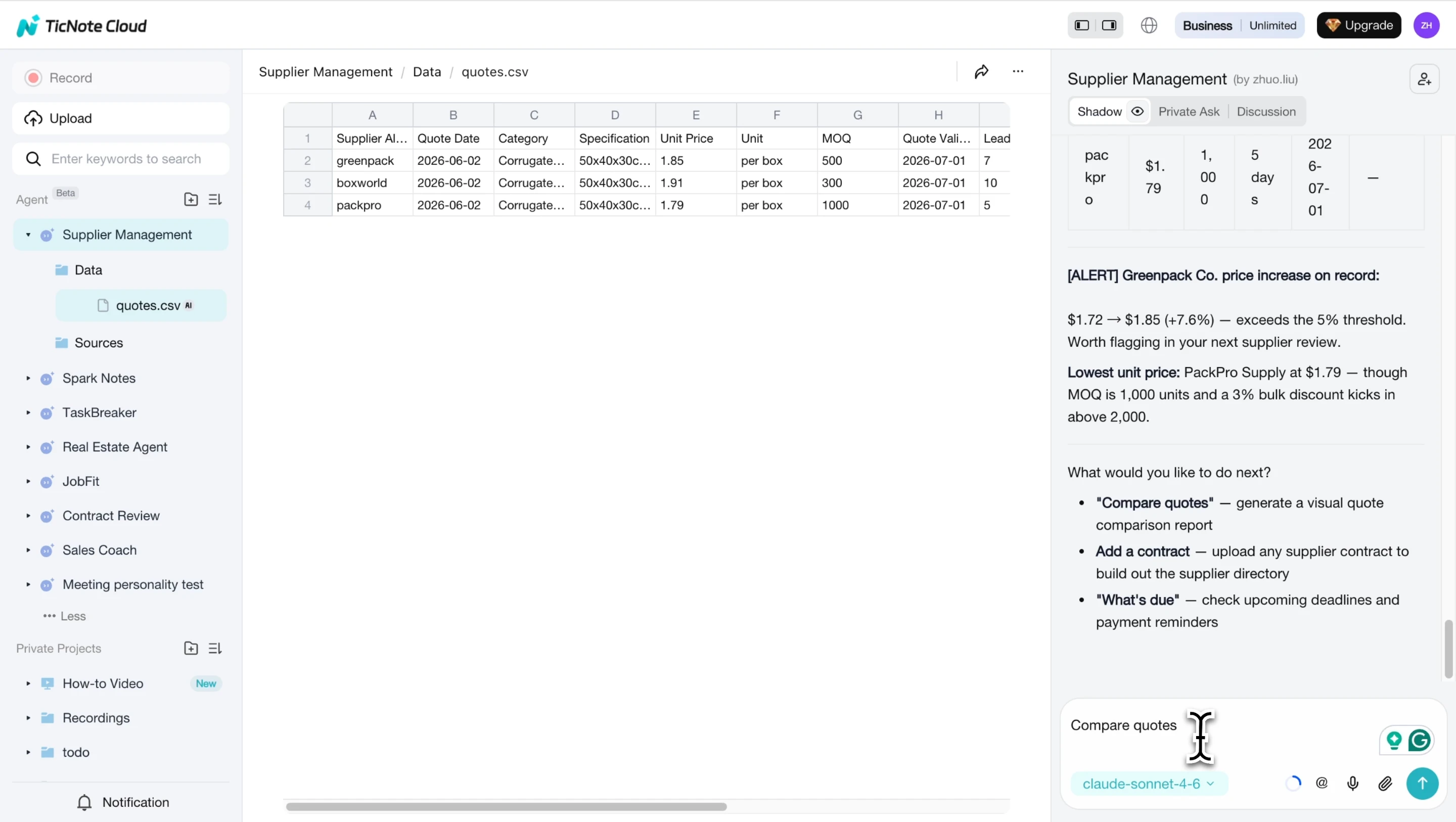
Step 4: View the comparison report
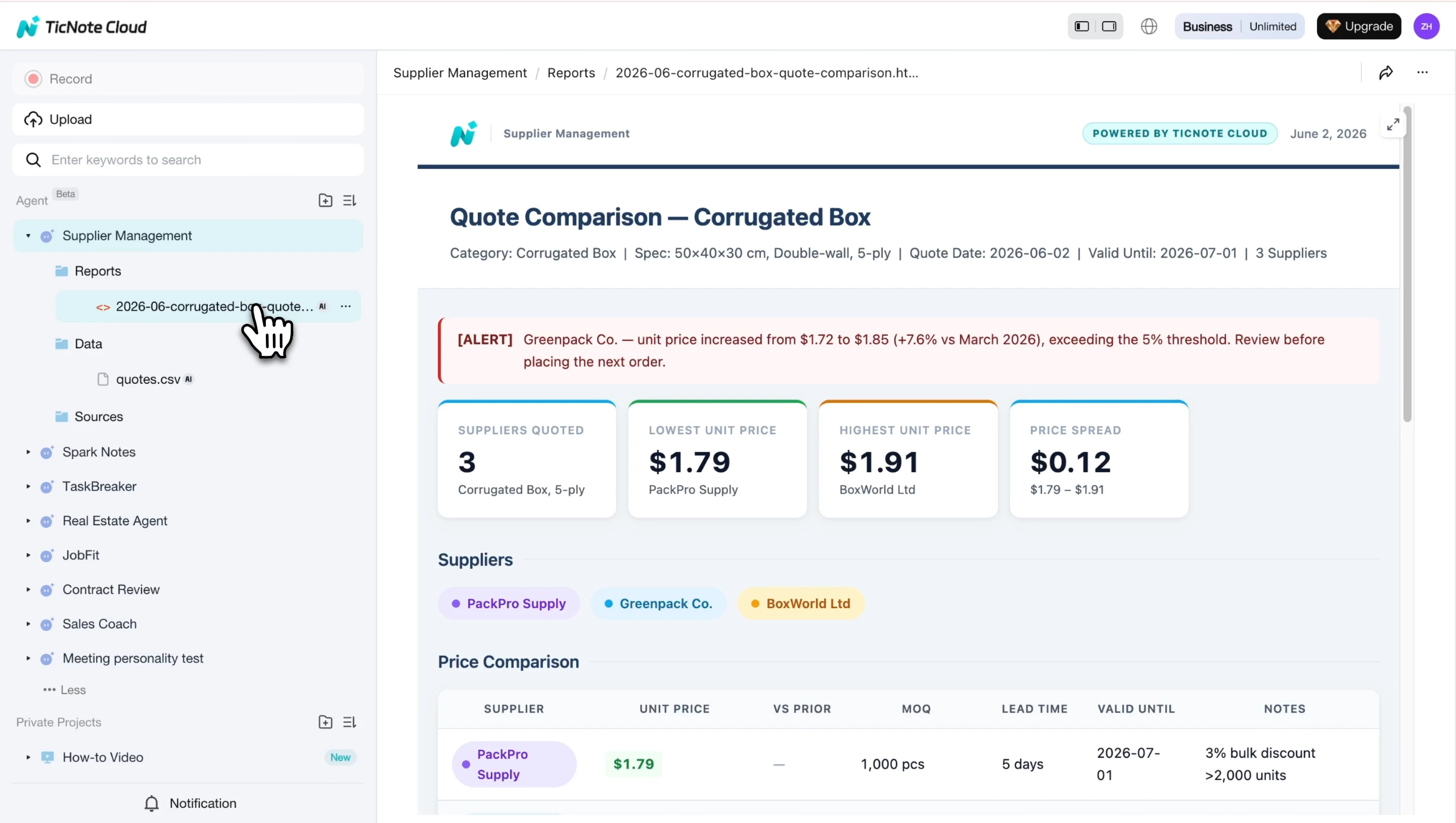
The skill generates a self-contained HTML report with an alert banner, summary metrics, and a full supplier price table, saved to your Reports folder and ready to share.
On mobile: Open the TicNote Cloud app, select the Supplier Management agent, and attach documents via the + button. The same parsing and alerting workflow applies. Voice queries work too: "What contracts are expiring this month?" returns your current deadline list immediately.
Try TicNote Cloud for Free and start building your vendor database from uploaded documents today.
Vendor management best practices for small teams
Good vendor management doesn't require a dedicated team or specialized software. It requires consistent habits applied to the right vendors in the right order.
Start with a vendor registry, not a vendor system
Before buying software, build a simple master list with vendor ID, contact, category, payment terms, and contract expiry. This is the foundation everything else sits on. A well-maintained vendor list with current pricing and contract status answers most questions before you need to search anywhere else.
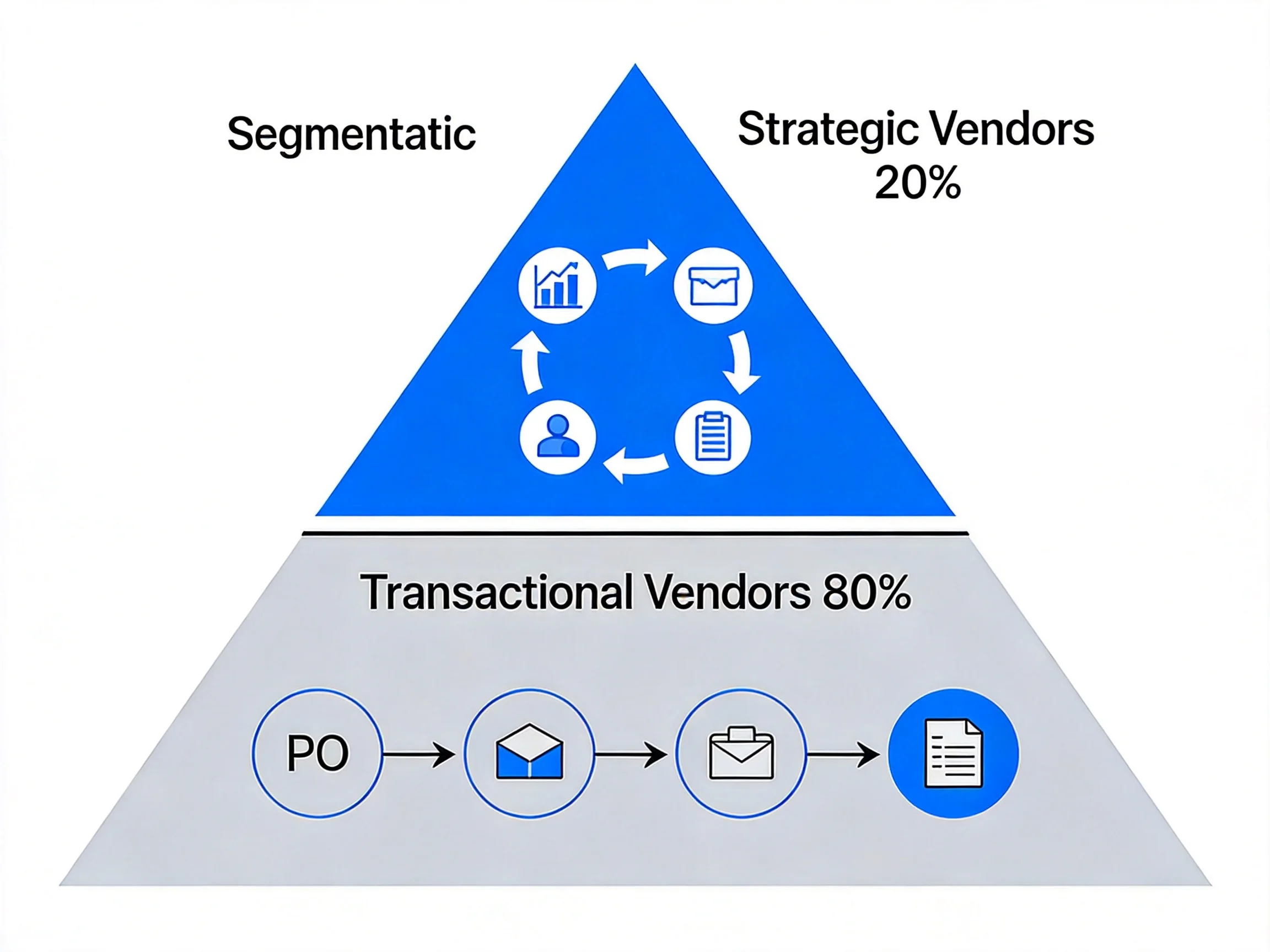
Treat your top 20% of vendors differently
Your highest-spend or highest-risk vendors deserve regular check-ins, proactive forecasting, and relationship investment. The rest can be managed transactionally: issue POs, track delivery, review at contract renewal. Applying strategic management uniformly wastes time. The 80/20 split is a useful starting rule until your data suggests a different threshold.
Never approve a PO without checking the latest quote
Prices change between orders. Always verify current pricing before issuing a PO and archive the quote that generated each PO. This creates a clean audit trail and makes invoice matching straightforward.
Review vendor performance before contract renewal, not after
A renewal negotiation with six months of performance data is a different conversation from one without it. Build the review habit before the contract expiry window, not during it. Use procurement automation to surface renewal reminders automatically so the review starts on your schedule, not the vendor's.
Conclusion
Vendor management doesn't need to be complicated: it needs to be consistent. A standard process for onboarding, a system for tracking pricing and contracts, and a quarterly performance review cycle are the foundations. If your team is still managing vendors through email threads and disconnected spreadsheets, that's where to start.
A clean vendor list with current pricing, contract status, and performance scores changes every conversation you have with a supplier. TicNote Cloud's Supplier Management skill handles the data layer automatically, so your team can focus on the decisions that actually require judgment.