


 Extension
TL;DR: skill agent workflow for faster competitor analysis
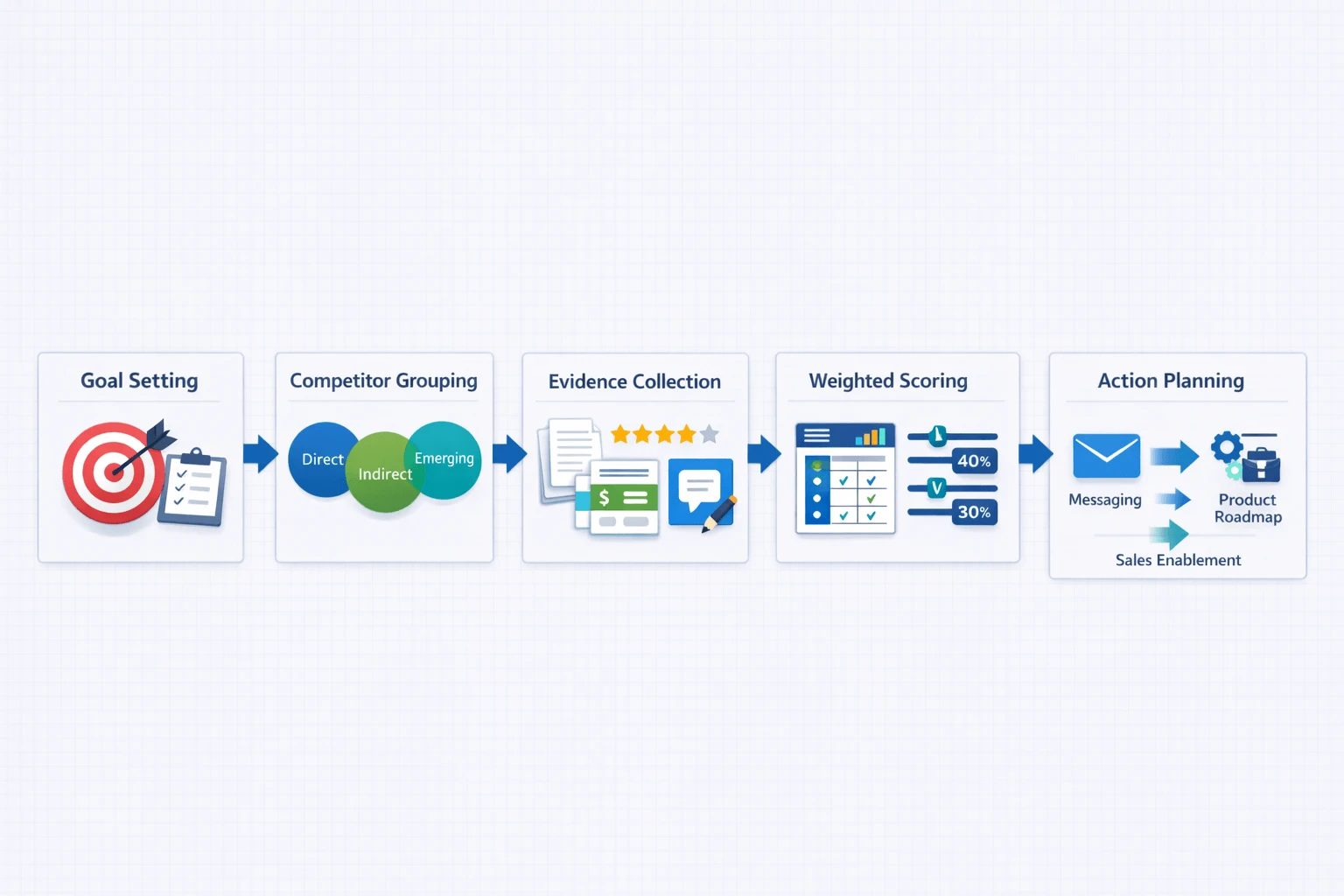
To analyze competitor strengths and weaknesses fast, try TicNote Cloud for free and follow a simple workflow: set one goal, group competitors into direct, indirect, and emerging sets, collect only public proof, score each company with weighted criteria, and turn the results into actions for messaging, product, and sales.
Research gets messy when notes, pricing pages, reviews, and call takeaways live in different places. That slows decisions and makes your competitor gap analysis harder to defend. A shared project workspace can fix that by keeping transcripts, interview notes, snapshots, and cited AI drafts together in one place.
Use the manual method if you want full control. Or speed up synthesis by storing evidence in one workspace and using cited AI outputs to draft matrices, summaries, and a competitor strengths and weaknesses template. Next, you'll see both approaches step by step.
How to analyze competitor strengths and weaknesses without guesswork
A useful review of competitor strengths and weaknesses starts with scope, not screenshots or random notes. Set the goal first, define the market you are judging, and decide what proof counts. That keeps your team focused on decisions instead of collecting facts that don't compare cleanly.
Define the goal and market frame
The purpose changes the scorecard. Product planning may weight roadmap depth and usability. Positioning may focus on messaging clarity and category fit. Pricing review looks at packaging, discounts, and entry points. Sales enablement needs objection patterns and switch triggers. Investor prep usually requires market coverage and defensibility.
Use one simple objective statement: assess five competitors in the U.S. SMB segment over the last 12 months to improve pricing and messaging. Then lock four boundaries:
- buyer segment
- geography
- use case
- time horizon
If you skip this, you compare unlike businesses.
Separate direct, indirect, and emerging rivals
Build a core matrix and a watchlist. Put companies in the core matrix when they overlap on audience, use case, and purchase alternative. A simple model works well:
- Direct: same buyer, same job, same budget
- Indirect: same buyer, different approach
- Emerging: small now, but growing into your space
Prioritize the highest-overlap firms first. Also, look for weaknesses inside strengths. A broad product line can create complexity. Low pricing can signal thin support. Strong brand awareness can hide poor fit for niche buyers.
Choose evidence you can verify
Every claim needs a source: product pages, pricing pages, reviews, case studies, public interviews, sales call notes, or search results. Feature claims matter, but buyer perception matters just as much. Track what customers actually see and feel, then store each finding with the source. If you need a repeatable structure, this guide on building a competitive analysis framework helps turn research into decisions.
Build your competitor gap analysis framework
A useful framework turns competitor strengths and weaknesses into a repeatable scoring system instead of a debate. Start with criteria that reflect how buyers choose, how your category works, and how your team actually wins. Then score every competitor on one scale, attach evidence to each score, and read the matrix for patterns you can act on.
Pick weighted criteria that match your business model
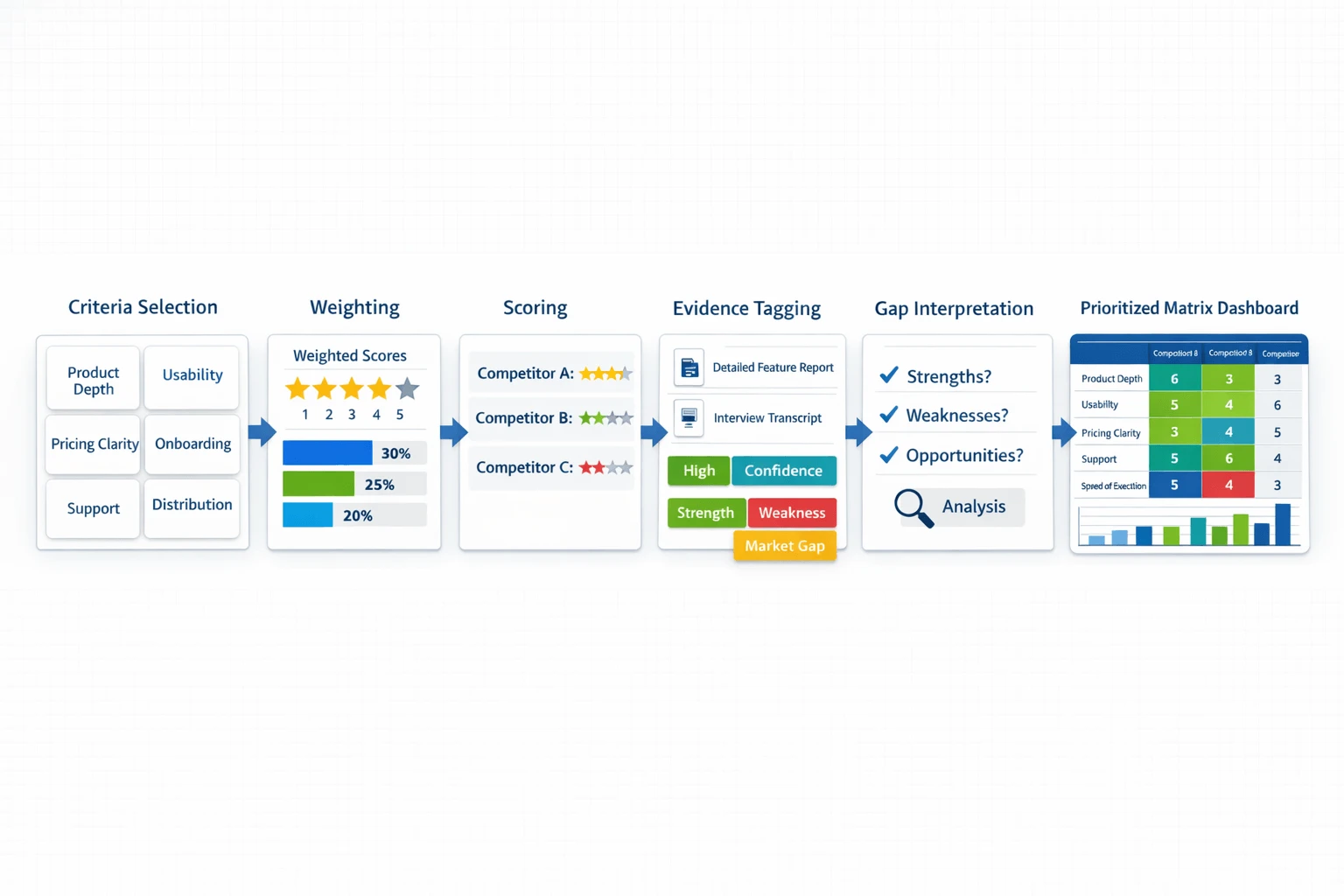
Choose 6 to 10 criteria. That is enough to show real differences without making the matrix messy. Good starting points include the four Ps: product, price, place, and promotion. Then extend the list with factors that often shape buying decisions:
- Product depth
- Usability
- Pricing clarity
- Onboarding
- Support quality
- Distribution reach
- Trust and reputation
- Customer experience
- Speed of execution
- Operational reliability
Not every factor should carry the same weight. A product team may weight usability and onboarding higher. A founder may care more about distribution and speed. A sales team may prioritize trust and pricing clarity. That is fine. The key is to agree on the weighting logic before anyone starts scoring.
Score strengths, weaknesses, and market gaps on one scale
Use one consistent direction, such as 1 for low performance and 5 for high performance. Keep the same scale across every company and criterion. For each score, add written proof: pricing page notes, review quotes, support response tests, product screenshots, or interview feedback.
A simple competitor strengths and weaknesses template should also include:
- Weight
- Score
- Weighted total
- Evidence note
- Confidence level
- Status: strength, weakness, or market gap
That confidence column matters. It helps teams separate validated findings from assumptions.
Interpret the matrix to spot patterns
The goal is not to declare a winner. It is to find openings that repeat. Look for areas where customers complain, where rivals overserve advanced features, where premium pricing lacks support, or where a visible strength creates a tradeoff somewhere else.
In the final article, a comparison chart and weighted scoring matrix will make these patterns easy to present. TicNote Cloud can support this step by organizing meeting transcripts, research notes, and cited AI summaries into one evidence trail, so your competitor gap analysis stays traceable before the team shares conclusions.
Where can you find reliable evidence on competitor performance?
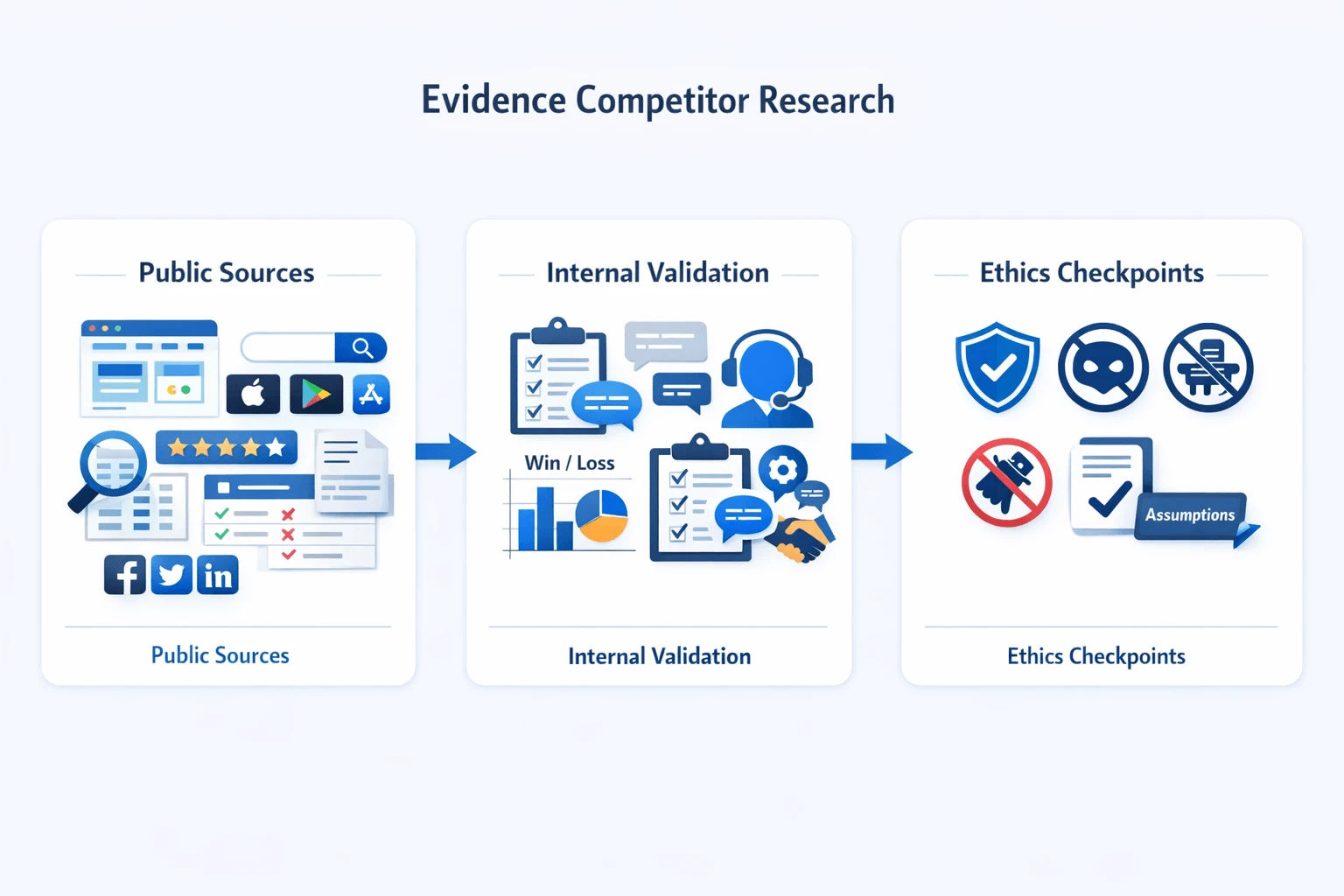
Reliable evidence comes from three places: public sources, internal validation, and clear ethical rules. This is the fastest way to assess competitor strengths and weaknesses without guesswork. Start with what competitors publish, test those claims against real customer feedback, and document every source so your final report holds up.
Use public sources first
Public material gives you a solid baseline for product, price, place, promotion, and sentiment. Focus on sources you can verify:
- Official websites, product pages, pricing pages, and help centers
- Release notes, changelogs, and comparison pages
- Review sites, app stores, and marketplace listings
- Search results, paid ads, and social profiles
These sources show what a company says, how it packages offers, and how customers respond. For a competitor gap analysis, capture exact quotes, publish dates, screenshots when needed, and the source URL. That traceability matters when you revisit the data 30 or 60 days later.
Validate claims with firsthand signals
Public claims are only the first layer. Next, compare them with customer call notes, win-loss notes, implementation feedback, interview transcripts, support patterns, and public signals such as hiring trends or new partnerships. This is where product marketers and consultants connect market research to what buyers actually say.
A project workspace helps here. When call notes, transcripts, and research files sit in one searchable place, it's easier to spot repeated themes and keep source context attached. Tools with editable transcripts and cited answers, such as TicNote Cloud, can make recurring objections and competitor patterns easier to compare across files.
Keep research ethical and usable
Strong research is ethical research. Use this checklist:
- Use public or permissioned information only
- Avoid deception or false identities
- Don't scrape restricted areas
- Respect platform terms
- Label assumptions clearly
Under Federal Trade Commission Act, Section 5, "unfair or deceptive acts or practices in or affecting commerce" are prohibited. Ethics isn't just compliance. It improves accuracy, credibility, and trust in every competitor strengths and weaknesses template you share.
Turn research into action with a competitor strengths and weaknesses template
A good template turns scattered notes into decisions. Instead of listing random competitor strengths and weaknesses, build a simple working sheet that shows what you found, how strong the evidence is, and what your team should do next. That is what makes a competitor gap analysis more useful than a basic SWOT: it connects findings to priorities, owners, and next moves.
Fill in a simple matrix step by step
Use one row per competitor and score each factor on a 1 to 5 scale. Keep these columns:
- Competitor name and type (direct, indirect, or emerging)
- Evidence source
- Criteria score
- Confidence level
- Recommended action
Your evidence source might be review sites, pricing pages, demos, sales calls, onboarding flows, or support replies. Confidence matters because not all signals are equal. A claim seen in three places is stronger than one sales rep comment. If you need a starting point, this competitive analysis worksheet can help standardize inputs.
Compare customer experience, positioning, and operations
Your matrix should compare three layers:
- Customer experience: onboarding friction, review sentiment, service responsiveness
- Positioning: message clarity, feature depth, category promise
- Operations: distribution reach, partner model, delivery speed
This helps you see what buyers notice first, what the brand promises, and what operating model supports that promise. Also look for weaknesses inside strengths. For example, enterprise breadth can create complexity. Convenience can reduce trust or personalization.
Prioritize the gaps your team can actually win
Sort each gap by customer value, strategic fit, and execution effort. High-value, high-fit, low-effort gaps should move first. Then turn the template into a short action list for:
- Messaging updates
- Roadmap changes
- Campaign tests
- Sales battlecards
Keep it tight. Three to five actions are usually enough for one planning cycle. If your team is pulling evidence from interviews, meetings, and market notes, TicNote Cloud can help organize those sources into one project, keep transcripts editable, and generate cited summaries for faster handoffs.
Step-by-step competitor gap analysis workflow
To make this process concrete, I'll show the steps using TicNote Cloud as the example tool for organizing and synthesizing competitor research. The goal is simple: define the right competitive set first, then compare each player with evidence so your competitor strengths and weaknesses analysis leads to decisions, not guesswork.
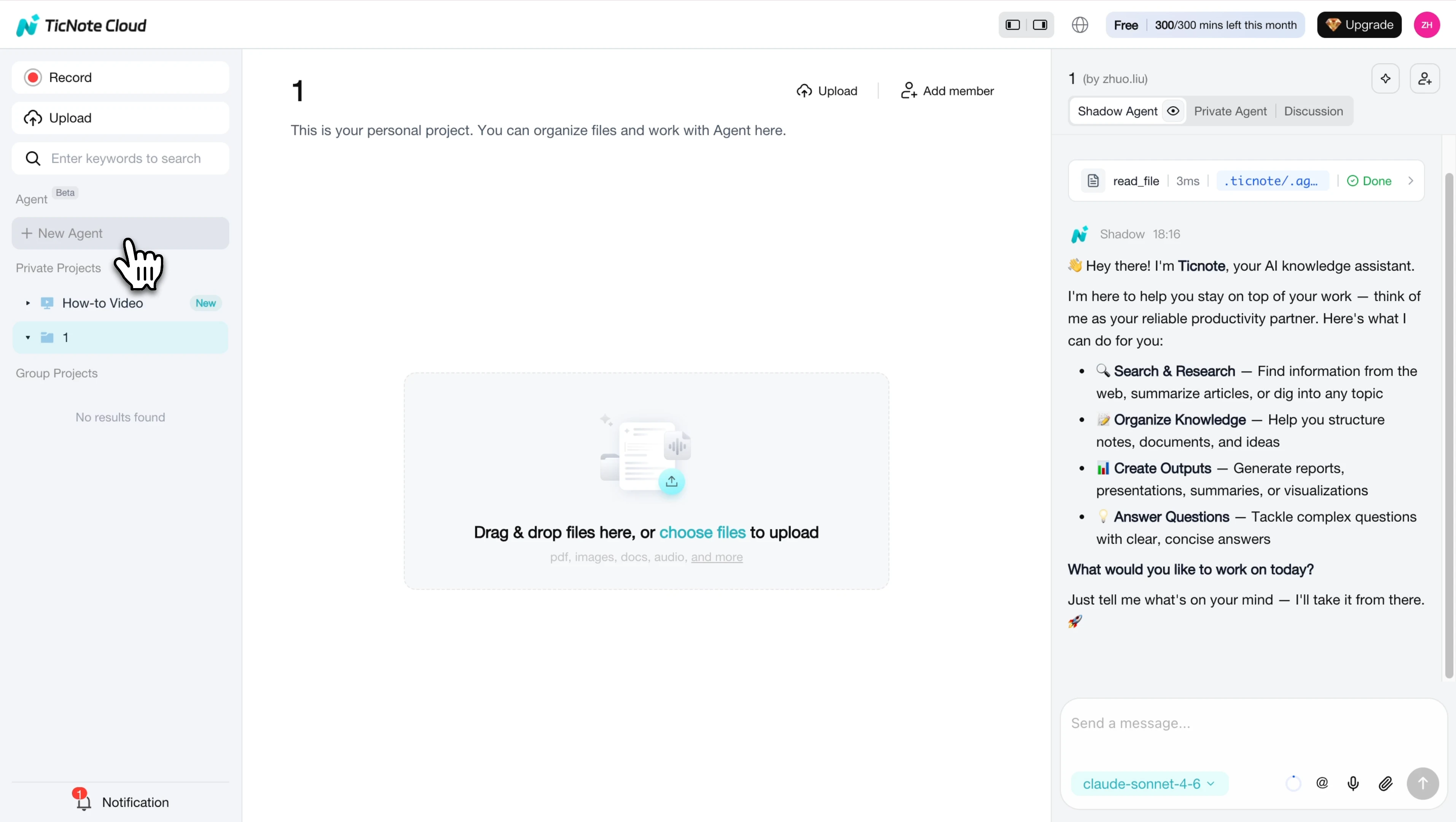
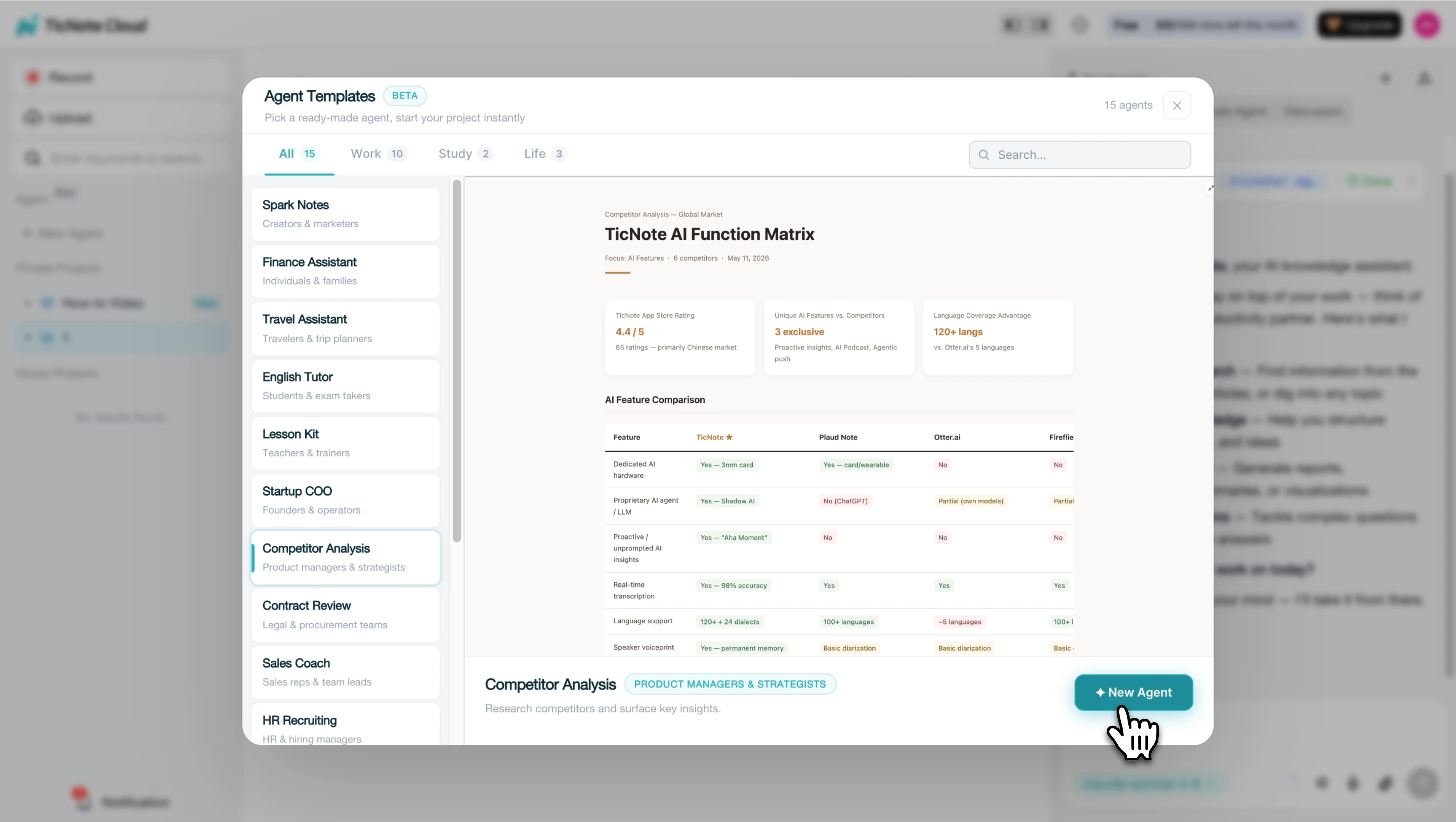
Start in the web workflow by adding the Competitor Analysis skill agent from the library. It appears in your workspace with no extra setup, so you can move straight into research.
Once the agent is added, select it from your list and open the analysis flow.
Next, enter your niche or industry, your location, and 5 to 10 competitor names or URLs. This step matters because it defines the competitive set before scoring begins. If your list is off, the whole competitor gap analysis will be off too.
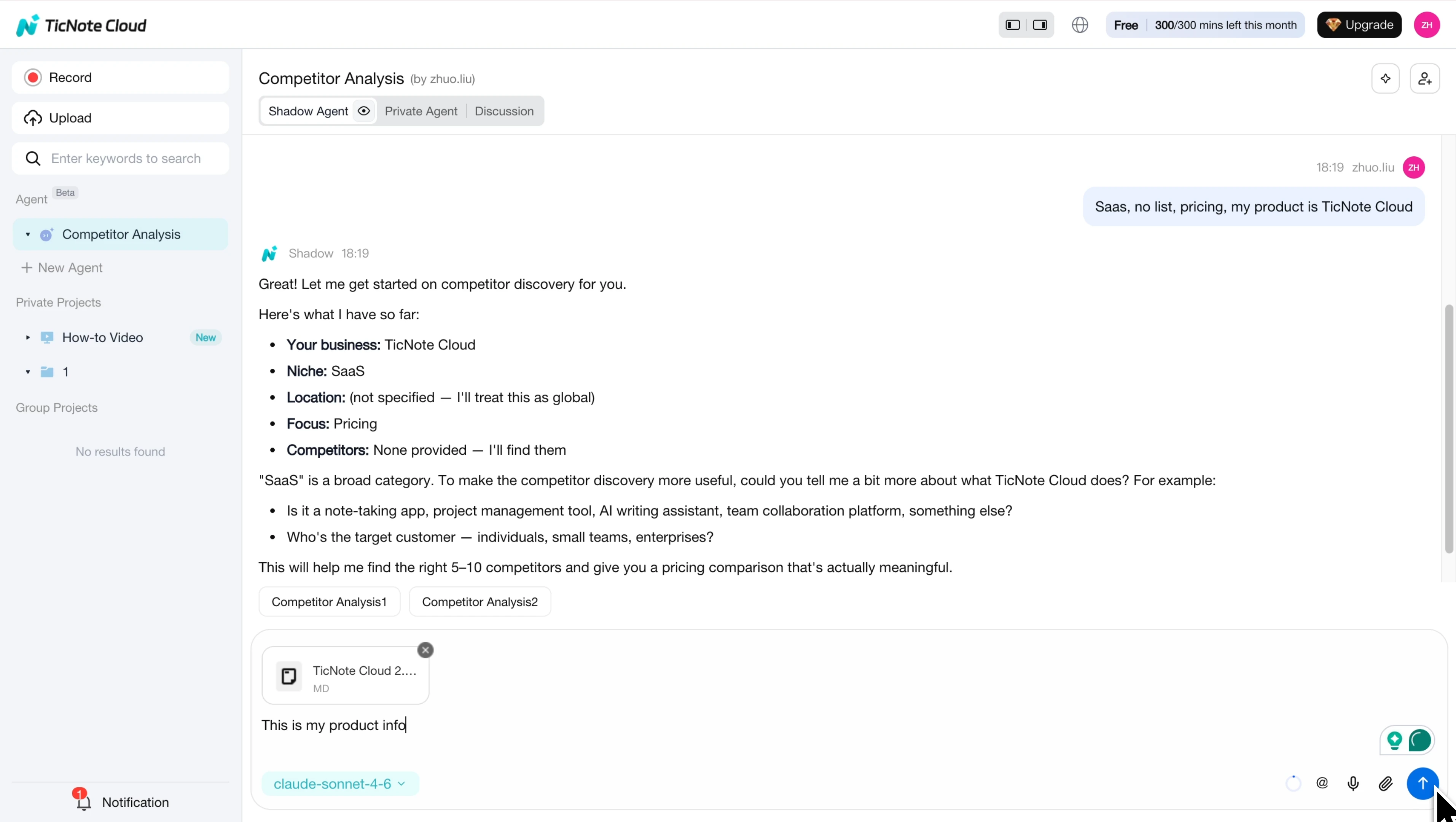
You can also add an optional focus, such as pricing, reviews, social media, or product range. That keeps the output aligned with the team's immediate goal, whether that's repositioning, sales enablement, or product planning. If you want more tool options, this guide to free competitor analysis tools is a useful next read.
The system then returns a full intelligence report: executive summary, comparison table, competitor profiles, market gaps, recommended actions, and a visual matrix. Review the files, refine your prompt if needed, and turn the findings into a stakeholder-ready report or presentation.
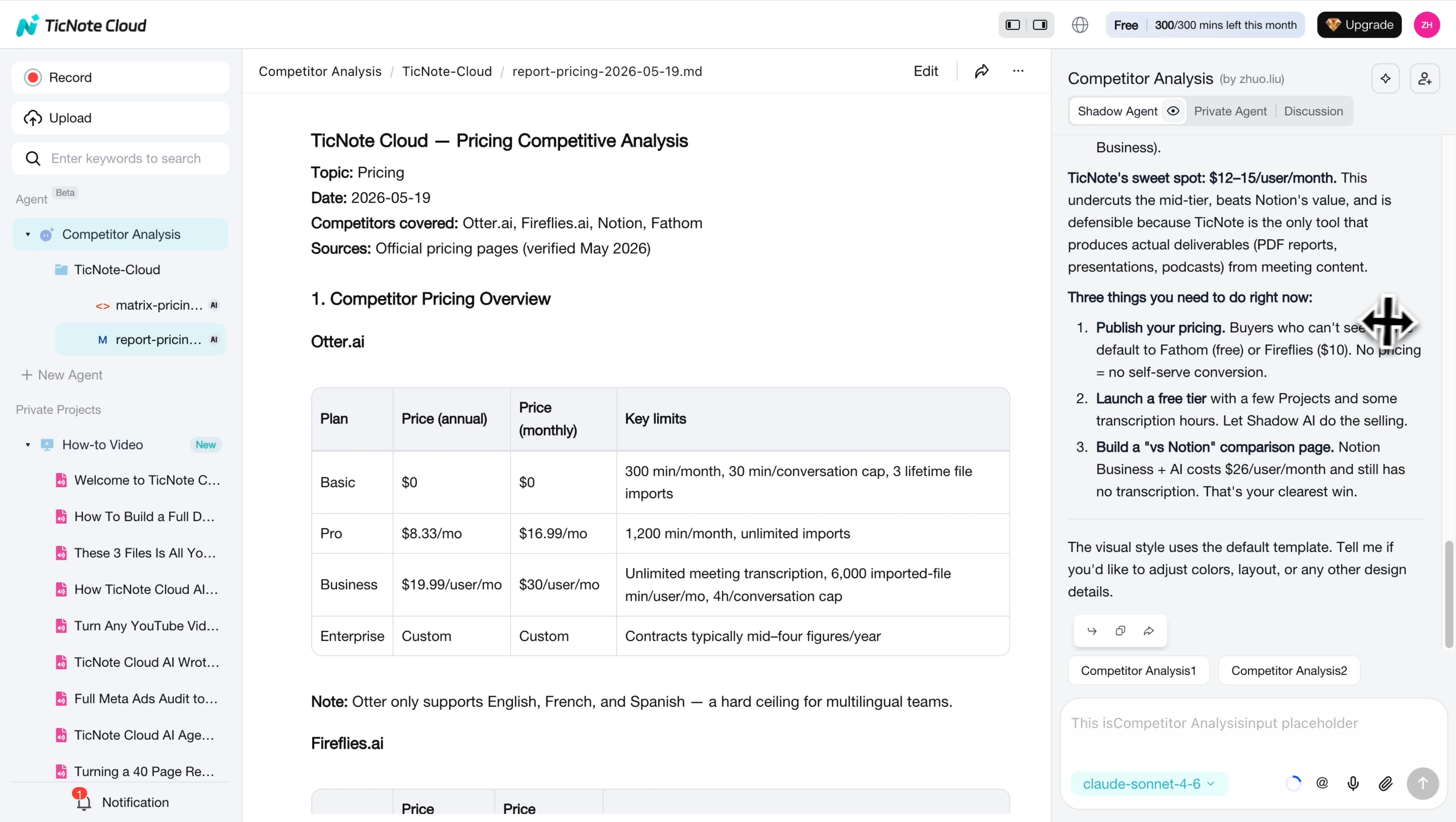
The visual output makes patterns easier to spot, especially feature gaps and SWOT-style trade-offs.
On mobile, the app workflow is lighter: capture meeting notes, upload files, review transcripts, and pull up project materials while research is still happening. Features like project-based memory, editable transcripts, and cited AI outputs help teams track evidence across interviews, calls, and documents without treating AI like magic automation.
Use competitor insights in messaging, product, and sales enablement
Once you map competitor strengths and weaknesses, the next step is simple: turn the matrix into better positioning, better product bets, and better sales tools. Focus on three moves: convert weak spots into messaging angles, use the scorecard to guide roadmap and campaign choices, and review the evidence on a light cadence so insights stay current.
Turn weak spots into positioning angles
Start with patterns, not attacks. If a rival is strong on features but weak on ease of use, your best message may be "faster time to value," not "more features." In many markets, the best positioning answers the weakness inside a competitor's strength. That gives your team sharper claims, stronger proof points, cleaner objection handling, and competitor-aware copy that still stays fair and supportable.
Feed roadmap and campaign decisions
Use the weighted matrix to decide what deserves action now:
- fix gaps that block deals or onboarding
- launch features that close high-value weaknesses
- test campaign angles tied to unmet buyer needs
- equip sales with rebuttals, proof, and examples
Useful outputs include battlecards, landing page updates, onboarding improvements, and content briefs. If you need a model, this guide to turning analysis into an action plan shows how to package findings for teams.
Keep your analysis current over time
Don't rebuild everything every quarter. Review the 5 to 7 criteria that affect wins most, then update only when new evidence appears. Store notes, interview transcripts, screenshots, and source links in one shared workspace so each round builds on the last. Tools like TicNote Cloud help here by keeping project notes, editable transcripts, and cited AI outputs together, which makes ongoing competitor gap analysis faster and easier to trust.
Final thoughts
Strong competitor analysis depends on four things: clear scope, verified evidence, weighted scoring, and disciplined follow-through. When you assess competitor strengths and weaknesses this way, you move from opinion to decisions you can defend.
The goal isn't a 20-page document. It's a clear call on where to differentiate, what to improve first, and which market signals to watch next. Keep your framework simple, update it often, and tie every finding to action.