


 Extension
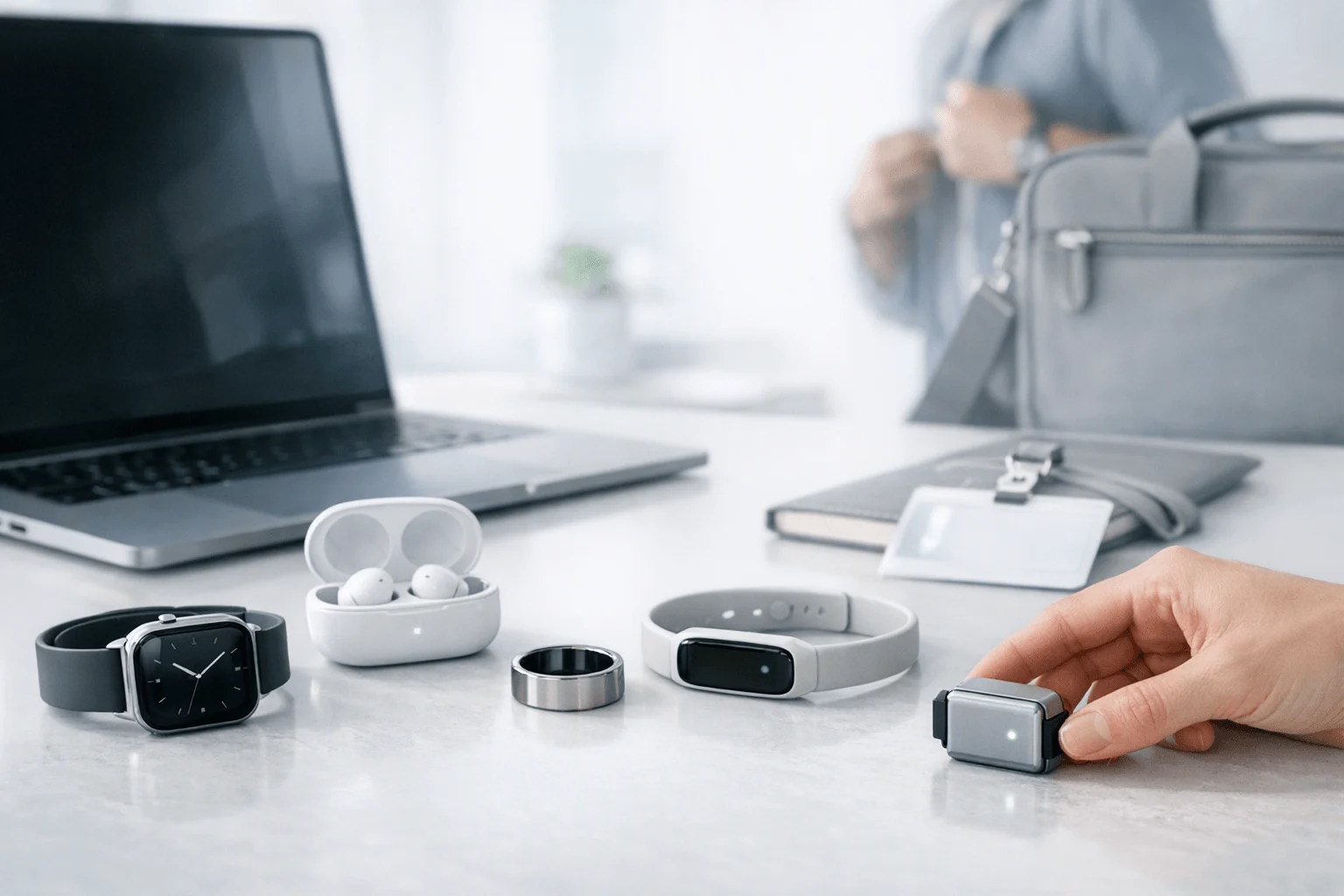
TL;DR: Wearable Tech Today in One View
If you want a fast example of where this category is headed, try TicNote devices: the real shift in wearable tech is that it now helps people capture, process, and act on information in real time, not just count steps or log sleep. In plain terms, wearable technology includes connected devices worn on the body — or carried in body-adjacent forms like smart audio gear — that sense, record, analyze, or surface data while you move through daily life and work.
The core categories to know are smartwatches, fitness bands, smart rings, smart clothing, medical wearables, smart glasses, head-mounted devices, and audio wearables such as smart earbuds. Each category differs in body placement, sensors, connectivity, privacy exposure, and job fit.
TicNote fits this ecosystem as a productivity-focused wearable built for meetings, lectures, fieldwork, and multilingual conversations. It records audio, transcribes speech, generates summaries and action items, and supports translation — and the sections ahead break that down with a simple category matrix and a decision table for work use cases.
What Is Wearable Tech and Why Does It Matter Now?
Wearable tech is any electronic device you wear on the body, build into clothing, or keep body-adjacent for fast, low-friction use. That includes smartwatches and rings, but it also includes newer tools for communication, recording, translation, and task capture. What makes a device a true wearable is not just size. It stays close, works quickly, and captures data continuously or when needed with minimal effort.
Think beyond fitness tracking
A basic gadget is something you take out and use. A wearable is different because it is persistent, easy to reach, and often hands-free. In practice, that means wearables can:
- sense motion, location, sound, or body signals
- connect by Bluetooth, Wi-Fi, or cellular
- process data on-device or in the cloud
- turn raw input into alerts, transcripts, summaries, or recommendations
That shift matters. Better mobile networks and lower-power chips helped move the category far beyond step counting. According to IDC Worldwide Quarterly Wearable Device Tracker (2024 forecast), the global market for smart wearables will grow 6.1% year over year in 2024, reaching 538 million units shipped.
Why these devices matter more at work
Professionals now spend more time in meetings, hybrid calls, site visits, and fast-moving conversations. The problem is simple: important details get lost. Modern wearables help reduce that gap by capturing speech, surfacing action items, improving safety, and giving lightweight access to information without stopping the task at hand.
That is why workplace-focused devices are getting more attention. A smartwatch might surface notifications. An AR headset might guide field work. And an AI wearable device like TicNote fits a newer productivity branch of the market by helping record conversations, generate transcripts, and create summaries without relying on manual notes.
Core parts of a modern wearable
| Layer | What it does | Example output |
| Sensors or mics | Capture signals from the body or environment | Audio, motion, heart rate |
| Connectivity | Send data to a phone, network, or cloud | Sync, upload, live access |
| Processing + AI | Turn raw input into usable information | Summary, translation, alert |
Next, it helps to break the category into the main device types people actually use in daily life and work.
The Main Types of Wearable Devices in Daily Life and Work
Wearable tech now goes far beyond step counts and heart-rate charts. In daily life and at work, the category spans wrist devices, rings, smart clothing, medical monitors, audio wearables, smart glasses, and head-mounted systems. The real difference between them is simple: where they sit on the body, what they sense, how they connect, and which tasks they can handle well.
Start with wrist devices
Smartwatches and fitness trackers are still the most familiar option. They work well for glanceable tasks:
- notifications
- calendar nudges
- heart rate and activity tracking
- quick replies
- contactless payments
- simple timer and task use
At work, that makes them useful for triage. You can screen a message, check a meeting alert, approve a prompt, or log basic health data during a long shift. But they are weak for deep input. Small screens, short battery life on some models, and awkward text entry limit them. They help you react fast, but they rarely capture detailed context from a meeting, lecture, or site visit.
| Device type | Body placement | Common sensors | Connectivity | Work uses | Privacy risks | Adoption barriers |
| Smartwatch / tracker | Wrist | Heart rate, GPS, accelerometer, SpO2 | Bluetooth, Wi-Fi, LTE, NFC | Alerts, quick replies, shift support, payments | Location, health data, message previews | Battery life, small input surface |
| Smart ring | Finger | Heart rate, skin temp, motion | Bluetooth | Sleep, recovery, discreet readiness tracking | Biometric sensitivity | Fewer features, charging size limits |
| Smart clothing / medical wearable | Torso, limb, skin | ECG, respiration, temperature, pressure | Bluetooth, cellular, clinical systems | Safety, rehab, chronic-condition support | Consent, regulated health records | Cost, compliance, specialized fit |
| Audio note-taking wearable | Ear, collar, pocket, chest | Microphones, motion | Bluetooth, Wi-Fi, 4G | Meetings, field notes, translation, call capture | Conversation recording consent | Policy concerns, audio trust |
| AR headset / smart glasses | Eyes, head | Camera, mic, IMU, depth sensors | Bluetooth, Wi-Fi | Remote assist, overlays, training | Always-on camera concerns | Comfort, cost, social acceptance |
Use discreet and specialized wearables for focused problems
Smart rings, connected clothing, and medical wearables solve narrower problems with less friction. Rings are popular for sleep, recovery, and passive wellness tracking because they are small and easy to forget about. Smart clothing adds sensors into shirts, vests, or bands for posture, motion, fatigue, and safety monitoring. Medical wearables go further, often supporting chronic-condition care, remote patient monitoring, or rehab.
These products matter in sports, industrial settings, education labs, and healthcare. But they also raise the bar on consent, accuracy, and governance. A wellness ring is one thing. A regulated monitor tied to patient care or worker safety is another.
Expand the category to audio and vision wearables
Audio-first devices are becoming more important at work because they fit how people actually communicate: by talking. Smart earbuds and AI note-taking wearables combine microphones, hands-free use, portability, and conversational capture in one form factor. That makes them practical for meetings, field inspections, lectures, clinical conversations, and multilingual discussions where real-time transcription or translation can reduce missed details.
For example, earbuds can capture a client call while you walk between meetings. A card-sized recorder can sit on a conference table and turn a workshop into searchable notes. In healthcare and education, the value is similar: less manual note-taking, better recall, and faster summaries after the conversation ends.
Smart glasses and AR/VR headsets add visual layers, remote guidance, and immersive training. They are strongest when workers need hands-free instructions or shared visual context. Their trade-off is obvious: higher privacy concern, higher cost, and lower day-long comfort.
Here is the quick fit:
| Task | Best-fit wearable | Comfort | Privacy tradeoff |
| Notifications and quick triage | Watch | High | Medium |
| Passive sleep and recovery tracking | Ring | Very high | Medium |
| Meetings, interviews, and language support | AI audio wearable | High | High |
| Remote visual guidance and overlays | AR headset | Low to medium | Very high |
If you want a deeper look at this category, this comparison of AI recording devices for work helps show where audio wearables fit against more traditional options.
How Does Wearable Technology Work Behind the Scenes?
Most wearable tech follows the same simple chain: capture a signal, move the data, then turn it into something useful. A smartwatch may track motion, heart rate, and location all day, while a work-focused device may wait for you to press record and capture speech with microphones instead.
Capture signals with sensors or microphones
Wearables collect data through small built-in parts called sensors. Common examples include:
- accelerometers for movement
- optical sensors for heart rate
- GPS for location
- temperature or environmental sensors for context
- microphones for voice and room audio
The key difference is whether the device is always on or user triggered. Fitness bands often track in the background. Productivity wearables usually start when you want them to. That matters for privacy, battery life, and control. In note-taking devices, good microphone placement, noise reduction, and speaker separation help the system tell voices apart and build a cleaner transcript.
Move data through Bluetooth, Wi-Fi, or cellular
After capture, the device has to send or sync the file. Many wearables use Bluetooth to pair with a phone, then rely on the mobile app for storage, settings, and cloud upload. Others use Wi-Fi or even cellular to work more independently.
Here are the tradeoffs:
- Bluetooth: low power, but often phone-dependent
- Wi-Fi: faster uploads, but higher battery use
- Cellular: more freedom, but more drain and cost
- Offline storage: better resilience, but delayed processing
Turn recordings into transcripts and summaries
This is where modern AI makes wearables more useful for work. Audio can be converted into text, then into summaries, action items, translated subtitles, or searchable notes. Some devices process after sync. Others, like TicNote Pods 4G, can generate live summaries during recording, while card-style recorders usually process after upload.
Still, output quality depends on room noise, accents, overlapping speech, supported languages, and model accuracy. If you want the deeper workflow, this guide on how meeting transcription works breaks it down clearly.
See how an AI note-taking wearable fits real workdays
Where Does TicNote Fit Within Modern Wearable Tech?
Most people still think wearable tech means step counts, sleep scores, or wrist alerts. But for work, a growing part of the category is about capturing spoken context: meetings, calls, interviews, lectures, and multilingual conversations. That puts smart earbuds and compact recorders in a useful middle ground between consumer audio gear and full workplace tools.
See smart earbuds as productivity wearables
Smart earbuds can do more than play music or handle calls. In the right setup, they become wearable tools for recording discussions, supporting live translation, and cutting manual note-taking. That matters for consultants moving between client sites, students sitting through long lectures, and field teams who need both hands free.
Open-ear or always-ready designs are especially practical because they reduce friction. You don't have to pull out a laptop, unlock a phone, or type while someone is talking. Instead, the wearable fits into the conversation itself.
Understand where TicNote fits in daily work
TicNote is a clear example of how wearable tech has expanded into productivity. The Pods models fit mobile, conversation-heavy workflows, while the Card and Card Lite cover more discreet in-person recording in a wallet-sized format. In simple terms, it isn't one device trying to do everything. It's a work-centered system built around different settings.
| Device type | Recording depth | Hands-free use | Privacy sensitivity | Best-fit scenario |
| TicNote Pods | High | High | Medium to high | Calls, fieldwork, live conversations |
| TicNote Card / Card Lite | High | Medium | High | Meetings, lectures, table-based discussions |
| Smartwatch | Low | Medium | Medium | Quick reminders, alerts, short voice notes |
| Smart ring | Very low | High | Low to medium | Passive tracking, simple controls |
| AR headset | Medium to high | High | Very high | Guided tasks, remote assist, training |
If you want a deeper look at this category, it helps to see how an AI meeting assistant turns raw audio into usable notes and follow-ups.
Focus on outputs, not just recording
What makes devices like this different is what happens after capture. TicNote devices can provide real-time transcription, translation with bilingual subtitles, highlights, photo sync, summaries, to-do extraction, searchable transcripts, speaker identification, and document generation. That shifts the value from "I recorded it" to "I can use it now."
The model differences matter too. Pods 4G add phone-free recording and live summary during a session, while the Wi-Fi version follows a sync-based flow. The card models are simpler and more discreet, with lower entry pricing starting at $129.99.
A product comparison table works well here because buyers usually care about four things: how deeply a device captures conversation, whether it works hands-free, how sensitive the privacy context is, and where it fits best. For readers who want a concrete example of AI-enabled wearable tech for work, TicNote is a practical one to examine.
What Are the Benefits, Limits, and Privacy Risks of Wearable Tech?
The biggest value of wearable tech is simple: it reduces friction. Instead of pulling out a phone or opening a laptop, you can capture information, check alerts, translate speech, or log activity in seconds. In work settings, that means fewer missed details, lighter note-taking, and faster follow-up after meetings, classes, hospital rounds, and field visits.
Get faster access and better documentation
Good wearables help in small moments that add up over a week. A smartwatch surfaces alerts hands-free. A smart ring tracks passive health signals with less screen time. Audio wearables and AI note-taking devices can document conversations with far less effort than typing notes live.
Key benefits include:
- faster access to messages, reminders, and prompts
- passive or low-friction data capture
- better memory support for tasks, names, and next steps
- safer hands-free use in driving, walking, or fieldwork
- stronger documentation for meetings, lectures, inspections, and consultations
For knowledge workers, the productivity gain is often practical, not flashy. If a wearable turns a 60-minute meeting into a searchable transcript, summary, and action list, it can save hours each week.
Expect trade-offs in real use
Wearables also have clear limits. Battery life is still a constraint, especially on devices that record, stream, or run sensors all day. Accuracy can drop in noisy rooms, with overlapping speakers, or when sensors drift over time. Comfort matters too; a device you stop wearing has no value.
Buyers should also watch for:
- uneven app quality across platforms
- weak interoperability with calendars, docs, and team tools
- false confidence in AI summaries or transcripts
- capture gaps caused by poor placement or weak connectivity
That last point matters most in high-stakes work. Treat transcripts and summaries as assistive outputs, not perfect records.
Check privacy before you trust the device
Privacy is the hardest part of this category. Microphones and cameras can collect sensitive data fast, and the legal and workplace rules vary by region. Under the General Data Protection Regulation (GDPR) (Regulation (EU) 2016/679), "personal data" means any information relating to an identified or identifiable natural person, and "processing" includes recording, storage, and disclosure by transmission.
Before buying, verify these points:
- whether recording consent is required in your location
- who can access audio, transcripts, and summaries
- how long data is stored and where it is hosted
- whether content is encrypted in transit and at rest
- whether user data is used to train AI models
- what admins or employers can see and export
For example, some vendors such as TicNote describe end-to-end encryption, user-controlled sync, and no AI model training on customer content. Those are useful claims, but buyers should still confirm them in a real security review, especially for legal, healthcare, education, and enterprise use.
How Should You Choose the Right Wearable for Your Use Case?
Choose the device for the job, not the hype. The best wearable tech depends on what you need most: health tracking, communication help, visual guidance, or reliable capture of spoken information. If you buy the wrong category, even great hardware feels annoying in daily use.
Start with the outcome you want
Use this simple rule: match the wearable to the task you repeat every day.
- Smartwatches: best for glanceable alerts, step counts, heart rate, and quick replies
- Smart rings: best for passive sleep and recovery tracking with low visibility
- AR headsets: best for specialized hands-free visual work, training, and remote guidance
- Smart earbuds: best for conversations, translation, calls, and mobile note capture
- Card recorders: best for one-press recording in meetings, lectures, and interviews
Pick the form factor that creates the least friction
A manager in back-to-back meetings usually gets more value from smart earbuds or a card recorder than from another health dashboard. A sales rep on the road may prefer earbuds that capture calls and in-person conversations. A student often needs simple lecture capture. Healthcare staff and field engineers usually need reliable documentation, clear transcripts, and strong privacy controls.
For that reason, TicNote Pods 4G fits users who need live summaries while moving between calls, client visits, or fieldwork. TicNote Card Lite makes more sense if you want affordable, simple press-to-record capture without extra setup. If your main goal is turning speech into usable notes, transcribing meetings and lectures should be easy, not another workflow burden.
Use a short buyer checklist
Before you buy, check these points:
- Comfort for all-day wear
- Battery life and charging habits
- Storage capacity and offline recording
- Language support and transcript accuracy
- Privacy controls, encryption, and export options
- Total cost, including device and software plan
A work-focused wearable should save time within the first week. If your priority is documentation, summaries, and action items instead of wellness metrics, TicNote is a stronger starting point than a general fitness device.
See which TicNote device fits your workday best
Final Thoughts
Wearable tech now means more than step counts and sleep scores. It includes devices that help people monitor health, stay safe, communicate faster, and capture useful information while moving through the day. In practice, the best wearable tech is the one that fits your task, environment, privacy needs, and work habits.
- Smartwatches fit quick alerts and light health tracking.
- Rings work best for passive wellness data.
- AR headsets help in hands-free visual workflows.
- AI note-taking devices fit meetings, classes, field visits, and multilingual conversations.
If your goal is to turn conversations into clear records and next steps, a work-first option like TicNote is a practical example worth comparing. It can also support a team knowledge system that keeps notes useful after the meeting ends.