


 Extension

TL;DR: Voice Recorders shortlist for faster decisions
If you want the best overall pick, TicNote AI Voice Recorder is the best AI voice recorder for most people because it combines wallet-size hardware, one-tap capture, real-time transcription, translation, and an included Plus plan. It fits busy meeting-heavy work best, but it also works well for interviews, lectures, and phone-call notes when you want fast setup and clear recap files.
Missed details turn into missed tasks, weak follow-ups, and extra admin later. That gets worse when your recorder is bulky or slow to start. TicNote AI Voice Recorder solves that with simple hardware capture and AI notes that are ready right after the session.
- 1. TicNote AI Voice Recorder — best overall for professionals, students, and consultants who need a compact recorder for meetings, interviews, lectures, and calls.
- 2. Comulytic Note Pro — best for buyers who care most about summary quality after long conversations and review-heavy workflows.
- 3. Open Vision Engineering Pocket — best for users who want long battery life and broad AI model support for extended recording days.
- 4. TicNote Pods 4G — best for mobile users, field teams, and travelers who need live summaries without relying on a phone.
For the full breakdown, check the comparison table and decision guide below.
Which best AI recorders are worth buying this year?
This roundup focuses on dedicated hardware, not phone apps. That matters if you want one of the best AI recorders for real work: something you can press once, trust in a meeting, and carry all day without juggling software. To keep the comparison fair, each device is judged on the same six factors: form factor, real-time transcription, translation, offline use, storage and battery, and ongoing cost. If you're still defining what an AI note device should actually do, this guide to AI meeting assistant basics helps frame the workflow.
Here are the four devices covered in this section:
- TicNote AI Voice Recorder
- Comulytic Note Pro
- Open Vision Engineering Pocket
- TicNote Pods 4G
TicNote AI Voice Recorder
TicNote AI Voice Recorder is the best overall pick for most buyers. The reason is simple: it balances portability, fast capture, and useful AI outputs better than most dedicated recorders. Its credit-card-sized body is 3mm thin, stores 64GB of audio, runs for up to 25 hours, and uses a 3-mic array with up to 10m pickup. In practice, that means it fits in a wallet or pocket and is ready the second a meeting starts.
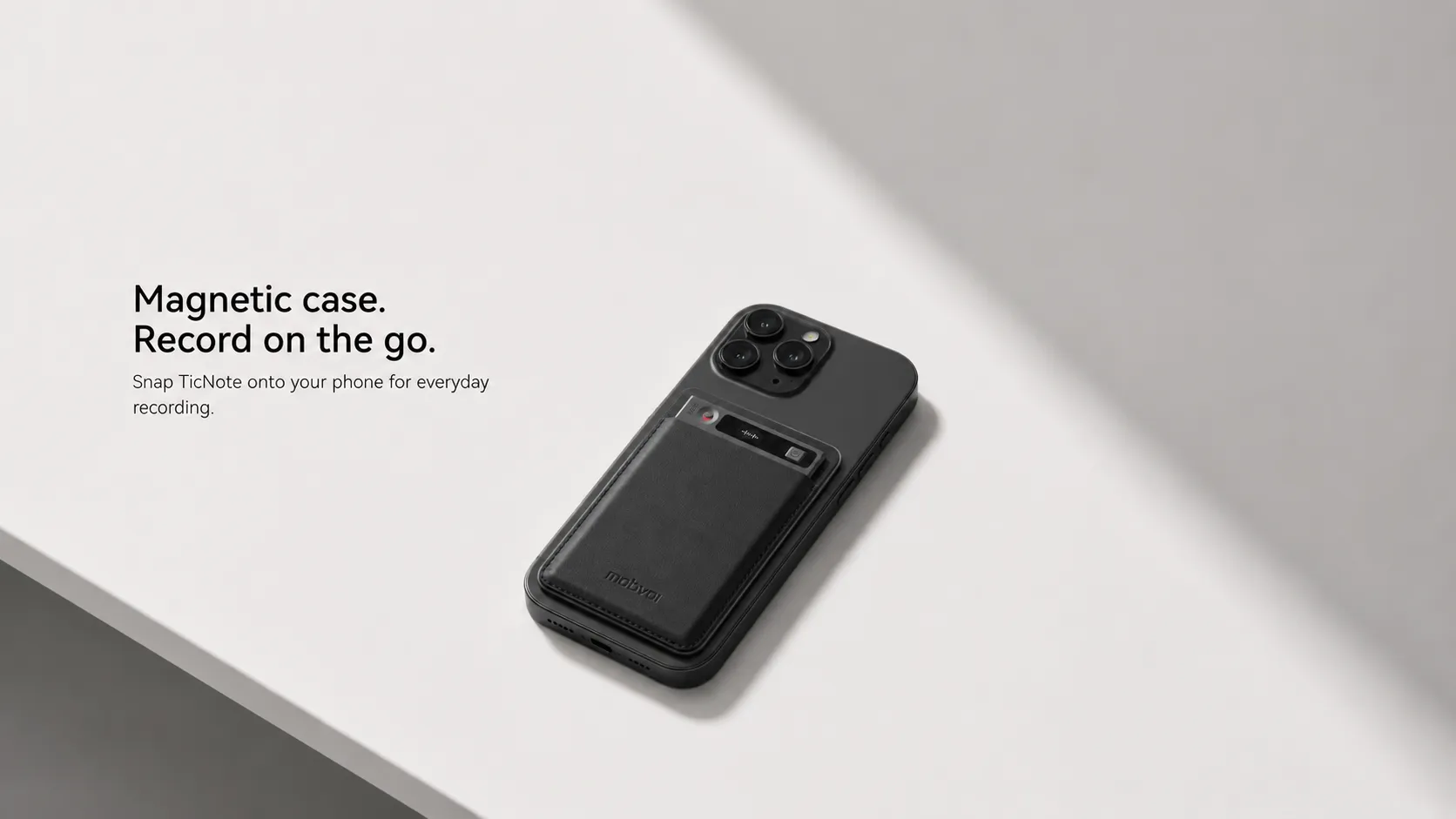 The biggest advantage is speed. You press one hardware button and record without opening an app. For busy consultants, journalists, students, legal teams, healthcare staff, and meeting-heavy professionals, that removes friction at exactly the moment notes usually get missed.
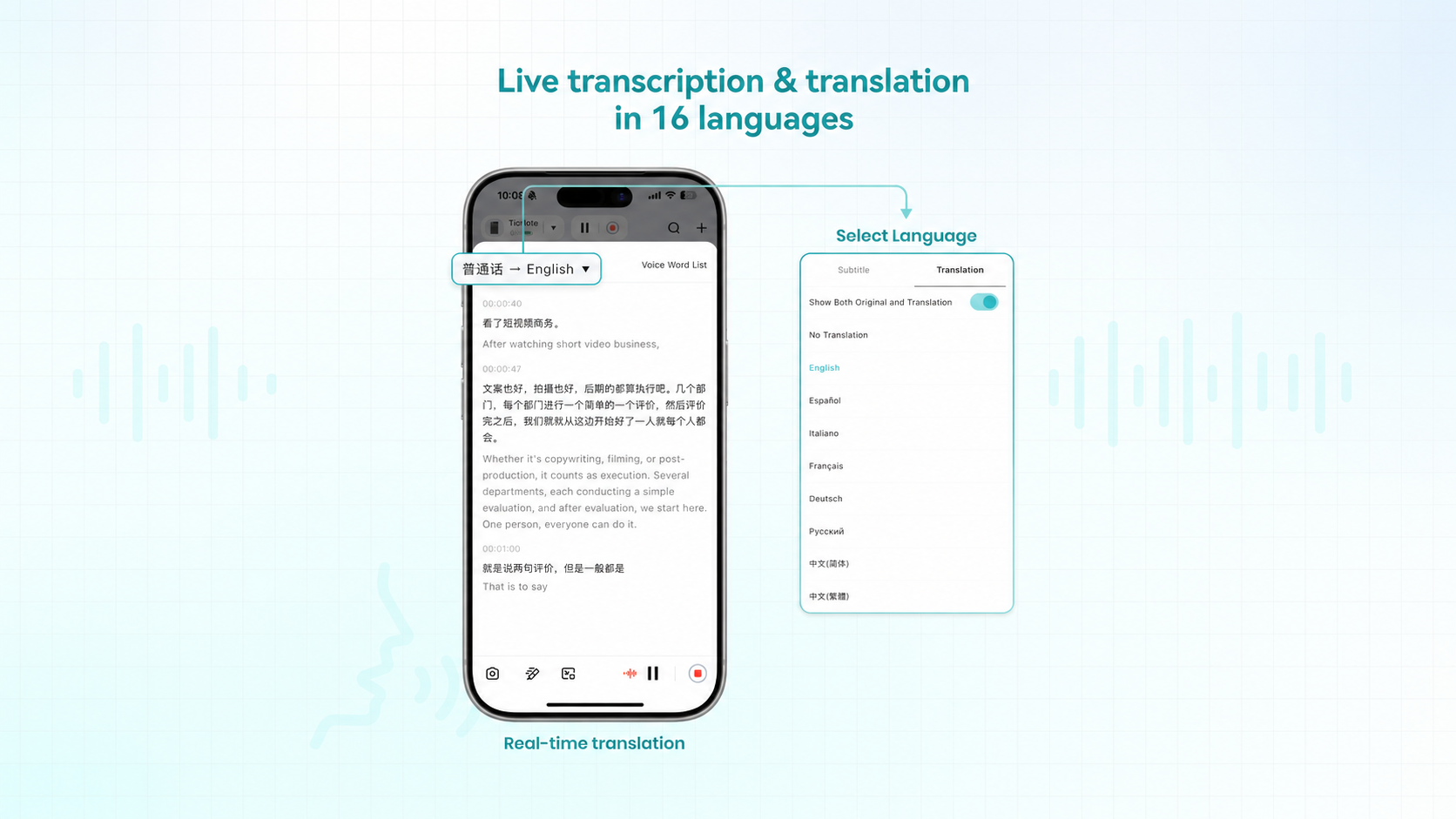
Its AI workflow is also strong. TicNote supports real-time transcription in 16 languages, with broader transcription and translation support across 120+ languages. That matters in multilingual meetings, interviews with mixed speakers, and cross-border client calls. During live transcription, you can highlight key moments, add annotations, and even snap photos that sync to exact points in the transcript. When the recording ends, summaries and to-do lists arrive right away. Later, AI chat can help find quotes, trace decisions, and pull context from past conversations.
Value is another reason it ranks first. The included Plus plan gives hardware buyers ongoing cloud access without an immediate extra software bill. That makes the overall cost easier to justify than devices that need a paid tier to feel complete.
There are tradeoffs. Some advanced outputs depend on cloud-connected features, so it isn't a pure offline AI workflow. And while TicNote makes strong privacy and security claims, buyers in regulated fields should still validate those details during purchase review.
Comulytic Note Pro
Comulytic Note Pro is the best fit for buyers who care more about polished post-meeting summaries than live transcription. Its slim magnetic design is easy to carry, and the 64GB storage plus long 45-hour battery make it practical for long workweeks and back-to-back sessions.
Where it stands out is summary quality. Buyers who mostly review notes after the meeting may prefer its slower, more reflective cloud analysis. If your workflow is "record now, review later," this approach can work well.
The downside is clear: there is no real-time transcription. You won't get live captions, live translation, or in-the-room text support while people are still talking. Analysis also takes longer, which makes it less useful for fast follow-up after interviews or sales calls. And once any trial period ends, the premium plan raises the total cost of ownership.
In short, Comulytic Note Pro is better for summary-first users who can wait. It is not the strongest choice for people who need live visibility during the conversation.
Open Vision Engineering Pocket
Open Vision Engineering Pocket is a strong runner-up for power users. It appeals most to buyers who want very long recording endurance, more AI model flexibility, and high-capacity capture for long sessions.
Its design is thicker and heavier than a slim card recorder, but that extra size supports a more robust recording profile. It attaches magnetically to a phone, includes a call-recording switch, and offers up to 96 hours of recording time. Support for multiple major AI models will also appeal to advanced users who want more control over how transcripts and summaries are processed.
The tradeoff is everyday elegance. It may feel less convenient for daily carry, especially if you want something wallet-sized. There are also practical drawbacks that matter: occasional button-press friction, export issues reported in testing, and a higher subscription burden if you want full history and workflow features unlocked.
For long interviews, all-day workshops, or heavy recording schedules, it's compelling. For simple daily note capture, it can feel like more device than some users need.
TicNote Pods 4G
TicNote Pods 4G is the best choice for interviews, calls, and fieldwork when you need live summaries without relying on a phone. Instead of a card format, it uses an earbuds-plus-case design with built-in 4G connectivity. That means it can capture, upload, and process recordings on the move, even when your phone stays in your pocket.
Its standout feature is live AI summary during recording. That's useful for sales travel, field interviews, mobile consulting, and on-the-go professionals who need an instant recap before the next stop. The system auto-switches between earbuds during calls and the case when idle, so the workflow stays flexible.
Storage is also solid: 32GB in the case plus earbud memory. Battery life depends on connectivity mode, with about 13 hours when 4G is on and around 22 hours when 4G is off. Those numbers are practical for mobile days, but they're still the main tradeoff. This is a pricier device, and cellular use shortens runtime.
For buyers who want live mobile workflows, though, few dedicated recorders match its convenience.
In buyer terms, the choice is straightforward:
- Pick TicNote AI Voice Recorder for the best overall balance of size, speed, language support, and value.
- Pick Comulytic Note Pro if polished summaries matter more than live transcription.
- Pick Open Vision Engineering Pocket if you want maximum endurance and broader model flexibility.
- Pick TicNote Pods 4G if your work happens on the move and you need live recap without a phone.
How the top AI voice recorders compare at a glance
This is the section where product marketing gets translated into a normalized buyer table. Instead of comparing vague claims, the table below lines up the best AI recorders across the same six decision factors: form factor, real-time transcription, translation, offline use, storage and battery, and ongoing cost. I've also added practical buying columns like call-recording friendliness, summary timing, app dependence, and best-fit user so you can judge first-year value, not just sticker price.
Compare the four devices on the same buying criteria
| Device | Price + included plan | Form factor | Real-time transcription | Translation | Offline use | Storage + battery | Call-recording friendliness | Summary timing | App dependence | Best-fit user |
| TicNote AI Voice Recorder | $$159.99; Plus plan included at$$0/yr for hardware users | Credit card-size recorder | Yes, in 16 languages | Yes | Yes, can record to onboard storage; cloud features need sync later | 64GB, about 434 hrs; 25 hrs battery | Strong; lever switch for earphone or speaker mode | Right after recording stops | Low for capture; app/cloud used for AI review | Best all-around pick for meetings, interviews, lectures, and calls |
| Comulytic | Mid-range hardware; plan terms vary by seller | Pocket recorder | No true live transcript emphasis | Limited or post-process focus | Usually yes for recording; AI may require upload | Moderate storage and battery | Good for simple meeting capture | Strong post-recording summaries | Medium | Buyers who care more about recap quality than live tools |
| Open Vision | Mid-to-premium; plan varies by model | Recorder with flexible mode options | Partial, depends on setup | Varies by plan | Yes for core recording | Strong battery life; flexible hardware options | Good, depending on mode used | Usually after upload or processing | Medium | Users who prioritize battery life and recording flexibility |
| TicNote Pods 4G | $$299.99; Plus plan included at$$0/yr for hardware users | Earbuds + charging case with 4G | Yes | Yes | Yes for capture, with live cloud workflow when connected | 32GB case + 256MB earbuds, about 2150 hrs in case; about 13 hrs with 4G on | Excellent for mobile calls and field work | During recording | Very low; no phone needed for core live workflow | Premium pick for road warriors and real-time mobile use |
Read the table the right way
A few clear patterns stand out. TicNote AI Voice Recorder has the best overall balance of price, portability, battery life, storage, and live AI features. Comulytic looks attractive if your top priority is clean summaries after the meeting rather than live transcription or translation. Open Vision stands out for long battery life and model flexibility. TicNote Pods 4G is the premium option if you want the fastest mobile workflow, especially when you need live summaries without relying on your phone.
One clarification matters: "offline AI recorder" can mean two different things. Some devices can record offline to local storage, which is useful and important. But advanced summaries, cloud sync, searchable transcripts, and cross-device AI chat often still need an upload later.
How to choose the right product
This section gives you direct recommendations by use case, not vague buying theory. If you're comparing the best AI recorders, the fastest way to decide is to match the device to how you actually work: desk to desk, room to room, or fully mobile.
Choose TicNote AI Voice Recorder if you want a wallet-size recorder with real-time transcription
For most buyers, this is the safest pick. It's small enough to carry every day, simple enough to use without training, and practical for meetings, lectures, interviews, and client calls.
Why it wins for most people:
- One-tap recording means you can start fast without opening an app
- Credit card-sized hardware fits a wallet, pocket, or phone setup
- Real-time transcription works during the conversation, not hours later
- Real-time translation helps in multilingual meetings
- Instant recap, summaries, and action items reduce post-meeting admin
- Searchable records make it easier to find quotes, decisions, and next steps
The biggest advantage is workflow speed. You press once, record, and get useful output right away. That makes it a strong fit for consultants, sales teams, students, legal users, and anyone who needs one hardware-plus-cloud system instead of juggling separate tools.
Choose Comulytic Note Pro if summary quality matters more than live transcription
This is the better fit if you care more about polished notes after the meeting than seeing text appear live. It suits writers, researchers, and consultants who mostly review conversations later and want cleaner post-call output.
Why it makes sense:
- Better for users who work from final summaries, not live transcripts
- Useful when review happens after interviews or long discussions
- Fits research and writing workflows where synthesis matters most
- Less ideal if you need to verify quotes or decisions in real time
In short, pick it when output polish matters more than live visibility.
Choose Open Vision Engineering Pocket if you want longer battery life and broad AI model support
This is the heavy-duty option. If you run long sessions, want more flexibility around AI models, and don't mind carrying something bulkier, it can be the right tool.
Key reasons to choose it:
- Better suited for long recording days and extended sessions
- Broader AI model support gives advanced users more options
- Good match for technical users who like tuning workflows
- Bulkier design and extra complexity may slow everyday use
It's best for power users who accept a few usability trade-offs in exchange for endurance and flexibility.
Choose Plaud NotePin S if tiny wearability matters most
This is a niche alternative, not the main recommendation. Its tiny wearable design is appealing if discreet carry matters more than anything else.
Keep these trade-offs in mind:
- Very wearable and easy to keep on you
- Better for users who prioritize form factor over value
- Included minutes are more limited
- Ongoing subscription pressure is higher for many buyers
If you're considering it, review this Plaud pricing breakdown before you buy.
Choose TicNote Pods 4G if you need live summaries without relying on a phone
This is the best match for people who work in motion. Sales reps, journalists, consultants, and field teams benefit most because the device can keep up when there is no time to upload files later or sit down with a laptop.
Why it stands out:
- Built-in 4G means no phone is required
- Live summaries arrive during recording, not after
- Strong fit for travel, field visits, ride time, and on-site conversations
- Earbuds-plus-case format supports mobile call and voice workflows
That live summary feature matters when the next meeting starts in 10 minutes and you need the recap now.
Here is the simple rule: for about 90% of readers, TicNote AI Voice Recorder is the safest recommendation. It covers the widest range of real-world needs, keeps the workflow simple, and costs less than always-connected premium hardware while still giving you transcription, translation, summaries, and searchable records in one place.
What exclusive TicNote features change the workflow?
TicNote isn't just another recorder that turns speech into text. It works more like a capture-to-knowledge system: record once, see the conversation live, and turn it into usable output fast. That's a big reason it stands out among the best AI recorders for people who handle meetings, interviews, lectures, and client calls every day.
See live transcription, translation, and summary in one flow
The first workflow change is simple: you don't have to split attention between listening, typing, and remembering. With real-time transcription, you can track what's being said as it happens. Real-time translation also makes TicNote more useful for multilingual interviews, cross-border client calls, and mixed-language team meetings. Then, when the recording ends, the summary and action items are ready right away, which cuts post-meeting admin.
- Follow the conversation without constant manual note-taking
- Translate live discussions across languages
- Get recap and next steps immediately after the session
Link photos to exact transcript moments and search across recordings
This is where the device becomes more than a transcript tool. You can snap a whiteboard, contract page, or lecture slide and sync that image to the exact point in the conversation. Later, you don't have to guess where that visual came from.
You can also chat across recordings to find a quote, decision, or open question. That reduces a common problem: information gets trapped in separate audio files, notes, and screenshots instead of staying connected in one searchable record.
Turn recordings into documents and build a reusable knowledge base
TicNote can turn raw recordings into meeting notes, reports, action lists, formatted documents, slide-ready summaries, and even podcast or research outputs. For teams with repeated calls, that matters. It helps solve three common problems from the start:
- Scattered decisions across meetings
- Hours lost organizing notes by hand
- No shared memory across projects
Used well, recordings stop being one-off files and start becoming a searchable system for ongoing work. If you're building that kind of workflow, it also helps to think in terms of a team knowledge system, not just single transcripts.
What should buyers know about privacy, security, and recording consent?
This section matters because trust is the real deal-breaker with the best AI recorders, especially for legal, healthcare, consulting, and other client-facing work. A recorder can save hours each week, but only if you know when recording is lawful, how data is stored, and who controls the transcript after the meeting ends.
Know the recording law before you press record
Recording rules are not the same everywhere. Some places allow one-party consent, which means one person in the conversation can approve the recording. Others require all-party consent. For example, California Penal Code § 632 states that recording a confidential communication requires the consent of all parties.
The safest habit is simple:
- tell people the meeting or call is being recorded
- get clear verbal agreement at the start
- check local law, employer policy, and industry rules first
Use extra caution with health, legal, finance, education, and job interviews. These often involve sensitive or regulated information.
Verify storage, encryption, and data control
Before you buy, check six basics:
- where audio and transcripts are stored
- whether data is encrypted in transit and at rest
- whether your content trains AI models
- whether you can delete files and set retention rules
- whether logs or traceable actions exist
- which features work locally and which need cloud sync
TicNote is a good example of claims buyers should verify in the policy documents: GDPR-aligned positioning, private-by-default settings, encrypted recordings and transcripts, no model training on user data, and user control over sync and retention. Review the privacy policy, terms, and regional compliance details before recording any client or patient conversation.
Final thoughts on the best AI voice recorders
For most buyers, TicNote AI Voice Recorder is the best AI recorder because it balances what matters most: hardware you'll actually carry, one-tap capture, real-time transcription, translation, and useful outputs like summaries and action items right after a meeting ends. That mix makes it a strong fit for meetings, interviews, lectures, and calls without adding friction to your day.
If your priority is summary-first workflow, Comulytic still makes sense. If you want longer battery life and broader recording flexibility, Open Vision is the better fit. And if you need live mobile recaps while traveling or working in the field, TicNote Pods 4G stands out for on-the-go use.
Before you decide, review the comparison table, check the product links, and if you also want cleaner notes after each recording, this guide on writing meeting minutes faster can help.
See the TicNote device and choose the setup that fits your workflow