


 Extension
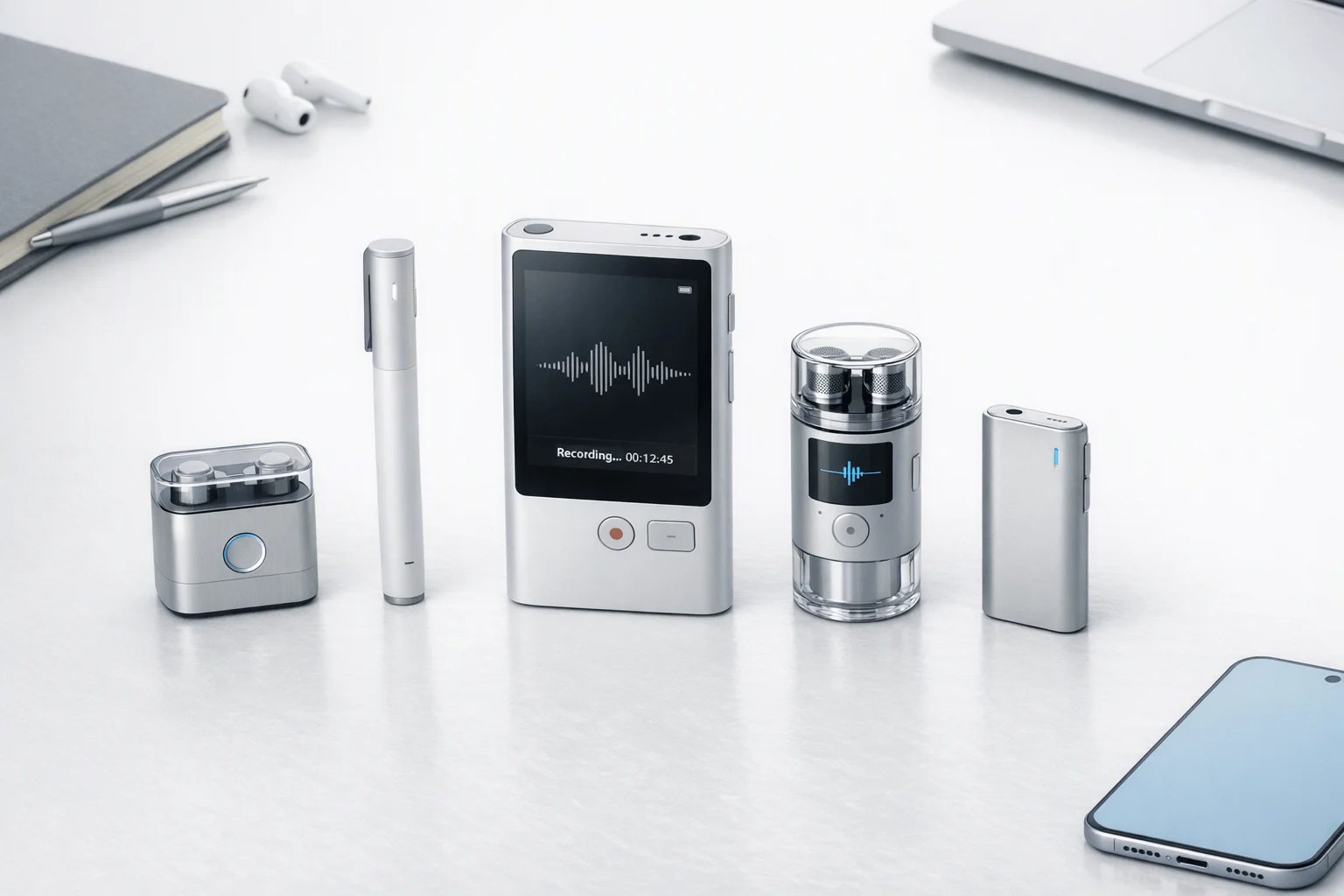
TL;DR: Best AI Note Taker Devices at a Glance
Most AI note hardware promises less typing and better recall, but a lot of it still feels like a voice recorder with extra steps. If you want the fastest safe bet, start with Buy TicNote Device: TicNote Card is the best AI note taking device for most people because it gives you wallet-size hardware, real-time transcription, summaries, and broad coverage for meetings, lectures, and interviews.
- Best overall for most buyers: TicNote Card - $159.99
- Best premium phone-free pick: TicNote Pods 4G - $299.99
- Best budget-minded alternative: Comulytic Note Pro - from $128.99
- Best battery-first option: Pocket - $129
- Best wearable option: soundcore AeroFit 2 AI Assistant - $129.99
In plain English: choose TicNote if you want the most complete everyday system; pick the 4G Pods if live uploads and mid-meeting summaries matter; go with soundcore if you mainly want a wearable, clip-on-style alternative for lighter capture. Subscription-wise, TicNote hardware includes a Plus plan, while some rivals lock better AI features behind paid tiers. See the Device if you want a closer look first.
Which AI note taking device is best for most people?
For most buyers, the best AI note taking device in this lineup is the TicNote Card. It gets the basics right without forcing big trade-offs: wallet-size hardware, one-tap recording, real-time transcription on your phone, translation support, offline capture, 64GB of storage, a 25-hour battery, and a hardware-linked Plus cloud plan included. This is a buyer-first review, so I'll give the verdict early: if you want the safest pick for meetings, lectures, interviews, and calls, TicNote Card is the one to start with.
- TicNote Card: $159.99
- TicNote Card Lite: $129.99
- TicNote Pods 4G: $299.99
- Best fit for most people: TicNote Card
Buy TicNote Device See the Device
Choose hardware when capture quality matters
A dedicated recorder beats an app when your phone needs to stay free, battery life matters, or you need better room pickup in a class, interview, or team meeting. Hardware is also easier to trust in the moment: press once, put it on the table, and keep talking. That matters more than most buyers expect.
That said, app-only tools can be enough if you mostly record short calls at your desk, always wear a headset, and don't mind draining your phone. If your workflow is light, software may save money. If you record often, hardware is usually worth it.
The 5 devices in this review
This review covers five picks: TicNote Card, TicNote Pods 4G, Comulytic Note Pro, Pocket, and Soundcore Work AI Voice Recorder. They made the cut because each offers a clear angle on the category, from wallet-size recorders to earbuds and compact assistants.
Here's what I'm comparing:
- transcription speed and accuracy
- summary usefulness
- battery life and storage
- privacy claims and consent fit
- subscription math over time
- best use cases for students, journalists, consultants, and multilingual users
How our AI Note Taker review compares the top devices
A good AI note taking device is not just a microphone with an app. It has to capture speech well, turn it into a usable transcript, and then produce summaries, action items, and exports you can actually use the same day. That is why this review uses a normalized scoring framework instead of leaning on specs alone.
We score what matters after recording
We weighted each device across six areas:
- Transcript accuracy and speaker separation
- Summary usefulness and action-item quality
- Real-time performance and upload speed
- Battery life and storage practicality
- Hardware usability in daily use
- Total cost of ownership over one year
In plain terms, the best device is the one that saves the most time after the meeting ends. A 25-hour battery sounds great, but it matters less if the summary is weak or the export is messy. We also looked at how well each product handles searchable transcripts, document generation, and follow-up workflows.
We include privacy, legality, and subscription math
Many roundup reviews skip the hard buyer questions. We do not. We check whether cloud processing is optional or required, what the free tier really includes, and how monthly versus annual plans change the long-term price. TicNote stands out here because it pairs hardware with a device-linked Plus plan and self-claimed encryption, including encrypted recordings and transcripts, but careful buyers should still validate those claims in their own security review.
As a benchmark mindset, even formal evaluation programs such as the NIST 2024 Speaker Recognition Evaluation Plan measure system performance using "the Detection Cost Function (DCF) and log-likelihood-ratio cost (CLLR)." That is a reminder that testing needs clear criteria, not marketing language.
We compare real use cases, not lab claims
Throughout the reviews, we focus on six scenarios:
- Conference-room meetings
- One-on-one interviews
- Lectures
- Phone and video calls
- Multilingual conversations
- Field notes on the move
That approach makes trade-offs clearer. Earbuds often win for calls and live translation. Wallet-card recorders are easier in lectures and in-person meetings. Wearable or clip-friendly devices can work better in field settings where hands-free capture matters.
Next, use the comparison table to find the best-fit pick by budget, workflow, and use case.
Comparison table: 5 best AI note taking devices
If you want the best AI note taking device for most buyers, the fastest short list comes down to one question: do you want a slim recorder, wearable earbuds, or a more app-led companion? The table below normalizes the biggest buying factors so TicNote Card and TicNote Pods 4G are easy to compare with Comulytic Note Pro, Pocket, and soundcore AeroFit 2 AI Assistant.
| Device | Form factor | Price | Storage | Battery | Language support | Real-time transcription | Summary timing | Translation support | Call recording | Subscription entry point | Standout hardware trait |
| TicNote Card | Wallet-size recorder card | $159.99 | 64GB | 25 hrs | 120+ languages; real-time in 16 | Yes | Right after recording stops | Yes, real-time translation | Not a core call-first feature | Plus plan included with hardware | 3mm thin card, 10m pickup, lever switch for speaker/earphone mode |
| TicNote Pods 4G | Open-ear earbuds + 4G case | $299.99 | 32GB case + 256MB earbuds | ~13 hrs with 4G on / ~22 hrs off | 120+ languages; real-time in 16 | Yes | Live during recording + instant after stop | Yes | Yes | Plus plan included with hardware | Phone-free recording and live cloud upload |
| Comulytic Note Pro | Portable recorder | $128.99 sale / $158.99 regular | 64GB | 45 hrs | 100+ languages | Not clearly positioned as live on-device | Post-processing summaries | Limited details public-facing | Not highlighted | Premium from $10/month | 45-hour battery, client-profile workflow |
| Small screen-free device | $129 | 64GB + unlimited cloud | 4-day battery | 120+ languages | Not clearly stated as live display | Post-processing notes and actions | Not a core translation-first pitch | Calls supported in broader workflow | Pro at $19.99/month; basic use without subscription | 15m range, unlimited cloud, MagSafe mount | |
| soundcore AeroFit 2 AI Assistant | Open-ear earbuds | $129.99 | Not clearly disclosed | 8.5 hrs / 35 hrs with case | 100 languages | Translation-focused live assistance | Not a dedicated meeting-summary workflow | Yes, real-time translation | Not positioned as recorder hardware | No clear paid plan disclosed | Best fit for translation, not full meeting capture |
Specs, battery, storage, and language claims are vendor-reported and may vary by workflow, sync method, and active features.
Quick winners by category
- Best overall: TicNote Card
- Best premium phone-free option: TicNote Pods 4G
- Best budget alternative: Comulytic Note Pro
- Best battery-focused device: Pocket
- Best wearable recorder: TicNote Pods 4G
Key trade-offs to notice
The big split is live AI versus after-sync AI. TicNote Pods 4G stands out because it can upload and summarize while a meeting is still happening. TicNote Card is simpler: record first, then get the recap fast after the session. Comulytic and Pocket look strong on battery and value, but their public product pages lean more toward post-processing than live in-meeting feedback.
Also check the true cost floor. TicNote hardware includes a Plus plan, while Comulytic and Pocket reserve some advanced features for paid tiers. Form factor matters too: a wallet card is easier in classrooms and conference rooms, while earbuds make more sense for calls, walking meetings, and field work. For the full buying verdict, keep reading the detailed reviews and product-by-product breakdowns below.
The 5 best AI note taking devices reviewed
Picking the right AI note taking device comes down to one question: do you want the best all-around recorder, the best phone-free system, or the best budget fit? After comparing battery life, storage, transcription workflow, and daily usability, TicNote Card stands out for most people because it balances size, speed, and post-meeting output better than app-only setups.
1. TicNote AI Voice Recorder
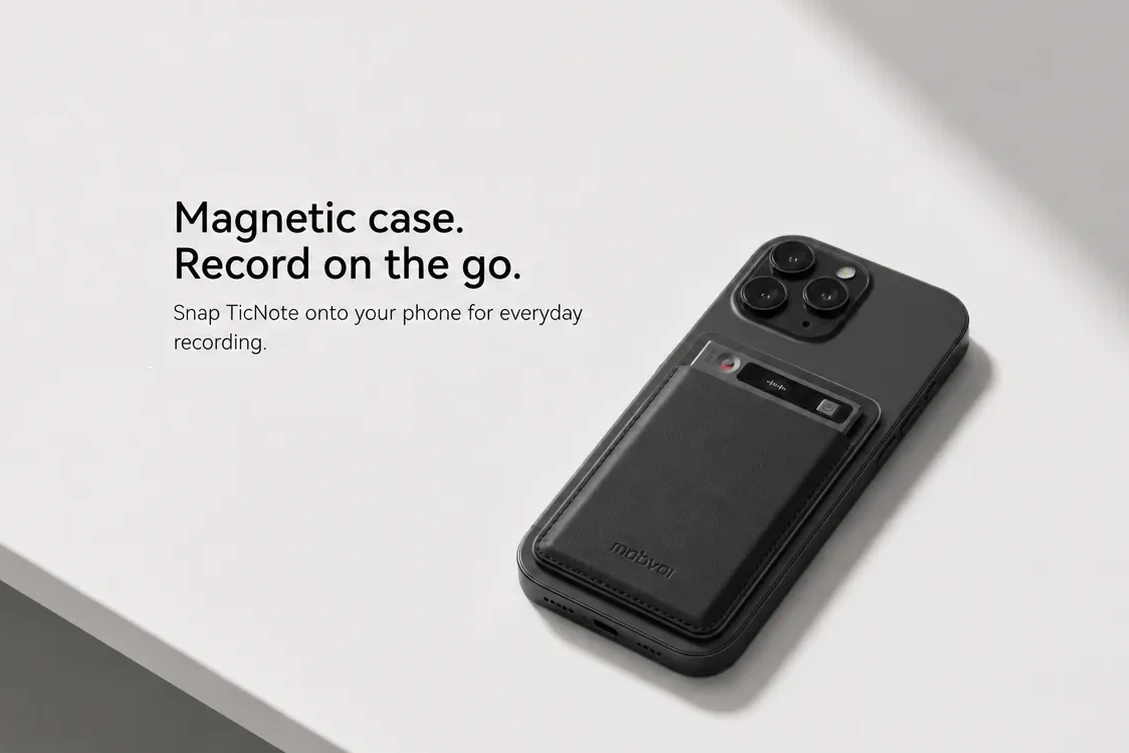
TicNote AI Voice Recorder is the best pick for most buyers. It gives you a credit-card-sized recorder that is just 3 mm thin, yet it still packs 64GB of storage, up to 25 hours of battery life, and a 3-mic array with up to 10 m pickup. That matters in real use. You can slip it into a wallet, tap once, and capture a meeting, lecture, or interview without fumbling with your phone.
What makes it stronger than many app-only tools is the workflow after recording. You get real-time transcription and translation on your phone through Bluetooth or Wi-Fi, then transcripts, AI summaries, and action items once the session ends. In practice, that means less copying, less cleanup, and fewer missed decisions.
Best for:
- Team meetings
- University lectures
- Interviews and research calls
- Professionals who want a recorder they will actually carry
The included Plus plan adds 600 minutes per month and 1,500 monthly credits, which improves the value right away. If you want the premium card design, 64GB storage, and the lever switch between Earphone and Speaker mode, this is the one to buy. If you want the cheaper version and can live with 4GB storage and fewer extras, Card Lite is the logical step-down.
2. TicNote Pods 4G
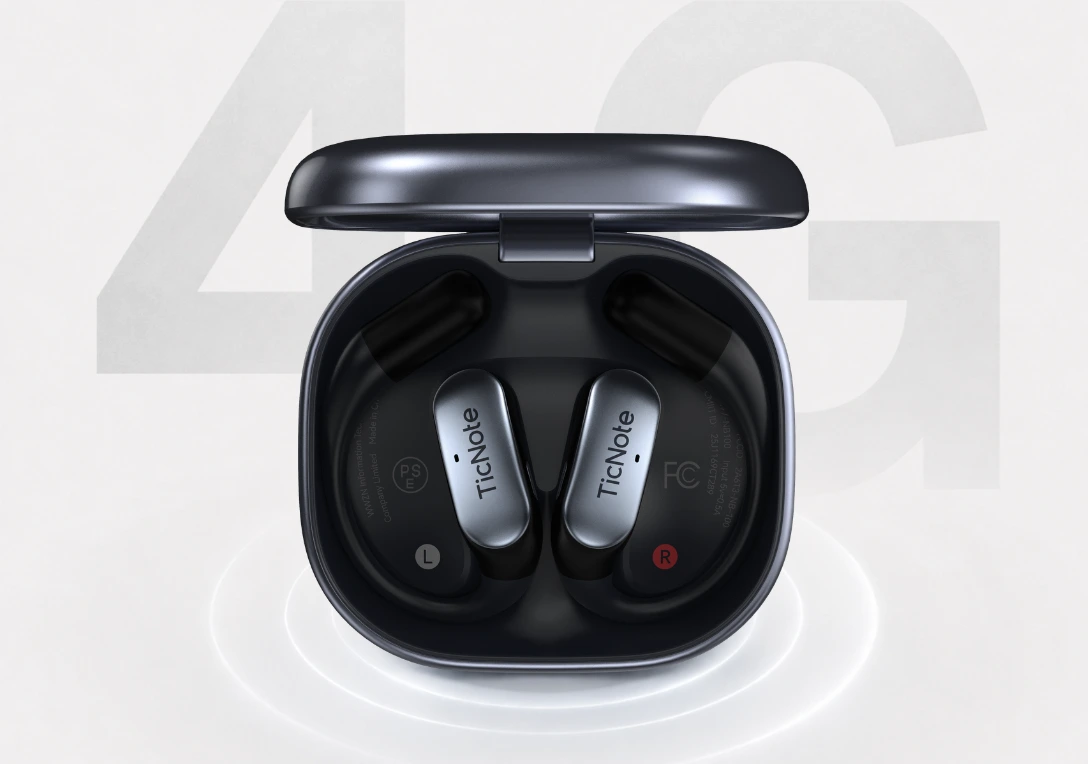
TicNote Pods 4G is the best premium earbud option, and the strongest choice if you need phone-free capture. Its biggest advantage is the built-in 4G eSIM in the charging case. You can record and upload without your phone nearby, which is rare in this category.
It also does more during the meeting than most rivals. You get Live Summary while the session is still happening, Quick Summary right after it ends, automatic call recording when you are wearing the earbuds, and case-based room recording when the earbuds are idle. That makes it a strong fit for consultants, sales teams, and field workers who move between calls, site visits, and in-person meetings.
Trade-offs are simple: it costs more at $299.99, battery life drops to about 13 hours with 4G on, and buyers should check region considerations before choosing the cellular model. Still, if speed and independence matter most, this is one of the most capable hardware systems here.
3. Comulytic Note Pro
Comulytic Note Pro is a solid lower-cost rival for buyers who care most about price and decent AI output. At about $128.99 sale pricing, it competes well on value. You get a wallet-size body, 64GB storage, up to 45 hours of recording, and summaries designed for client-facing work.
Its strengths are clear: long battery life, simple portability, and useful outputs for sales, finance, law, and consulting. But compared with TicNote, it appears less focused on real-time performance and broad workflow depth. If your priority is fast transfer, live visibility, or a richer cross-device knowledge base, TicNote has the edge.
4. Pocket
Pocket is the battery-forward alternative for people who want long stretches of recording and strong AI outputs afterward. It combines 64GB onboard storage, unlimited cloud positioning, 120+ language support, and a 4-day battery claim. It also leans hard into post-recording tools like action items, search, mind maps, and Ask Pocket.
That makes it appealing for founders, doctors, engineers, and other heavy talkers who want extended use without frequent charging. The trade-off is everyday carry. It is more of a dedicated gadget than an invisible wallet tool, so it may feel bulkier and less natural to keep on you all day.
5. Soundcore Work AI Voice Recorder
Soundcore's wearable angle makes sense for users who want the mic close to the speaker. A clip-on or on-body recorder can work better than a bagged phone when you are walking, commuting, or moving between short conversations. That is the main appeal here: more consistent voice pickup from a body-worn position.
Compared with card-style devices, a wearable can be easier for on-body capture but less discreet in formal settings. Compared with earbud-style gear, it is usually simpler for quick recording but less versatile for calls and live listening. So it fits users who want a direct, wearable recorder first, not a broader meeting ecosystem.
If you want the safest all-around choice, start with TicNote Card. If you want the most advanced phone-free setup, look at TicNote Pods 4G. For a quick side-by-side view, jump back to the comparison table, then continue to the dedicated TicNote section for the bigger ecosystem differences.
What makes TicNote different from other AI note takers?
Most rivals do one or two things well. They may record clearly, or translate live, or turn audio into a summary later. TicNote stands out because it combines the full stack in one AI note taking device system: live transcript viewing, bilingual subtitle-style translation, highlights and annotations during recording, photo-to-transcript sync, searchable AI chat across recordings, and fast summaries with action items right after the session ends. That matters in real use, because meetings, lectures, calls, and field notes rarely happen in the same format twice.
Get the right format for how you work
TicNote is easier to buy because the lineup is clear:
- TicNote AI Voice Recorder — $159.99. Best for everyday professionals who want a premium wallet-size recorder with 64GB storage and 25-hour battery life.
- TicNote Lite AI Voice Recorder — $129.99. Best for buyers who want lower-cost, one-button simplicity without a mode switch.
- TicNote Pods 4G — $299.99. Best for travel, calls, and field work because it can upload and generate live summaries without your phone nearby.
- TicNote Pods Wi-Fi — $249.99. Best for global users who want the earbud format and don't need cellular sync.
That range is a real advantage. Many competitors give you one form factor and ask you to adapt your workflow around it.
Cover more use cases with one system
The Card models fit desks, classrooms, and conference rooms well, with a 10-meter pickup range and simple press-to-record use. The Pods models cover moving environments better: calls, walk-and-talk interviews, travel days, and on-site work. The 4G version is the most flexible for mobile professionals, while the Wi-Fi version makes more sense for international buyers who want no region-lock positioning.
Across all four devices, you still get the same core cloud workflow: transcript search, AI Q&A over recordings, document generation, and the included Plus plan for hardware users. In short, TicNote doesn't just sell a recorder. It gives you a hardware-and-cloud workflow that matches how people actually capture information now.
How to choose the right product
The right AI note taking device depends less on specs alone and more on how you actually work. For most people, TicNote Card is the safest pick because it balances size, recording quality, 64GB storage, 25-hour battery life, and fast AI follow-up without pushing you into a bulky setup or a high upfront cost.
Pick the best fit by workflow
- Choose TicNote Card if you want a wallet-size all-rounder. It's the best choice for students, consultants, journalists, and professors who need something slim, reliable, and easy to carry every day.
- Choose TicNote Pods 4G if you need phone-free capture. At $299.99, it's the premium option, but it's also the strongest for travel days, field work, and packed meeting schedules because it can upload and summarize while the session is still happening.
- Choose Comulytic Note Pro if low-cost hardware matters most. At about $128.99 on sale, it's a practical fallback for buyers who care more about price than instant workflows or broader hardware flexibility.
- Choose Pocket if battery life is your top priority. Its 4-day battery makes sense for marathon workdays, long archives, and people who value endurance over a slimmer carry.
- Choose soundcore AeroFit 2 AI Assistant if wearable recording and translation fit your routine better than a dedicated recorder card. It's a better match for mobile conversations, multilingual listening, and lighter note capture on the move.
Buyer shortcut
If you want the best overall value, get TicNote Card. If you need full independence from your phone, get TicNote Pods 4G. If budget leads, choose Comulytic. If endurance matters most, choose Pocket. If you want earbuds first, choose soundcore.
Go back to the comparison table if you're still narrowing by battery, storage, or subscriptions. Choose the TicNote device that fits your workflow best.
Privacy, consent, and subscription costs you should not ignore
An AI note taking device can save hours each week, but the legal and cost details matter just as much as battery life or transcription quality. Before you record any meeting, lecture, or call, check local law, company policy, and industry rules because consent standards vary by country, state, and workplace. That matters most in journalism, healthcare, legal, and HR, where sensitive conversations carry higher risk.
Check consent rules before you press record
In some places, one person can consent to recording. In others, everyone must agree. In the EU, Regulation (EU) 2016/679 (General Data Protection Regulation), Article 4(11) defines consent as "any freely given, specific, informed and unambiguous indication of the data subject's wishes." That is a strong baseline for recorded conversations and transcript handling.
Ask hard questions about privacy
Before you buy, ask five things:
- Where is audio processed: on device, in the cloud, or both?
- Is data encrypted in transit and at rest?
- How long are recordings and transcripts stored?
- Does the vendor train AI models on your data?
- Can the device record offline before sync?
TicNote lists GDPR alignment, encrypted recordings and transcripts, and offline capture as positive signals. Still, verify those claims in the vendor's security documents.
Compare the full yearly cost
"Free" often means capped minutes, limited summaries, or paid upgrades later. For example, included hardware plans may cover 600 minutes per month, while heavier users may need a Pro tier at $79 per year with device ownership. Compare 12-month cost, not just hardware price, and review the comparison table's subscription row before you buy.
Final thoughts on the best AI Note Taker for 2026
If you want the best AI note taking device for daily work, class, and calls, TicNote Card is the strongest overall pick for most people. It keeps the process simple: press once, record, sync, and get transcripts, summaries, and action items without adding more friction to your day.
Here's the short version:
- Choose TicNote Card if you want the best balance of size, battery life, storage, and ease of use.
- Choose TicNote Pods 4G if you want a premium option with phone-free recording and live summaries while the meeting is still happening.
- Before you buy, verify privacy terms, consent rules, and any subscription limits so your total cost is clear.
Good hardware should remove work, not create another app to babysit. If TicNote fits your workflow, now is a smart time to buy; if you're still tracking this category, join our newsletter for future AI note taker updates and hands-on comparisons.