


 Extension
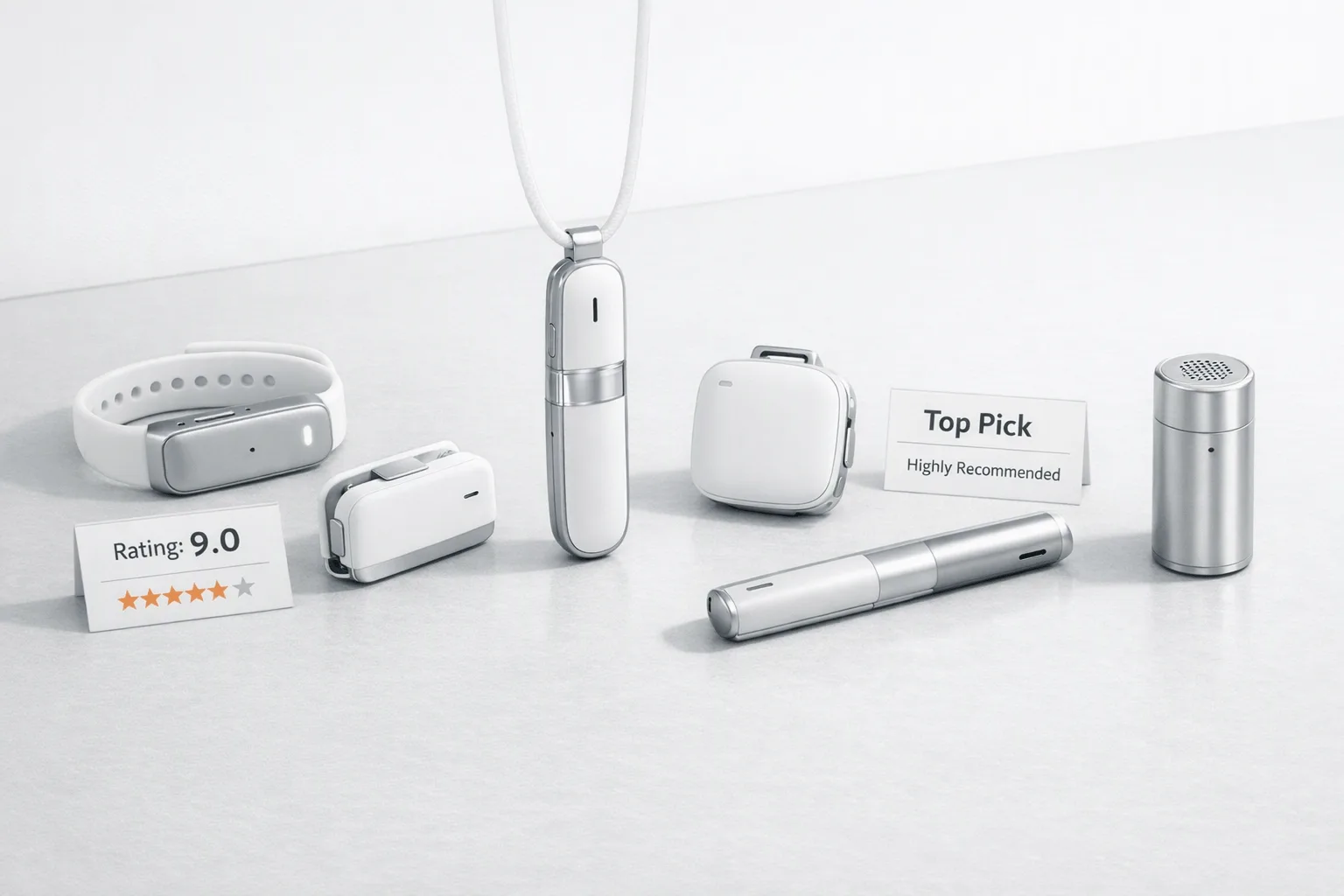
TL;DR: Wearable Tech picks for fast decision-making
If you want the best wearable voice recording setup for work, use Buy TicNote Device or See the Device: it's the strongest overall fit because it combines wearable voice recording, transcription, summaries, and action items in one system. The card and earbud options cover meetings, lectures, calls, and field notes without forcing you into a single workflow.
- Best overall for AI-first work: TicNote
- Best low-cost TicNote option: TicNote Card Lite at $129.99 for simple one-button recording and core AI notes
- Best phone-free wearable option: TicNote Pods 4G at $299.99 for live summaries, upload without a phone, and call recording
- Best non-AI traditional pick: Sony ICD-TX660 for buyers who only want straightforward speech capture without cloud or AI tools
Best wearable voice recording devices reviewed for 2026
The gap in this category is simple: plenty of devices can capture audio, but far fewer turn that audio into something useful right after a meeting. For most buyers comparing wearable voice recording tools, the best options are the ones that balance comfort, clear pickup, battery life, and a workflow that saves real time afterward.
TicNote Card
TicNote Card ranks high because it fits everyday work with almost no friction. It is a 3 mm thin, credit card-sized recorder with a 3-mic array, 25-hour battery, 64 GB storage, and up to 10 m pickup. In practice, that means it slips into a wallet, handles a full day of meetings, and still gives you enough local capacity for heavy weekly use.
Its strongest edge is the workflow after capture. When connected, it supports real-time transcription and translation on your phone. After the session, it turns recordings into transcripts, summaries, and action items automatically. That makes it a strong fit for managers, consultants, and sales teams who need decisions and next steps, not just raw audio.
- Form factor: wallet-friendly card recorder
- Price: $159.99
- Best for: professionals who want premium portability and AI notes
- Why it stands out: strong hardware-to-summary balance
TicNote Card Lite
Card Lite is the lower-cost entry point, but it keeps the core experience intact. You still get one-button, modeless recording, a 3-mic array, 25-hour battery, and AI transcription, summaries, and action items after sync. At $129.99, it is the easiest recommendation for students and budget-conscious teams.
The tradeoff is simpler hardware. It skips the more premium build touches and extras of the Card, so it feels more practical than polished. Still, for buyers who care more about clean capture and useful notes than finish, it offers excellent value.
- Form factor: slim card-style recorder
- Price: $129.99
- Best for: students, interns, and cost-conscious teams
- Main tradeoff: fewer premium extras
TicNote Pods 4G
TicNote Pods 4G is the most advanced pick here. The open-ear earbud design is easier to wear for long stretches, and the built-in 4G eSIM means it can record and upload without your phone nearby. That matters for walking meetings, site visits, client travel, and field work.
It also offers features most rivals do not: live summary during recording, quick summary right after recording ends, automatic call recording while worn, and dual modes for room capture or calls. At $299.99, it is best for consultants, account executives, and field workers who need speed more than simplicity.
TicNote Pods Wi-Fi
Pods Wi-Fi targets buyers who like the earbud format but usually carry a phone. It keeps the open-ear design, AI summaries, and sync-based transcription workflow, while dropping cellular. The upside is a lighter, more global-friendly option with no region lock at $249.99.
This is the best match for users who want wearable capture during lectures, hybrid workdays, and travel, but do not need phone-free upload.
Sony ICD-TX660
Sony ICD-TX660 is the strongest non-AI benchmark in this set. It is slim, easy to carry, and reliable for basic speech recording. According to Sony ICD-TX660 Digital Voice Recorder Specifications, it has 16 GB of built-in memory and up to 17 hours of MP3 128 kbps recording time. But there is no transcript, no summary, and no action-item layer, which lowers its value for commercial users.
Soundcore Work
Soundcore Work is a more discreet wearable alternative and may appeal to users who want light AI help in calls or multilingual situations. But compared with stronger AI-first systems, it is less convincing for multi-speaker room pickup, deep note generation, and structured post-meeting output.
If your goal is searchable records and polished follow-up material, TicNote's card and earbud models are the more complete tools.
How we evaluated each wearable tech recorder
We judged each device with a disclosed, productivity-first method built for real wearable voice recording use. In plain English: a great recorder for commercial use must capture clear speech, turn it into useful notes fast, last through long days, stay comfortable to carry or wear, protect sensitive content, and make financial sense over time. Because most buyers want decisions, summaries, and searchable transcripts more than studio-quality sound, AI usefulness carried the most weight.
Score what changes the workday
We used a 100-point framework:
- AI usefulness: 30 points
- Audio clarity: 20 points
- Battery life: 15 points
- Comfort and wearability: 15 points
- Privacy and control: 10 points
- Value: 10 points
That weighting reflects real buying behavior. A recorder with slightly less polish in noisy audio can still win if its transcript is accurate, its summary is actionable, and its workflow saves hours each week.
Test in real scenarios, not a lab vacuum
Each wearable voice recorder was assessed in the settings people actually use:
- noisy cafés for background chatter control
- lecture halls for distance pickup
- outdoor walking meetings for wind and motion
- conference rooms for multi-speaker recall
- phone-call situations for call capture and transcript usefulness
This scenario method beats generic spec-list reviews because it maps features to actual jobs. A student and a field consultant may both need hands-free recording, but they fail in different ways.
Focus on the buyer's end result
For professionals, the key output is action items. For students, it's clean lecture summaries. For consultants, it's searchable transcripts. For legal and healthcare users, privacy controls and exact recall matter most. If you want more context, see our guide to wearable tech use cases and privacy risks, and sign up for updates if you want future comparison tests and scorecards.
Which wearable voice recorder should you choose?
The right wearable voice recording device depends on where you record, how much AI help you want, and whether you need a card-style recorder or earbuds. If you want the safest all-around pick for meetings, lectures, and daily carry, TicNote has the strongest lineup because it covers simple capture, AI summaries, translation, and searchable follow-up in one system.
Choose TicNote Card for the best everyday balance
TicNote Card is the best choice for professionals who want the most complete mix of portability, battery life, storage, and AI note-taking in a wallet-sized device. At 3 mm thin, with 64GB storage, about 25 hours of battery life, and room pickup up to 10 meters, it fits repeat meetings, lectures, and client sessions better than most pocket recorders.
Its real advantage is workflow depth. You don't just save audio. You get transcripts, summaries, action items, speaker identification, and AI Q&A after sync. For project managers, consultants, and sales teams, that's usually the difference between owning a recording and actually using it.
Choose TicNote Card Lite for lower cost and simple AI notes
If price matters more than premium materials, TicNote Card Lite is the better fit. At $129.99, it keeps the core value: one-button recording, 25-hour battery life, 3-mic capture, post-sync transcription, and AI summaries.
This is the smart pick for students, solo consultants, and small teams rolling out multiple devices. You give up some premium extras, but the core recording-to-summary workflow stays intact.
Choose TicNote Pods 4G for phone-free recording and live summaries
TicNote Pods 4G are the top pick for road warriors, field teams, and sales reps who work while moving. The deciding feature is simple: the case can upload through built-in 4G, so you don't need your phone nearby.
That matters in real life. You can record on-site visits, walking meetings, and calls, then get Live Summary while the session is still happening. If speed matters more than price, this is the strongest AI wearable voice recorder in the group.
Choose TicNote Pods Wi-Fi for global travel and earbud comfort
Choose TicNote Pods Wi-Fi if you want the earbud form factor but don't need cellular upload. They keep the same broad AI workflow, support sync by Wi-Fi and Bluetooth, and avoid the 4G region issue.
They're the right answer for international users, frequent flyers, and anyone who wants open-ear comfort with a sync-based workflow.
Choose Sony ICD-TX660 for basic recording only
Sony ICD-TX660 makes sense if you only want simple speech capture for lectures, interviews, or voice memos. It's a classic recorder choice, not a full AI note system.
So if your goal is reliable audio first and automated summaries second, Sony is fine. But it won't match TicNote for searchable transcripts, action items, or post-meeting output.
Choose Soundcore when discretion matters most
Soundcore's most relevant option works best when subtle wearability matters more than deep notes. It's useful for translation, light conversation support, and low-profile use, but it offers less workflow depth than AI-first recorders built around meetings and documentation.
If you're still narrowing it down, this wearable device comparison guide can help you compare form factor, battery, and use case side by side.
What makes TicNote different from other AI wearable voice recorder options?
Most wearable recorders stop at capture. TicNote goes further by turning wearable voice recording into a usable workflow: record once, get text, summary, action items, and searchable follow-up material. That matters in real work, where the value isn't the audio file. It's what you can do with it next.
Turn speech into text you can use fast
TicNote stands out because transcription is central, not an extra. Across its card and earbud models, it supports real-time transcription, real-time translation, and bilingual subtitle-style assistance. In practice, that helps in four common scenarios:
- meetings where you need searchable decisions
- lectures where you want key points without replaying 90 minutes
- interviews that need quotes fast
- cross-language conversations where live understanding matters
For multilingual teams, this is a real advantage over a basic wearable voice recorder. Instead of saving audio and dealing with it later, you can follow the conversation as readable text appears on your phone.
Get summaries when timing actually matters
Summary speed is one of TicNote's biggest differences. The Card and Card Lite are designed for fast post-recording recaps, which works well for lectures, office meetings, and interviews. The Pods 4G go further: they can deliver Live Summary during an active session and Quick Summary right after recording ends.
That isn't a gimmick. It's useful when you're moving between client calls, site visits, or walking meetings and need the recap before the next conversation starts. In a crowded category, that timing advantage is one of the clearest reasons to consider an ai wearable voice recorder instead of a simple recorder.
Build project memory, not just transcripts
TicNote also does more with captured content after the meeting. Its AI tools can turn recordings into:
- action lists and follow-up notes
- searchable answers with Ask AI
- project-level knowledge across multiple recordings
- formatted reports, documents, and slide-ready outputs
That changes the buying equation for consultants, sales teams, journalists, and other knowledge workers. A basic recorder stores files. TicNote helps turn conversations into reusable work.
Keep control of privacy and sync
Privacy is another key separator. TicNote describes its system as private by default, with encryption in transit and at rest, offline recording, and user-controlled sync. Buyers should still verify security claims during procurement, especially for regulated teams. Under General Data Protection Regulation (GDPR) — Regulation (EU) 2016/679, personal data must be "processed in a manner that ensures appropriate security of the personal data, including protection against unauthorised or unlawful processing and against accidental loss, destruction or damage, using appropriate technical or organisational measures" (Article 5(1)(f)).
For many buyers, that's the real difference: TicNote combines hands-free capture with AI output, searchable memory, and stronger control options in one system.
Comparison table: features, battery, pricing, and best use case
A good wearable voice recording device should be easy to compare across form factors, not buried under brand language. The table below normalizes the key buying points: price, transcription, summary timing, call capture, storage, battery life, pickup range, and who each model fits best.
| Model | Form factor | Starting price | AI transcription | Summary timing | Call recording | Storage | Battery | Pickup range | Best for |
| TicNote Card | Card recorder | $159.99 | Yes | Post-recording | No dedicated call mode | 64GB | 25 hrs | 10m | Professionals who want a slim wallet recorder |
| TicNote Card Lite | Card recorder | $129.99 | Yes | Post-recording | No dedicated call mode | 4GB | 25 hrs | 10m | Budget buyers who want simple one-button capture |
| TicNote Pods 4G | Open-ear earbuds + case | $299.99 | Yes | Live during recording + instant after | Yes | 32GB case + 256MB earbuds | ~13 hrs with 4G / ~22 hrs without | 10m | Field work, calls, and phone-free workflows |
| TicNote Pods Wi-Fi | Open-ear earbuds + case | $249.99 | Yes | Post-upload | Yes | 32GB case + 256MB earbuds | ~22 hrs | 10m | Global travelers and users who keep a phone nearby |
| Sony ICD-TX660 | Slim handheld recorder | ~$159.99 | No native AI | None | No | 16GB | ~15 hrs | N/A | Pure offline recording with no AI layer |
| Soundcore Work | Headset/earbud workflow | Varies by seller | Limited or app-dependent | None or app-dependent | Yes | N/A | Varies by model | N/A | Calls first, notes second |
How to read the table
The biggest split is simple: card recorders win on portability, while earbud designs win on call capture and hands-free use. If you want live AI output, TicNote Pods 4G is the standout; if you want the lowest entry price with AI notes, Card Lite is the value pick.
A final note on scoring logic: "live" means summaries appear during the session, "post-recording" means they arrive after capture ends, and "post-upload" means cloud processing starts once files sync. That distinction matters more than small battery gaps for most buyers.
How to use wearable AI recording safely and effectively
Good results from wearable voice recording start before you press record. You need clear consent, smart device placement, and a simple review workflow; otherwise even the best AI wearable voice recorder can produce weak transcripts or create compliance risk. For calls, healthcare, legal work, or discreet devices, check the law and your workplace policy first. According to Reporters Committee for Freedom of the Press — Can We Tape? (2024), federal law permits recording telephone calls and in-person conversations with the consent of at least one of the parties, but 11 states require the consent of every party to the conversation.
Place the recorder for cleaner audio
- Keep card-style recorders in a shirt pocket, badge area, or table edge facing speakers.
- With earbuds and a case, place the case within about 1 to 3 meters of the main speaker for room capture.
- Reduce clothing rub, bag muffling, and desk vibration.
- Use call mode for phone or online meetings, and room mode for lectures or group discussions.
- Stay within the stated pickup range, but closer is almost always better.
Review fast so notes stay useful
- Scan the transcript right after the session.
- Fix speaker labels and mark key highlights.
- Export action items before they get buried.
- File recordings by client, course, or project.
- Use tools with summaries and AI Q&A to cut re-listening time.
TicNote fits this workflow well because it pairs one-tap capture with summaries, searchable transcripts, and project-based storage.
See how TicNote can simplify secure recording and follow-up.
Final thoughts
The best wearable voice recording device depends on what you value most: better AI workflow, smaller form factor, or true phone-free use. For most buyers comparing wearable voice recording tools for work or school, TicNote is the strongest overall pick because it does more than capture audio. It records, transcribes, summarizes, and turns conversations into usable follow-up fast.
Match the device to the job
- TicNote Card: best for professionals who want a slim wallet-ready recorder with strong battery life and 64GB storage.
- TicNote Card Lite: best value if you want simple one-button recording at a lower cost.
- TicNote Pods 4G: best for mobile users who need phone-free recording and live summaries.
- TicNote Pods Wi-Fi: best for global users who want earbud convenience without 4G limits.
- Traditional Sony-style recorders: still fine for basic audio capture, but they usually stop at recording and leave the note-taking work to you.
If you want a wearable voice recorder that helps you finish the job, not just store the meeting, TicNote stands out. Buy TicNote Device or See the Device, then review the comparison table before you decide.