


 Extension
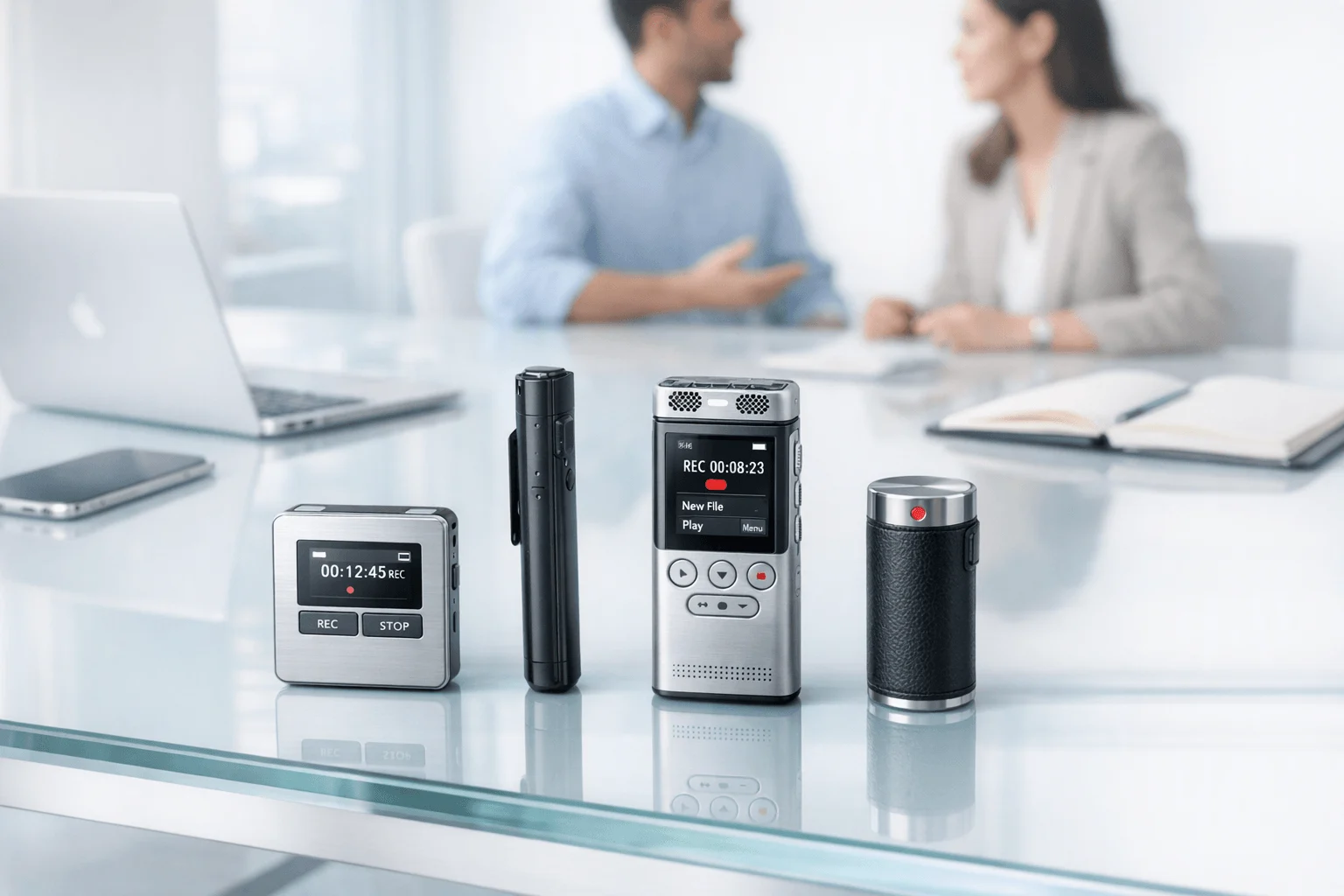
TL;DR: Best Voice Recorders for Sales Calls in 2026
If you want the fastest answer, see the device: the best AI Voice Recorder for sales calls in 2026 depends less on hype and more on workflow fit—phone, video, in-person capture, coaching, or bot-free privacy. After comparing this category by how sales teams actually work, TicNote stands out as the best overall pick for teams that want one system for calls, meetings, and field conversations, with real-time transcription, CRM-ready summaries, and portable hardware.
Software-only tools still make sense in narrower cases. Gong fits mature coaching programs, Chorus suits ZoomInfo-centered teams, and bot-free options like Krisp or Jamie can be better for privacy-first environments. The full comparison table and decision guide below break down where each option wins.
Which AI Voice Recorder for sales calls is best for your team?
The best AI Voice Recorder for sales calls depends on where your reps talk, how often managers review calls, and how much follow-up work needs to flow into CRM. For most SMB and mid-market teams, the fastest answer is simple: pick the tool that matches your sales motion first, then judge the AI notes.
Match the tool to the sales workflow
- Remote SDR teams: Otter or Read AI work well when most calls happen on Zoom, Teams, or Google Meet.
- Field sales reps: TicNote stands out because it can capture in-person meetings, phone calls, and ad hoc conversations without relying on a meeting bot.
- Managers focused on coaching: Gong is strongest for scorecards, pipeline inspection, and trend analysis across many reps.
- RevOps teams: Chorus fits best when your stack already leans on ZoomInfo-style intelligence and snippet sharing.
Best overall: TicNote
TicNote is the most versatile fit for mixed sales teams. Its card recorders cover face-to-face meetings and room conversations, while the earbud-based options handle calls and mobile workflows. That matters if your reps sell across phone, video, and in-person touchpoints in the same week.
It also goes beyond raw recording. You get transcripts, summaries, action items, translation, speaker identification, and project-level AI search. For teams that need a hardware-based sales call recorder instead of a single platform dependency, that's a real advantage. If you're also comparing hardware-first options, this guide to Plaud alternatives is worth a look.
Best for enterprise conversation intelligence
Gong is best for large organizations that want deep coaching and forecast visibility. Chorus is a strong pick for teams already tied to ZoomInfo workflows and snippet-based enablement.
Best for lightweight transcription
Otter and Read AI are good when speed matters more than capture flexibility. They offer fast notes and real-time transcription for sales calls, but they are less suited to field meetings or offline capture.
Best for privacy-first, bot-free workflows
Krisp- and Jamie-style tools appeal to teams that want fewer visible bots in meetings. The trade-off is clear: you may get a cleaner participant experience, but often with less replay depth and less complete archive coverage.
In short, TicNote is the best fit for teams with mixed sales workflows, Gong leads in enterprise coaching, and Otter is best for lightweight software-only notes.
What should sales teams compare before buying?
The best AI Voice Recorder for sales calls isn't always the one with the longest feature list. It's the one your reps will actually use across Zoom demos, phone calls, and in-person customer meetings, while giving managers searchable notes instead of a pile of raw recordings.
Compare the recording method first
Most teams are choosing between three capture models:
- Device-level recording: hardware records the conversation directly. This is often stronger for field sales, phone calls, and in-person meetings.
- Bot-based recording: a meeting bot joins Zoom, Teams, or Meet and records the call. This works well for scheduled video meetings but can hurt call comfort or fail when bots are blocked.
- Native platform recording: Zoom or Teams records inside the platform. This is simple, but coverage is limited to supported meetings.
Here is the practical rule: if your team sells in the field, runs mobile calls, or meets buyers face to face, software-only tools leave gaps. Many revenue teams end up using two systems unless they choose a platform like TicNote that spans card recorder, earbuds, call capture, and room recording.
Judge transcript quality by sales outcomes
Don't stop at "accurate transcription." Sales teams need:
- clear speaker separation
- strong noise handling
- solid performance with accents
- recognition of product names and sales terms
- reliable action items and next steps
- usable summaries of objections, risks, and commitments
A recording is just storage. Searchable notes are what speed up follow-up, handoffs, and pipeline reviews.
Check CRM, search, and coaching workflows
A good tool should help reps log call notes fast and help managers find exact quotes later. Look for CRM-ready summaries, searchable archives, deal review support, and the ability to turn conversations into follow-up docs or reports. TicNote Cloud stands out here because it can generate reports, search across projects, and build a project knowledge base across multiple calls.
Review security and consent risk early
Ask direct questions about encryption, retention controls, access permissions, regional hosting, and whether your data trains models. Also ask how consent is disclosed and logged. Under Regulation (EU) 2016/679 (General Data Protection Regulation), Article 4, "personal data" means "any information relating to an identified or identifiable natural person," which is why recorded sales conversations need real legal review, not just marketing claims.
Comparison table: top AI recorders for sales calls
A good AI Voice Recorder for sales calls should match how your team actually sells. Some teams live in Zoom. Others spend hours on mobile calls or in customer offices. That's why the best way to compare these tools is by recording method, coverage, CRM fit, and how much coaching depth you really need.
| Product | Recording method | Phone / video / in-person | Bot-free | Real-time transcription | Summaries | Coaching depth | CRM readiness | Multilingual support | Storage approach | Pricing transparency |
| TicNote | Hardware recorder + earbuds + app | Yes / Yes / Yes | Yes | Yes | Yes | Moderate | Good export and structured notes | 120+ languages | On-device + cloud sync | Public device pricing |
| Gong | Software + integrations | Yes / Yes / Limited in-person | Usually no | Limited by workflow | Yes | Deep | Strong | Varies by plan | Cloud | Custom pricing |
| Chorus | Software + integrations | Yes / Yes / Limited in-person | Usually no | Limited by workflow | Yes | Deep | Strong | Varies | Cloud | Custom pricing |
| Otter | Software / meeting bot / app | Limited / Yes / Limited | No in many workflows | Yes | Yes | Light | Basic | 6 languages | Cloud | Public tiers |
| Read AI | Software / meeting bot | Limited / Yes / No | Yes in supported meetings | Yes | Yes | Moderate | Moderate | Varies | Cloud | Limited public pricing |
| Krisp | Software layer | Yes / Yes / No | Yes | Yes | Yes | Light | Basic | Varies | Cloud | Public tiers |
| Jamie | Software assistant | Limited / Yes / Limited | Often yes | Limited | Yes | Light | Basic | Varies | Cloud | Public tiers |
For lightweight teams, ease usually wins. For example, Otter Pricing lists a Basic plan at $0/month with 300 monthly transcription minutes and 30 minutes per conversation. That makes software-only tools easy to trial, but they still lean hardest toward remote meetings.
What this comparison shows
Enterprise platforms like Gong and Chorus lead on coaching analytics, pipeline inspection, and manager dashboards. But they're often overkill for SMB teams that mainly need reliable capture, summaries, and clean follow-up notes.
TicNote stands out because it covers the gaps software misses: phone calls, video meetings, and true in-person sales conversations. That matters for field reps, account executives on the move, and teams that don't want bots joining every call.
Callout: TicNote Pods 4G add live summaries while recording, while Card and Card Lite give wallet-size capture for onsite meetings and quick hallway recaps.
If your team sells everywhere, not just at a desk, TicNote is the most flexible fit. If your team needs deep rep scoring and call coaching, enterprise revenue platforms still have the edge.
How does TicNote stand out for sales teams?
For sales teams, the best AI voice recorder for sales calls isn't just the one with clean transcripts. It's the one that fits how reps actually work: desk calls, hallway follow-ups, onsite walkthroughs, and back-to-back meetings in the car or at a client office. That's where TicNote stands out. Its lineup covers card-style in-person capture, earbud-based call recording, and a software layer that turns raw conversations into searchable account history.
Use card-style recording for simple in-person capture
TicNote Card and Card Lite solve a common sales problem: important details often come up away from a laptop. A credit card-sized recorder is easy for account executives and field reps to carry every day, whether they're heading into a discovery meeting, a client check-in, or a coffee meeting between calls.
Card is the more premium option at $159.99. It has a 3 mm aluminum body, 64 GB storage, up to 25 hours of battery life, and a lever switch for Earphone or Speaker mode. Card Lite costs $129.99 and simplifies things further with one-button, modeless recording. For teams that want fewer training issues and lower upfront cost, that simplicity matters.
Why does this help sales? It reduces note loss. Reps can press once, stay present, and leave with transcripts, summaries, and action items instead of partial notes scribbled after the meeting.
Pick Pods 4G when mobile reps need instant recap
TicNote Pods 4G is the most differentiated option for road warriors. The earbud-plus-case design supports call recording during phone use, and the built-in 4G eSIM lets the case upload audio without the rep keeping a phone nearby. That matters when the day is stacked and every minute between meetings counts.
Its biggest advantage is speed:
- Live Summary updates while the meeting is still happening
- Quick Summary arrives as soon as recording stops
- Auto-switching supports calls in earbuds and room capture from the case
- No phone is required for real-time upload
For field sales, that means a rep can finish one conversation and review next steps before walking into the next one.
Buy the TicNote device that fits your sales workflow
Choose Pods Wi-Fi for global teams
TicNote Pods Wi-Fi fits international teams that don't need cellular upload but do need flexibility. It uses Bluetooth and Wi-Fi sync, delivers the same core AI outputs after upload, and has no region lock. For cross-border sales orgs, that makes deployment simpler than hardware tied to a specific network setup.
Turn recordings into account memory with TicNote Cloud
The hardware matters, but the software layer is what makes TicNote useful at team level. TicNote Cloud gives reps and managers more than transcripts:
- Real-time transcription and translation
- Highlights and annotations during live capture
- Photo sync tied to exact transcript moments
- AI summaries and to-do lists after meetings
- Ask AI across recordings and projects
- Document generation for notes, reports, and formatted recaps
- Bulk organization in one workspace
For sales teams, those features map directly to buying needs: CRM-ready notes, coaching snippets, multilingual selling support, and searchable account memory across a book of business. The project knowledge base is especially useful because it turns separate meetings into one queryable history for an account.
If you want a fuller view of which model fits calls, travel, and onsite meetings, this device comparison guide helps clarify the trade-offs. Workflow diagram note: in practice, the flow is simple—record, sync, transcribe, summarize, search, then push insights into follow-up and reporting.
See the full TicNote device family for sales, meetings, and travel
How to choose the right product
The right AI Voice Recorder for sales calls depends less on brand awareness and more on where your team actually sells. If your reps move between mobile calls, Zoom demos, office meetings, and in-person visits, you need one system that can follow the workflow without forcing people to stitch together separate apps, bots, and recorders.
Pick TicNote when your team sells everywhere
TicNote is the strongest fit for teams that need one hardware-backed system across phone, video, and face-to-face conversations. That matters in real sales work. AEs jump from headset calls to laptop demos. Field reps walk into noisy sites. Managers still want transcripts, action items, and searchable notes in one place.
Best fit by SKU:
- TicNote Card: best for reps who want a premium, carry-anywhere recorder that fits in a wallet and handles daily meeting capture with post-call transcripts and summaries.
- TicNote Card Lite: best for budget-conscious reps who want simple one-button recording and the core AI workflow at a lower entry price.
- TicNote Pods 4G: best for field sales teams that need phone-free recording, live summaries during meetings, and automatic call capture when wearing earbuds.
- TicNote Pods Wi-Fi: best for global teams that want the earbud form factor but prefer phone-assisted sync and no region-lock positioning.
This is also where TicNote stands apart from software-only tools. It gives teams flexible capture options, from a card recorder in a pocket to earbuds that can handle calls and room audio. If you want a deeper look at privacy-friendly workflows, this guide to a bot-free note taker is useful context.
Pick Gong when coaching and forecasting come first
Choose Gong if your priority is manager visibility, call review at scale, pipeline inspection, and forecast discipline. It fits larger revenue teams that already run structured enablement and want conversation intelligence more than portable recording hardware.
In plain terms, Gong is better for sales leadership than for field capture. If the main buyer is a CRO, VP of Sales, or RevOps lead who wants coaching dashboards and forecast signals, Gong is usually the cleaner fit.
Pick Chorus when ZoomInfo alignment matters
Chorus makes the most sense for teams already invested in ZoomInfo. If your organization values contact enrichment, account context, and enterprise deal review inside that ecosystem, Chorus can be a logical extension.
It is less about flexible recording form factors and more about tying conversations back to revenue workflows and account intelligence.
Pick Otter or Read AI for simpler software-led notes
Otter and Read AI are solid choices for teams that live mostly inside video meetings and want fast deployment. They work best when you need software-first notes, meeting summaries, and lower rollout complexity.
They are usually a better fit for inside sales teams with predictable meeting stacks than for outside reps who also need dependable in-person capture.
Pick Krisp or Jamie when bot-free matters most
Krisp and Jamie fit privacy-sensitive environments where visible meeting bots are a problem. That can be important for some client-facing calls where bot attendance hurts trust or creates friction.
The trade-off is straightforward: these tools can be a strong match for discreet capture, but they are not always the best option if your team also wants a long-term replay archive, broader hardware flexibility, or stronger support for field sales recording.
Use this buyer framework
Choose based on these three filters:
- Team size: smaller teams often benefit from simpler tools; larger teams may need coaching, admin controls, and forecast workflows.
- Workflow: if reps sell in person and on the phone, hardware matters; if they live in Zoom, software may be enough.
- Compliance posture: privacy rules, consent needs, retention limits, and storage controls should be reviewed before rollout.
If you already know your team needs hardware-backed flexibility across calls, meetings, and field conversations, TicNote is the most versatile buy in this category.
See the TicNote device options for sales calls and field meetings
Legal, privacy, and rollout risks sales leaders should plan for
An AI Voice Recorder for sales calls can save hours each week, but it also creates legal and operational risk if your team records first and asks questions later. Sales leaders need clear rules for consent, storage, access, and adoption before rolling anything out across phone, video, and field conversations.
Follow the strictest consent rule
Recording laws vary by state, country, and where each person is located during the call. If a rep in one state calls a buyer in another country, treat the stricter rule as your default. Use a short script at the start of every recorded conversation, such as: "This call may be recorded for notes, follow-up, and quality purposes." When possible, store proof of notice in the CRM, call log, or meeting record.
Set retention and access rules early
Privacy risk usually starts after the call ends. Define how long audio, transcripts, and summaries are kept, who can open them, and when they must be deleted. For EU-related workflows, Regulation (EU) 2016/679 (GDPR), Article 17 establishes a "right to erasure" requiring the controller to erase personal data without undue delay in specified circumstances. Buyers should review regional hosting, encryption, admin controls, and whether audio is stored in the cloud, deleted after processing, or kept on device until synced. TicNote says it is GDPR-aligned, encrypted, and does not use customer content to train AI models, but procurement should still verify every claim.
Keep rollout simple for reps and managers
Most failures come from weak process, not bad software. Common problems include inconsistent rep usage, vague file names, unclear transcript ownership, and managers trying to review too many calls.
Use a simple SOP:
- require one naming format for every recording
- define who owns transcript cleanup and CRM attachment
- limit coaching to one or two call reviews per rep per week
- pilot with a small team before full rollout
That structure keeps notes searchable, coaching focused, and compliance easier to manage.
Final thoughts
The best AI Voice Recorder for sales calls is the one your team will actually use across phone calls, video meetings, and in-person conversations—and that turns those moments into notes, summaries, and next steps instead of leaving you with raw audio files. For most teams, TicNote offers the most flexible path because it combines hardware capture with AI summaries, call recording options, field-friendly devices, and searchable project knowledge.
That said, narrower needs can still point elsewhere. Gong and Chorus fit teams centered on revenue intelligence. Otter and Read AI make sense for software-first meeting workflows. Bot-free recorders can work well when your biggest concern is discreet in-room capture. If you want more context before deciding, review this guide to AI recorders across meetings, interviews, and calls.