


 Extension
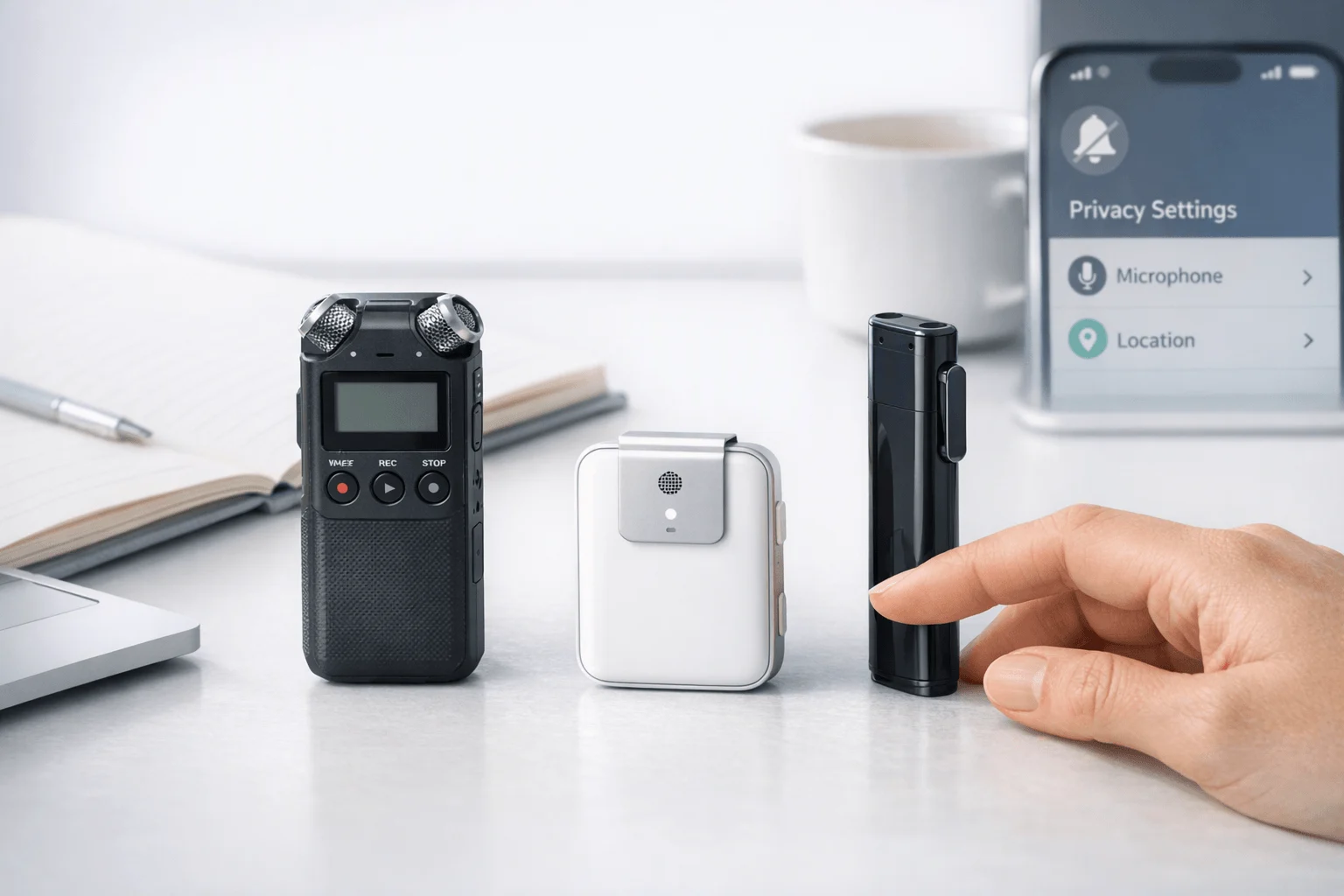
TL;DR: Wearable Tech review snapshot
If you want the fast answer, skip to the comparison and alternatives sections: the AI wearable Limitless idea is strongest for people who want low-friction conversation recall, not for buyers who need strict privacy confidence or polished follow-up workflows. In real use, the appeal is simple: capture more, remember more, search later. The catch is that long-term value depends on how much you trust the system with sensitive context.
- Best for: ambient capture, memory support, lightweight recall
- Less ideal for: regulated work, sensitive meetings, task-heavy workflows
- Market reality: smart concept, weaker buying case now that new Pendant sales have stopped
| Snapshot | Score |
| Hardware design | 8/10 |
| Transcription usefulness | 6.5/10 |
| Privacy confidence | 5.5/10 |
| Buyer value | 5/10 |
For most shoppers, this is a category-defining concept more than a clear best buy. Jump ahead to the comparison table and alternatives if you want a more practical option.
How does the AI wearable Limitless device fit today's wearable tech market?
The ai wearable Limitless sits in a fast-growing category: always-listening devices built to capture spoken interactions, turn them into searchable notes, and help with recall later. In plain terms, it's not just a recorder. It's a memory tool that promises to turn conversations into useful outputs like summaries, reminders, and searchable context. That distinction matters because the real review standard in this market is simple: does the device create better follow-up, or does it just create more audio files?
Define the category by outcomes, not hardware
Limitless fits the new wave of AI wearables that aim to reduce note-taking friction. These products often come as pendants, clips, earbuds, or other screen-light tools you can wear all day. The core pitch is passive capture: talk normally, let the system log key details, and retrieve them later.
What buyers really want, though, is more specific:
- fewer missed details in meetings
- faster summaries after calls
- searchable recall for names, tasks, and decisions
- less manual admin at the end of the day
That's why novelty alone no longer wins. A wearable can look smart and still fail if its notes are messy, delayed, or hard to trust.
See where it fits in the current trend
Limitless belongs to the same broader market conversation as Bee, Pocket, and professional note-taking devices like Comulytic or TicNote. The difference is positioning. Limitless leans harder into all-day memory and contextual retrieval, while some rivals focus more directly on meetings, summaries, and action items.
This is still an early category. Many devices sound compelling in demos, then show workflow gaps in daily use: weak consent handling, unclear summary quality, limited battery confidence, or notes that never become real tasks. So shoppers now compare AI wearables less by form factor and more by note utility.
Understand why demand keeps rising
Interest is rising for a reason. Professionals are overloaded with calls, meetings, and voice notes. Many want one device to record, summarize, and make follow-up searchable without opening a laptop every time. Passive capture feels easier than active note taking, especially during commutes, client conversations, and back-to-back meetings.
In that sense, Limitless makes sense as a category product even if the market is still maturing. If you want a broader wearable note-taking option with more structured meeting outputs, TicNote is the more complete alternative because it pairs hardware capture with transcripts, summaries, action items, and multiple form factors.
What is the real user experience like day to day?
Day-to-day use is where devices in the ai wearable Limitless category either feel invisible or become one more thing to manage. A strong review should judge the basics first: how fast it pairs, whether the app explains permissions in plain English, how clear the recording controls are, and whether onboarding tells you exactly when the device is listening, saving, or idle. Buyers in this category want a low-maintenance tool, not a wearable that needs constant second-guessing.
Check setup before you trust it
The first 10 minutes matter more than most spec sheets admit. Good onboarding should make five things obvious right away:
- how to pair the device
- what permissions are required
- how to start and stop recording
- what each light, vibration, or sound means
- where to confirm that a session actually synced
If any of those steps are fuzzy, trust drops fast. In practice, the best wearable recorders let you confirm capture within 2 to 5 seconds. You should know, at a glance, whether the device is actively recording, paused, muted, or simply connected.
Wear it all day or leave it at home
Form factor decides whether a wearable becomes useful or forgotten. A pendant may sit well over a shirt but feel too visible with formal clothing. A clip can be more discreet, but it may shift during commutes or catch on jackets and bags. That sounds minor, but comfort problems stack up over an 8- to 10-hour day.
Battery claims also need context. "All-day battery" only means something if the device is handling realistic use: several meetings, walking outside, short voice notes, and idle time between sessions. Reviewers should also test sweat, train commutes, pocket carry, and repeated charging. Weather resistance and durable clasps matter because professional wearables get bumped, moved, and worn for long stretches.
Test recording in three real settings
Raw audio capture is not the same as dependable conversation capture. That distinction shows up fast in mixed environments.
- Meetings: Check speaker pickup across a table, overlapping voices, and whether summaries stay usable when 3 to 6 people talk.
- Commutes: Test traffic, station noise, wind, and body movement. This is where false captures and muffled speech usually appear.
- Casual conversations: Review how well it handles quick exchanges, turning your head, and moments that start before you remember to record.
The key question is consistency. A good device should move from a quiet office to a noisy sidewalk without missing obvious speech or creating too many junk clips. If you want broader device context, this guide to wearable voice recorder picks compares how these tradeoffs play out across the category.
Which features matter most in this review?
In any ai wearable Limitless review, the features that matter most are not the flashy ones. Buyers care about one simple outcome: can the device capture a conversation, turn it into a clear recap, and help you act on it later without wasting time fixing the output. That's the standard that separates a clever demo from a tool you'd trust in real work.
Judge transcript quality by usefulness, not perfection
A good transcript does four things well:
- captures the main ideas accurately
- separates speakers clearly
- preserves decisions, promises, and deadlines
- lets you jump back to the original audio fast
Perfect word-for-word transcription matters less than people think. In day-to-day use, the real test is whether the summary keeps the context intact. If a meeting ends with three owners, two deadlines, and one open risk, the app should surface that in seconds, not bury it in a long wall of text.
Summary speed also matters. Some devices generate recaps only after upload, while stronger products now push summaries during or right after the session. That changes the workflow. A fast summary is useful before your next meeting; a delayed one often becomes another item to clean up later.
Measure task capture like real work depends on it
An AI note taker wearable should do more than store conversations. It should turn talk into next steps.
When I score this category, I look for:
- action items with clear owners
- reminders or follow-up prompts
- usable recap formats for email or team syncs
- consistent extraction of commitments and decisions
This is where buyer expectations have risen fast. Limitless-style wearables are no longer judged only on memory and recall. They're judged on whether they can produce structured outputs that save 10 to 15 minutes after every meeting. Products like TicNote, for example, push harder on summaries, to-do lists, searchable projects, and document generation, which makes basic conversation logging feel incomplete by comparison.
Prioritize search, stability, and long-term note value
The first week is about novelty. The third month is about retrieval.
That's why a strong review framework should check:
- app stability during long recordings
- search across old conversations
- playback synced with transcript text
- tags, folders, or project views
- cloud access across phone and desktop
The best devices make old conversations more useful over time. Search should help you find a promise, quote, or client detail in seconds. Playback sync should let you verify meaning without scrubbing through an hour of audio. And the app should stay stable enough that you trust it with important meetings.
If you want to compare how these expectations stack up across the category, see this AI wearable buyer's roundup before narrowing your shortlist.
Privacy, consent, and trust: are the tradeoffs acceptable?
For many buyers, this is the make-or-break issue with an ai wearable limitless-style device. The core question isn't just whether it can record well. It's whether the product makes responsible recording easy, visible, and socially acceptable, or whether it shifts the full burden onto the person wearing it.
Judge consent in the real world
A good privacy review starts with everyday use, not legal fine print. That means asking:
- Is there a clear recording indicator?
- Can people nearby tell the device is active?
- Is muting fast and obvious?
- Does the design encourage explicit consent before recording?
- Will it create friction in offices, clinics, classrooms, or client meetings?
Consent is more than legality. Under the General Data Protection Regulation (GDPR), consent must be "freely given, specific, informed and unambiguous" (Article 4(11)). That standard captures the bigger issue: a device can be legal in some places and still feel invasive in practice.
Ask hard questions about data handling
Privacy-conscious shoppers should look past generic claims like "secure AI." The real checklist is simpler:
- Where is audio stored: on-device, in the cloud, or both?
- Are recordings and transcripts encrypted?
- Who can access the content?
- Is user data used to train models?
- Can you export and delete everything easily?
- Are retention settings clear, or buried in support docs?
Transparent products explain these points in plain language. Better ones also offer local processing where possible, selective sync, and clear deletion controls.
Know when to skip the category
Some users should avoid wearable recorders entirely:
- People handling medical, legal, HR, or financial conversations
- Teams without clear recording and consent policies
- Anyone working with minors, confidential sources, or regulated data
- Buyers who know constant capture will hurt trust with clients or coworkers
That's not a flaw in every device. It's a fit issue. If privacy risk feels like a constant mental tax, the convenience probably isn't worth it. Before you buy, read a deeper wearable privacy explainer and make sure your workflow, workplace rules, and consent standards are actually compatible.
How does it compare with other wearable note-taking options?
If you're comparing the ai wearable Limitless category as a buyer, the biggest question isn't raw recording. It's whether the device turns conversations into usable notes with low friction, clear privacy controls, and a pricing model that still makes sense a few months later. Right now, Limitless matters more as a category reference point than a straightforward purchase option, because new Pendant sales have stopped.
| Device | Form factor | Recording style | Note utility | Battery framing | Privacy posture | App depth | Best workflow fit | Pricing model |
| Limitless | Pendant | Passive conversational capture | Strong for recall and retrieval, lighter on structured action items | All-day battery | Export/delete controls, updated policy after acquisition | Good for search, memory, API/MCP use | Ambient memory, developer context | No new hardware sales; existing users keep plan |
| TicNote | Card recorder or earbuds | One-press recording, offline capture, sync later or live upload on 4G model | Strong summaries, action items, searchable transcripts, document generation | 25 hrs on cards; about 13 to 22 hrs on Pods depending on mode | Detailed security claims, encrypted recordings, no training on user data | Deep app and cloud workflow tools | Meeting-heavy work, travel, structured notes | Hardware from $129.99 to $299.99; software tiers published |
| Comulytic | Small handheld recorder | Intentional recording for professional conversations | Good summaries, annotations, client-focused follow-up | 45-hour recording claim | AES-256/AWS-based claims, no model training on user data | Focused professional workflow | Sales, consulting, legal, finance | Hardware from $128.99 sale; premium from $10/mo |
| Small screen-free device | One-press capture | Good action items and search; lighter workflow depth than full workspaces | 4-day battery | Clear privacy messaging, consent-focused positioning | Solid consumer-friendly app | Fast-moving solo users | Hardware around $129; Pro $19.99/mo |
Focus on workflow, not just hardware
The real split shows up after a week of use. Limitless feels the most passive. That's useful if your goal is memory support and broad recall. But passive capture can be less dependable for work because it creates more noise, and noise makes summaries weaker.
TicNote and Comulytic feel more intentional. You press record, capture the meeting, and get output designed for follow-up. That's a better fit for people who need decisions, next steps, and searchable transcripts. TicNote goes further on note utility because it supports summaries, to-do extraction, document generation, and cross-recording search inside one workflow.
Battery also needs context. A passive wearable can feel easier because it is always there, while a structured recorder often lasts longer in focused use. For example, PLAUD Note lists "30 hours continuous recording" and "60 days standby." That framing matters because standby time and active recording time are not the same metric.
Match the device to the job
Here is the practical buying shortcut:
- Choose Limitless if you want ambient memory, retrieval, and developer-facing context tools, and you accept that it is not broadly competitive as a new hardware buy today.
- Choose TicNote if your priority is turning meetings, calls, or field conversations into usable notes fast.
- Choose Comulytic if you work in client-heavy professional settings and want a focused recorder with lighter software complexity.
- Choose Pocket if you want a simple, portable device for personal recall and action items without a steep setup curve.
For most buyers, Limitless is now more interesting as an idea than as the strongest current purchase. If your goal is better notes, not just better memory, the stronger options are the ones built around structured summaries and action items rather than passive capture alone.
Alternatives to consider
If the ai wearable Limitless approach feels too open-ended, the best alternatives are the ones that turn captured audio into usable work output. For most buyers, that means comparing not just hardware style, but also how fast each device gets you from recording to transcript, summary, action items, and search.
Choose TicNote for a fuller note-to-output workflow
TicNote is the strongest fit for people who want structured meeting capture, not just memory recall. Its lineup covers two very different use cases: card-style recorders for discreet, press-once capture and earbud options for mobile professionals who want recording plus AI help during calls and meetings.
That range matters. The TicNote Card starts at $159.99, the Card Lite at $129.99, while the Pods Wi-Fi and Pods 4G extend the lineup to $249.99 and $299.99. Across the range, the core workflow stays consistent:
- record meetings, calls, or lectures
- get transcripts and summaries automatically
- pull out action items and follow-ups
- search past recordings later
For work use, that's a practical advantage over memory-first wearables. TicNote also fits users who want more than raw notes, including document generation, timeline views, highlights, and searchable project knowledge. If you want broader category context, this guide to AI note taker wearable alternatives is a useful next read.
Product embed: TicNote offers a card recorder, a simpler Card Lite, and earbud-based Pods models, giving buyers more form-factor choice than most single-device rivals.
Consider Comulytic if you want a professional-focused recorder
Comulytic may appeal to users in sales, consulting, finance, or legal work who want a dedicated AI note device with strong battery life and role-specific positioning. Its Note Pro is listed at $128.99 sale price, with 64GB storage and up to 45 hours of recording.
Before buying, compare three things carefully:
- app polish and long-term support
- summary quality in real client conversations
- privacy language and how clearly data handling is explained
Look at Pocket for simpler portable capture
Pocket is a reasonable alternative if you prefer a compact device with a different portable-capture style. It emphasizes convenience, 120+ languages, 64GB onboard storage, unlimited cloud, and a starting price around $129.
The tradeoff is straightforward: convenience is only half the value. You should also judge whether the notes are actually useful later and whether the app helps organize months of recordings without turning search into clutter.
Before you buy, compare TicNote, Comulytic, and Pocket side by side against Limitless to see which one best matches your workflow, privacy comfort level, and output needs.
Final thoughts
The ai wearable Limitless idea is compelling, but the concept is stronger than the current buying case. It points to where always-listening AI wearables are going: better recall, searchable context, and less manual note-taking. For most buyers today, though, the real test is simple: does it capture reliably, create useful notes, and earn your trust on privacy every day?
That's why this category still feels early for serious productivity use. If you want a dependable work tool now, go back to the comparison table and alternatives section and focus on output quality, consent controls, and whether the device is still actively sold and supported. If you want another category view, this review of Bee's real-world tradeoffs is a useful next read.
If you're tracking this space, subscribe for future wearable tech reviews, hands-on tests, and buyer updates.