


 Extension
TL;DR: A skill agent workflow for fair hiring decisions
Start with a free evidence workspace to make candidate evaluation fairer: define job-relevant criteria first, capture structured proof in each interview, and score every competency with the same behavioral rubric.
Scattered notes create bias risk. When evidence lives in inboxes, spreadsheets, and memory, panels compare impressions instead of facts. A skill agent workflow helps turn conversations into searchable, attributable notes and scorecard-ready inputs.
Use the panel meeting to calibrate scores, resolve gaps, and document the final decision with traceable evidence.
What is objective candidate evaluation with a scorecard?
Candidate evaluation is the structured comparison of shortlisted candidates against the work a role actually requires. It starts after screening. Screening removes non-starters, such as missing certifications, visa limits, language needs, location, or availability. Evaluation decides who is the strongest match with the lowest hiring risk.
Make objectivity visible
"Objective" doesn't mean every judgment becomes perfect. It means the hiring team uses the same 5-part operating system:
- Pre-defined criteria tied to real job tasks
- Shared interview questions, prompts, or work samples
- Documented evidence from what the candidate said or did
- A consistent rating rubric with clear anchors
- Panel calibration before and after interviews
A candidate evaluation scorecard reduces gut-feel hiring because it forces the panel to name the criteria before opinions form. It also separates observations from interpretations. "Led a 6-person migration project under a 10-week deadline" is evidence. "Seems strategic" is an interpretation.
That distinction matters. Scorecards make disagreements visible instead of hidden. They also reduce common failure modes: halo effect, recency bias, unstructured note-taking, and inconsistent questions across candidates.
Include the right fields
A practical candidate evaluation form or candidate evaluation template should include:
- Role, level, and hiring stage
- Competencies and weighted importance
- Question mapping for each competency
- Behavioral rating anchors, such as 1 to 5
- Evidence fields using STAR: situation, task, action, result
- Red-flag or knockout criteria
- Overall recommendation
- Confidence level
- Open risks and possible mitigations
The core idea is evidence management. Interviews produce a lot of unstructured signal. A scorecard turns that signal into comparable data only when notes, transcripts, work-sample feedback, and reference comments are captured, stored, and easy to review later. Tools like TicNote Cloud can support this by keeping interview evidence searchable inside shared Projects, with editable transcripts and cited AI answers for panel review.
Build candidate evaluation criteria before the first interview
Objective candidate evaluation starts before anyone joins a call. If the team defines success first, interviewers can collect facts instead of impressions. The goal is simple: turn the job description into 6–10 measurable competencies that every candidate is assessed against in the same way.
Start with outcomes, then name the competencies
Ask two questions before writing interview questions: "What must this person deliver in the first 90 days?" and "What should be true after 12 months?" Then convert those outcomes into clear criteria.
A practical flow:
- List the role outcomes, such as shipping a feature, reducing escalations, or improving forecast accuracy.
- Map each outcome to a competency, such as technical execution, stakeholder communication, quality judgment, ownership, or customer empathy.
- Define observable evidence for each one: a shipped product, a handled escalation, an influenced decision, a design doc, a coaching plan, or a customer recovery example.
If resume review happens before interviews, align it with a weighted resume rubric so the whole funnel uses the same logic.
Separate must-haves from differentiators
Must-haves are threshold criteria. They include legal requirements, safety needs, required certifications, language coverage, or core skills without which the person cannot do the job. Nice-to-haves are differentiators. They can raise a score, but they should never justify excluding an otherwise qualified person.
Weight criteria by role type
| Role type | Heavier-weight criteria | Typical evidence |
| Individual contributor | Execution quality, problem-solving, collaboration | Work samples, project outcomes, peer examples |
| Manager | People leadership, coaching, decisions under uncertainty | Hiring plans, feedback examples, team tradeoffs |
| Technical | Systems thinking, debugging depth, code quality, security mindset | Architecture choices, incident reviews, code discussion |
| Customer-facing | Communication clarity, objection handling, empathy, reliability | Escalation stories, renewal support, follow-up habits |
Replace "fit" with job-relevant behavior
Avoid vague traits like "likable," "polished," or "culture fit." Replace them with constructs tied to work: collaboration norms, values-aligned decisions, feedback style, and accountability. Also flag protected-attribute proxies that often creep into notes, such as accent, school prestige, age-coded language, hobbies, or "executive presence" without evidence.
This criteria list becomes the backbone of the candidate evaluation template and the question plan used in the next sections.
Which candidate evaluation methods create the strongest evidence?
Candidate evaluation is strongest when you combine several methods, then record the proof in one shared scorecard. No single interview, test, or resume review should decide the hire. The goal is to collect 3–5 independent signals that show whether the person can do the work.
Rank methods by evidence strength
- Work samples and job simulations. These create the clearest job-related proof. Ask for a short task that mirrors the role: a writing brief, a small debugging issue, a customer email, or a prioritization exercise. Keep it time-boxed, score it with the same rubric, and avoid long take-home projects unless the candidate is paid.
- Structured interviews mapped to competencies. Use the same core questions for every candidate, with clarifying probes allowed. Ask interviewers to capture STAR evidence (Situation, Task, Action, Result), then assign focus areas such as problem solving, collaboration, or customer judgment. This reduces duplicate questions and limits bias.
- Screening questions and resume review. These are early-stage signals, not proof of performance. A resume can show relevant experience, scope, and career pattern, but it can't confirm skill quality. Use a mini scorecard for consistent reads; this resume screening scorecard approach helps teams avoid "gut feel" shortlisting.
- Reference checks and verification. Use structured prompts tied to the same competencies. Verify work history, credentials, or licenses when they matter for the role. Do this late-stage, with candidate consent.
- Psychometric and technical assessments. Use carefully. These can help when validated for the job, but they can create accessibility barriers, cultural bias, or overconfidence in a single score. The Uniform Guidelines on Employee Selection Procedures (1978) state, "No test or selection procedure shall be used which has an adverse impact on the employment of any racial, ethnic, or other protected group unless the test is shown to be predictive of or significantly correlated with important elements of job performance."
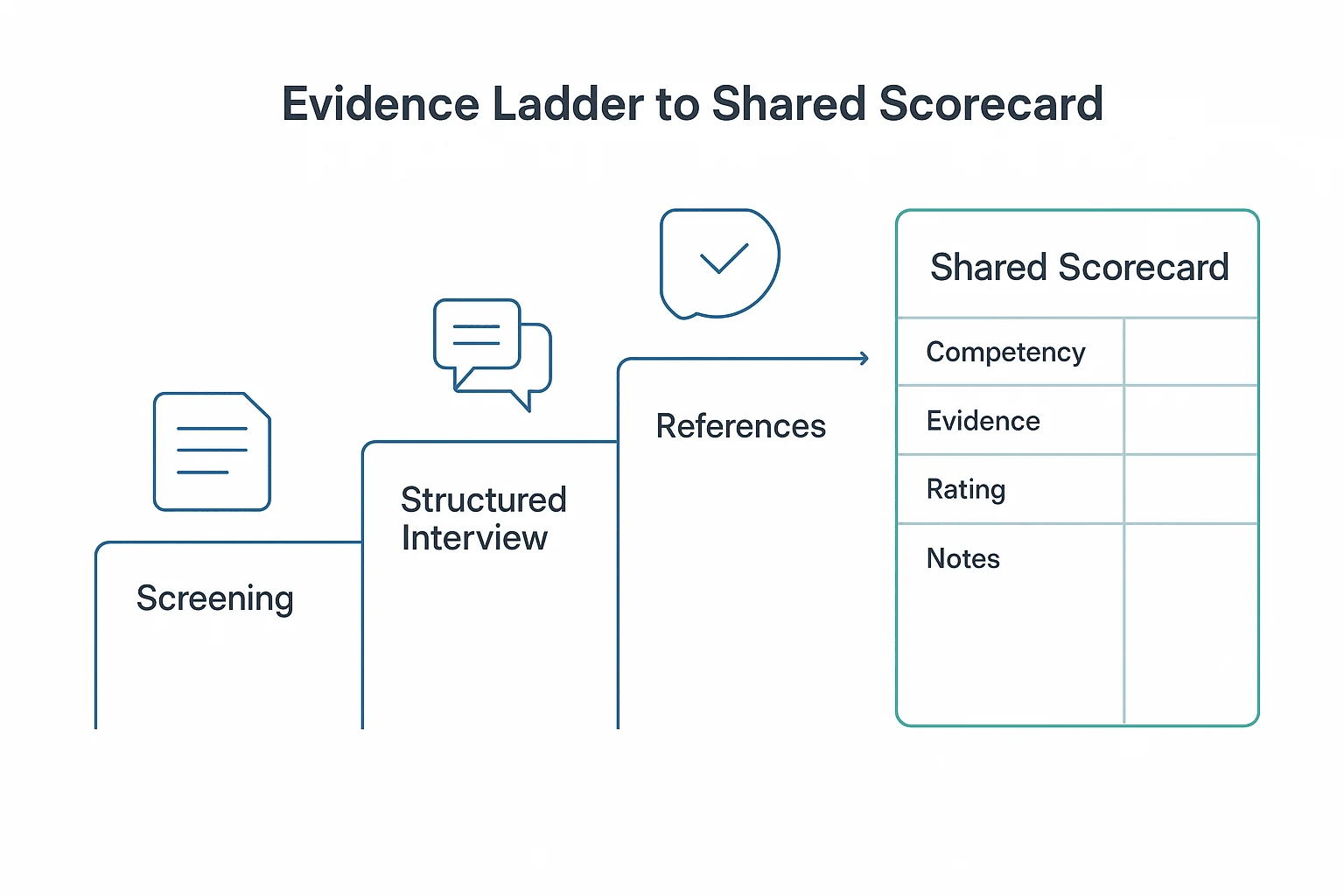
Use an evidence ladder
| Method | Proof created | How it lands in the scorecard |
| Screening | Claims, qualifications, work history | Eligibility and minimum criteria |
| Structured interview | Behavioral examples | Competency ratings with notes |
| Work sample | Job-relevant artifact | Skill score plus rubric comments |
| Reference check | Third-party verification | Risk flags and consistency checks |
A tool like TicNote Cloud can support this process by storing interview transcripts, notes, and work-sample feedback in a Project workspace. Shadow AI can then search across files and surface cited evidence for each scorecard input.
Design the candidate evaluation scorecard and rating rubric
A candidate evaluation scorecard makes interviewer ratings comparable by tying each score to observable behavior, not gut feel. The goal is simple: two interviewers should read the same evidence and understand why a candidate earned a 2, 3, or 5.
Use a 1–5 scale with evidence rules
Use clear anchors and add a "Not enough evidence" option. That prevents guessing.
- 1 = no evidence, incorrect approach, or behavior below the role bar.
- 3 = meets the role bar with a relevant example and sound reasoning.
- 5 = exceeds the bar with multiple strong examples, clear results, and transferability to this role.
- Not enough evidence = the interviewer must ask follow-ups or leave the competency unscored.
A scorecard is also a documentation tool. It should preserve the why behind each rating with short, attributable evidence snippets from interviews, work samples, or references. TicNote Cloud can help here by turning interview transcripts into searchable Project notes, so reviewers can cite the exact answer behind a score.
Build weights around the role
Weighted points = score × weight. Use 100% total weight, then review both the total and each must-have area.
| Competency | IC weight % | Manager weight % | Customer-facing weight % | Score | Weighted points | Interviewer notes |
| Core technical skill | 30 | 20 | 15 | 4 | 1.20 | Cited two relevant projects |
| Problem solving | 20 | 15 | 15 | 3 | 0.60 | Structured but missed trade-offs |
| Communication | 10 | 15 | 25 | 5 | 0.50 | Clear, concise customer examples |
| Collaboration | 10 | 15 | 15 | 3 | 0.30 | Worked across product and sales |
| Ownership | 15 | 10 | 10 | 4 | 0.60 | Took accountability for delays |
| Leadership | 5 | 20 | 5 | 2 | 0.10 | Limited coaching evidence |
| Role motivation | 10 | 5 | 15 | 3 | 0.30 | Reasonable fit |
| Total | 100 | 100 | 100 | — | 3.60 | Review red flags separately |
For more scorecard thinking outside hiring, see this repeatable scorecard workflow.
Write anchors that remove vague language
Use this pattern: "In this role, strong looks like... evidence includes... weak looks like..." Replace "good communicator" with "explains complex trade-offs in plain language, checks understanding, and adapts to the audience."
Set thresholds and protect against hidden red flags
Define pass/fail rules before interviews start. For example: no "1" on core skill, ethics, safety, or legal judgment. If a knockout issue appears, document the behavior, source, date, and impact. Don't bury it inside an average.
Use two decision rules: review weighted total and per-competency spread; if two interviewers differ by 2+ points on the same competency, trigger calibration before making the hiring decision.
Run a structured workflow from interview to hiring decision
A fair candidate evaluation process works best when every person knows their role before the interview starts. Treat the workflow like an operating system: define the bar, capture evidence, score independently, calibrate as a panel, then document a job-related decision.
Assign owners before interviews begin
Set ownership early so the process doesn't drift:
- Hiring manager: owns the must-have competencies and final business context.
- Recruiter or TA partner: owns the interview plan, schedule, scorecard collection, and process consistency.
- Interviewers: each owns 1–2 competencies, not the whole candidate.
- Panel lead: runs the debrief and records the final decision memo.
Require every interviewer to submit their candidate evaluation scorecard within 30–60 minutes after the interview. That timing reduces memory drift and keeps notes tied to what was actually said.
If your hiring process includes many meetings, a structured meeting operating system helps teams keep decisions, owners, and follow-ups visible.
Capture evidence before opinions
Use a simple rule: no one shares a hire/no-hire opinion before independent scoring. This prevents groupthink.
Interviewer notes should follow this format:
- Quote or behavior: What did the candidate say or do?
- Context: What question, task, or scenario prompted it?
- Impact: Why does it matter for the role?
For behavioral answers, use a STAR checklist:
- Situation/Task: What problem were they responsible for?
- Action: What did they do, not just the team?
- Result: What changed, improved, shipped, or failed?
- Reflection: What did they learn or adjust next time?
Tools can reduce admin here without replacing judgment. For example, TicNote Cloud can capture bot-free interview transcripts, let recruiters edit notes, store each role in a Project workspace, and use Shadow AI to find cited answers across interview files.
Calibrate, then document the decision
Run a 20–30 minute debrief:
- Silent read of submitted scorecards.
- Round-robin discussion by competency.
- Resolve evidence gaps.
- Align scores to the hiring bar.
- Record risks, mitigations, dissent, and next steps.
For close totals, don't "average away" doubt. Use a targeted follow-up interview, added work sample, or reference check focused on the missing evidence. Record dissenting views in neutral, job-related language.
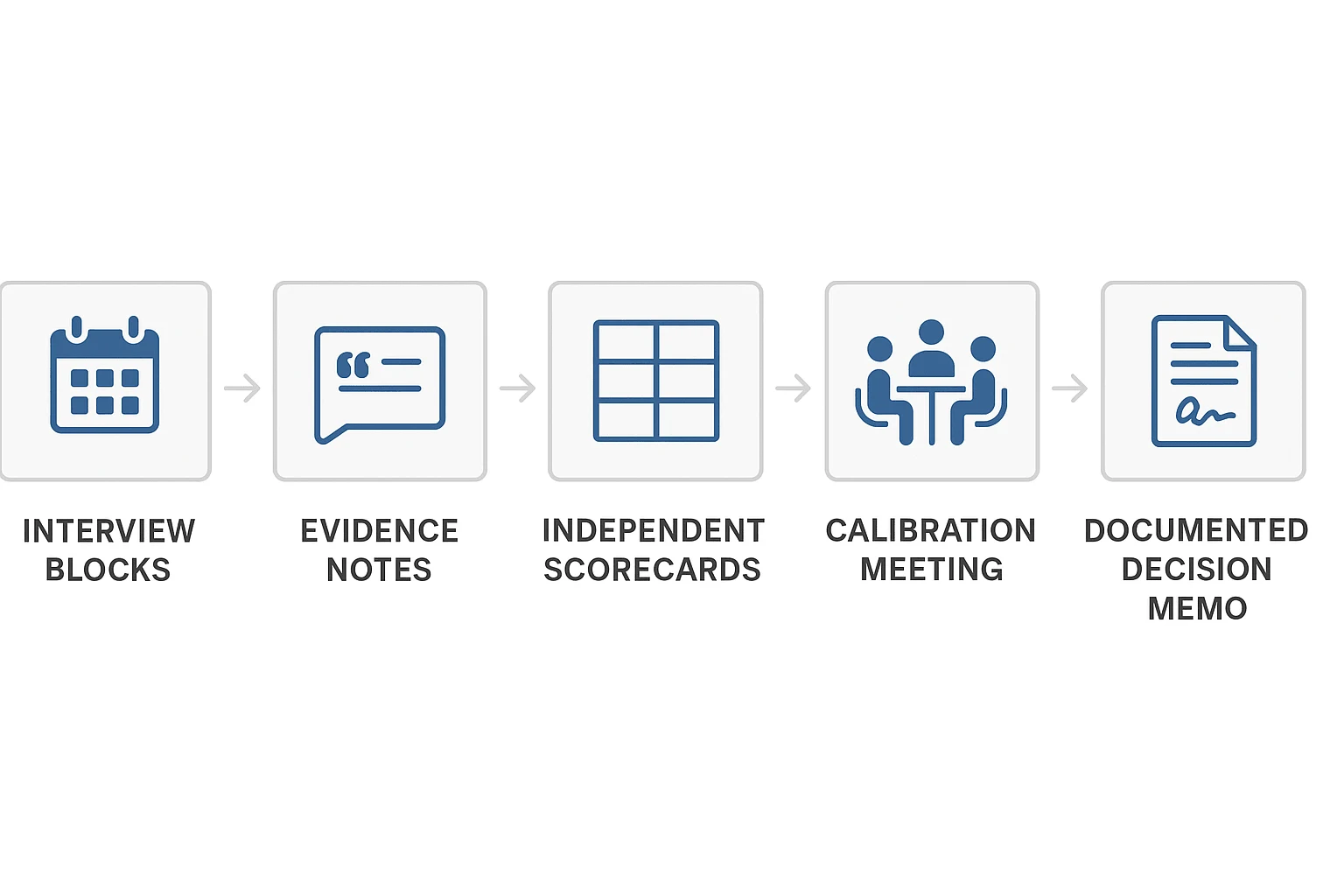
Evaluation workflow diagram outline: interview blocks → evidence notes → independent scorecards → calibration meeting → documented decision memo.
Capture interview evidence and generate scorecard inputs (step-by-step)
Objective candidate evaluation works best when every score points back to evidence. TicNote Cloud is useful here because the HR Recruiting skill agent can keep job criteria, candidate materials, transcripts, and evaluation outputs in one searchable workflow.
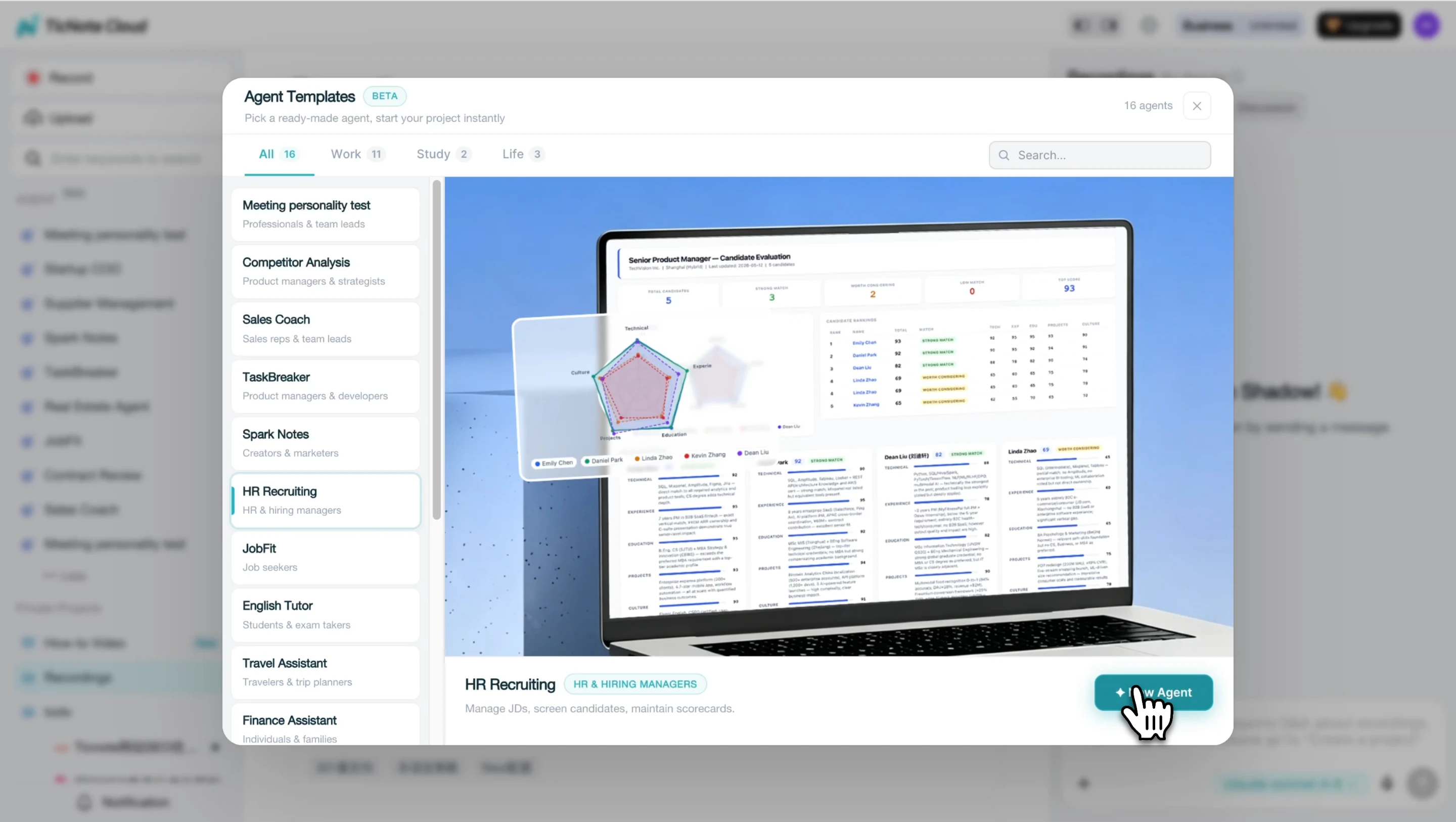
Step 1: Add the HR Recruiting skill agent
In TicNote Cloud, open the Skill Agent library, choose Add Agent, and add the HR Recruiting skill to your workspace. Give access only to the recruiters, hiring managers, and panel members who need to contribute notes.
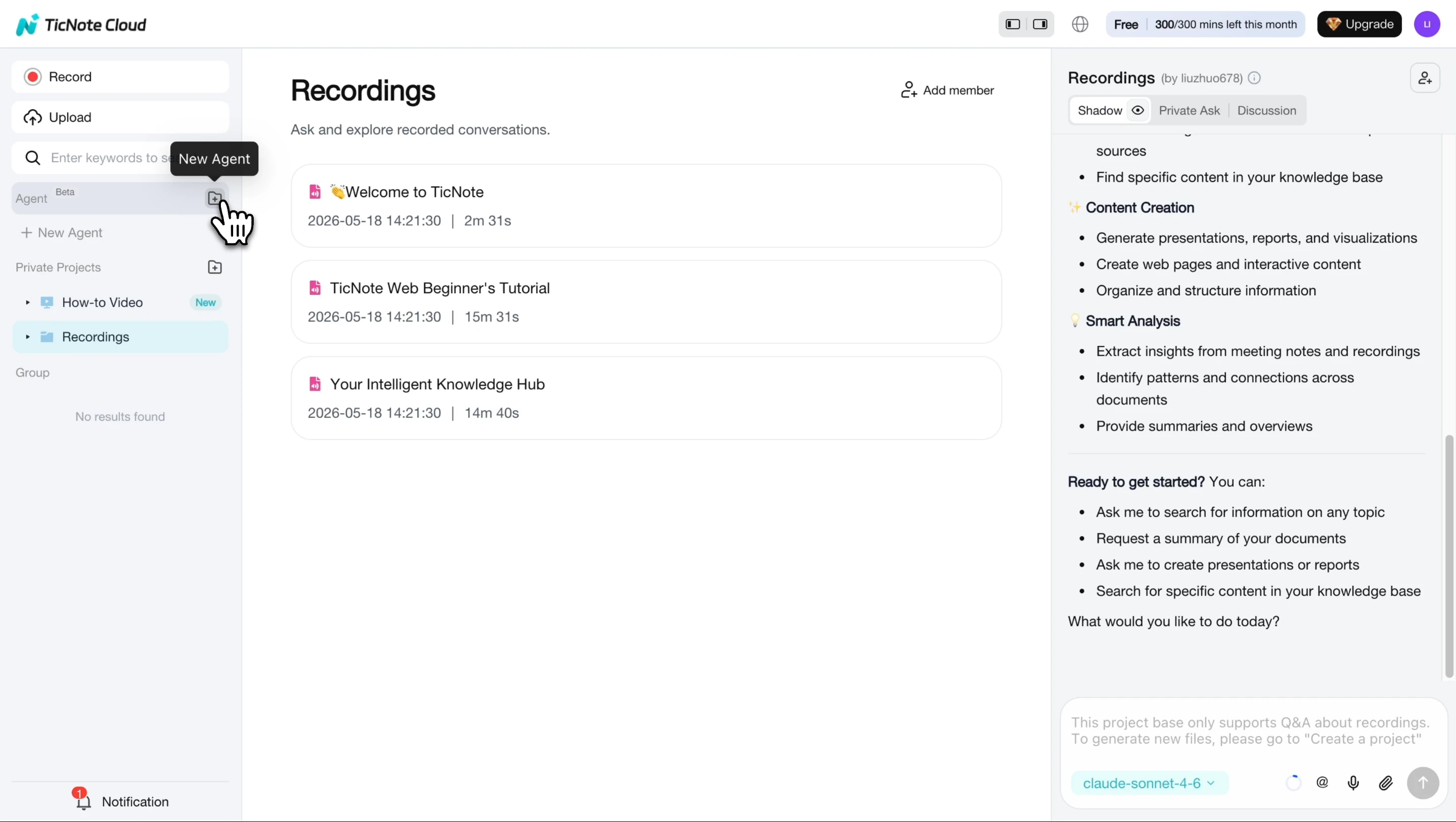
Once the agent is added, it appears in your agent list and is ready for the requisition.
Step 2: Create the role workspace and add inputs
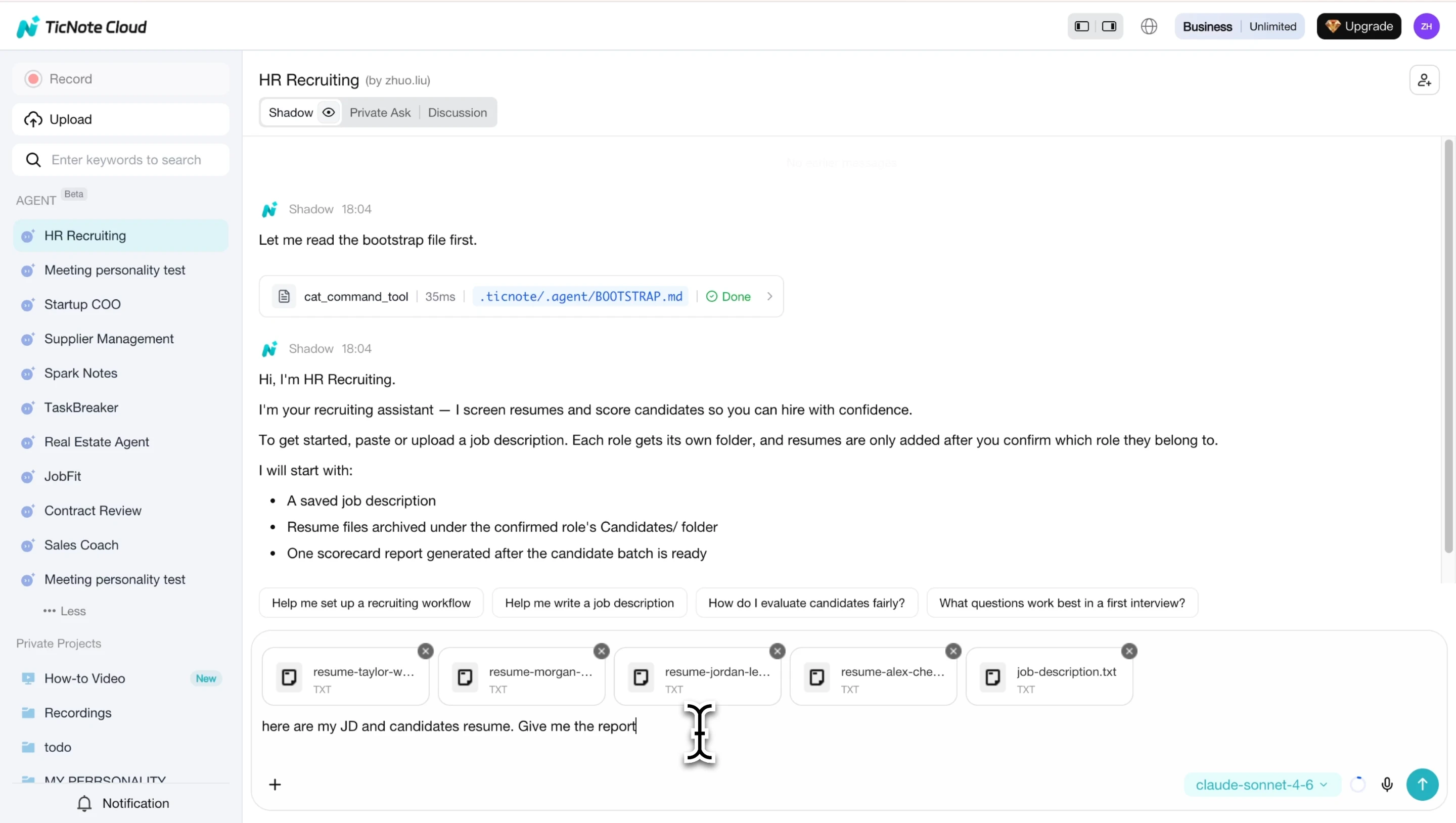
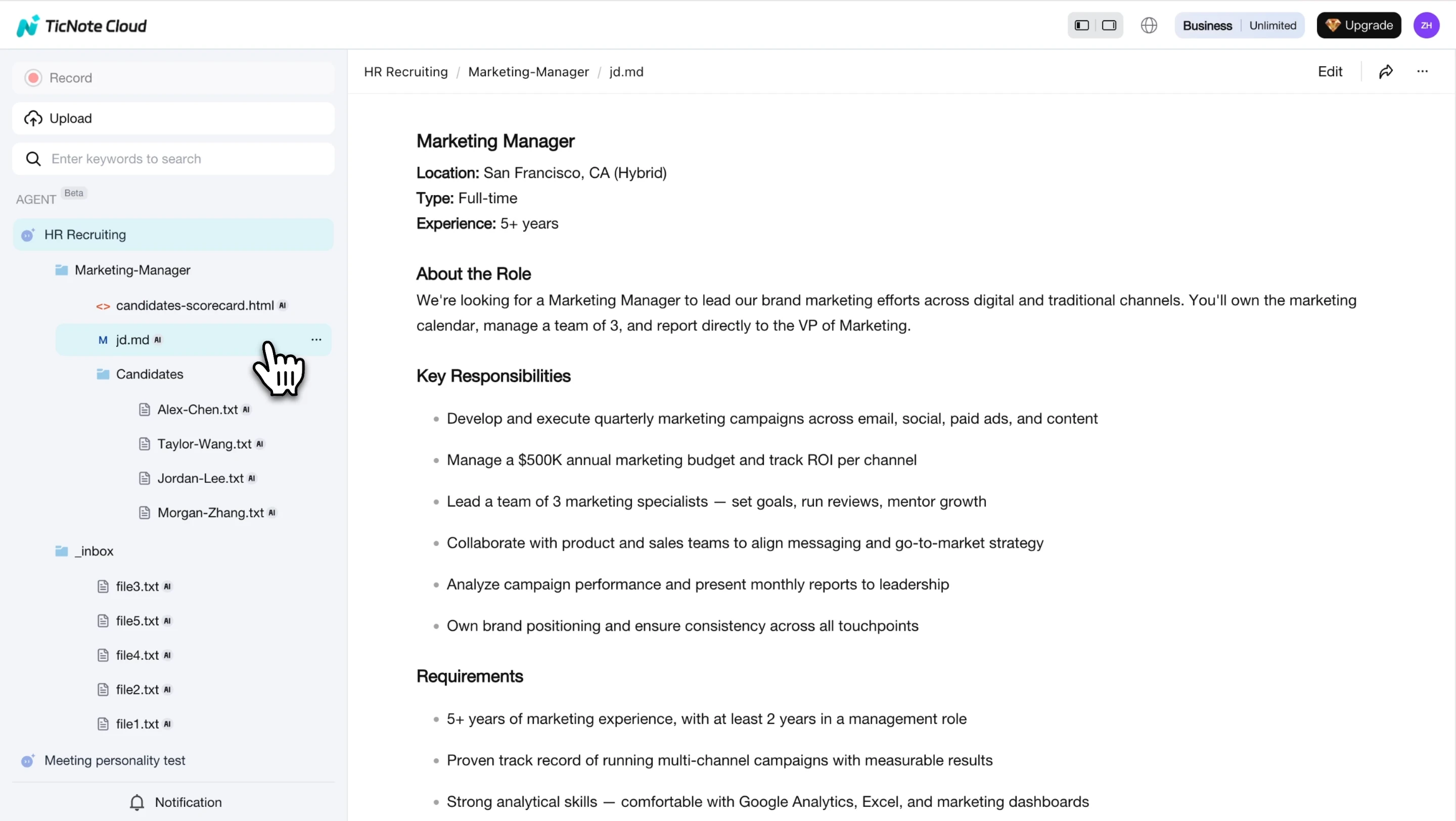
Create one Project workspace per requisition. This keeps the evidence scoped to one role and reduces mix-ups across candidates. Then:
- Paste the job description or role scorecard criteria into the HR Recruiting agent.
- Add allowed candidate materials, such as resumes, work-sample briefs, and interview plans.
- Keep the same 5 core dimensions visible: Technical, Experience, Education, Projects, and Culture.
Step 3: Capture the interview evidence and clean it up
After each interview, add the recording or transcript to the same Project. Use editable transcripts to correct names, acronyms, product terms, and technical phrases. Small fixes matter because later scorecard notes should cite the right proof, not a messy transcript.
Step 4: Generate scorecard-ready notes
Ask the agent for a structured summary mapped to your criteria. A strong prompt is: "Summarize this interview using STAR bullets for each competency, with cited evidence and open follow-up questions."
Use cross-file Q&A for specific checks, such as "What did the candidate say about stakeholder conflict?" Then paste the cited answer into your candidate evaluation scorecard. The tool should support the panel's judgment, not replace it.
Step 5: Review the report and refresh it as evidence changes
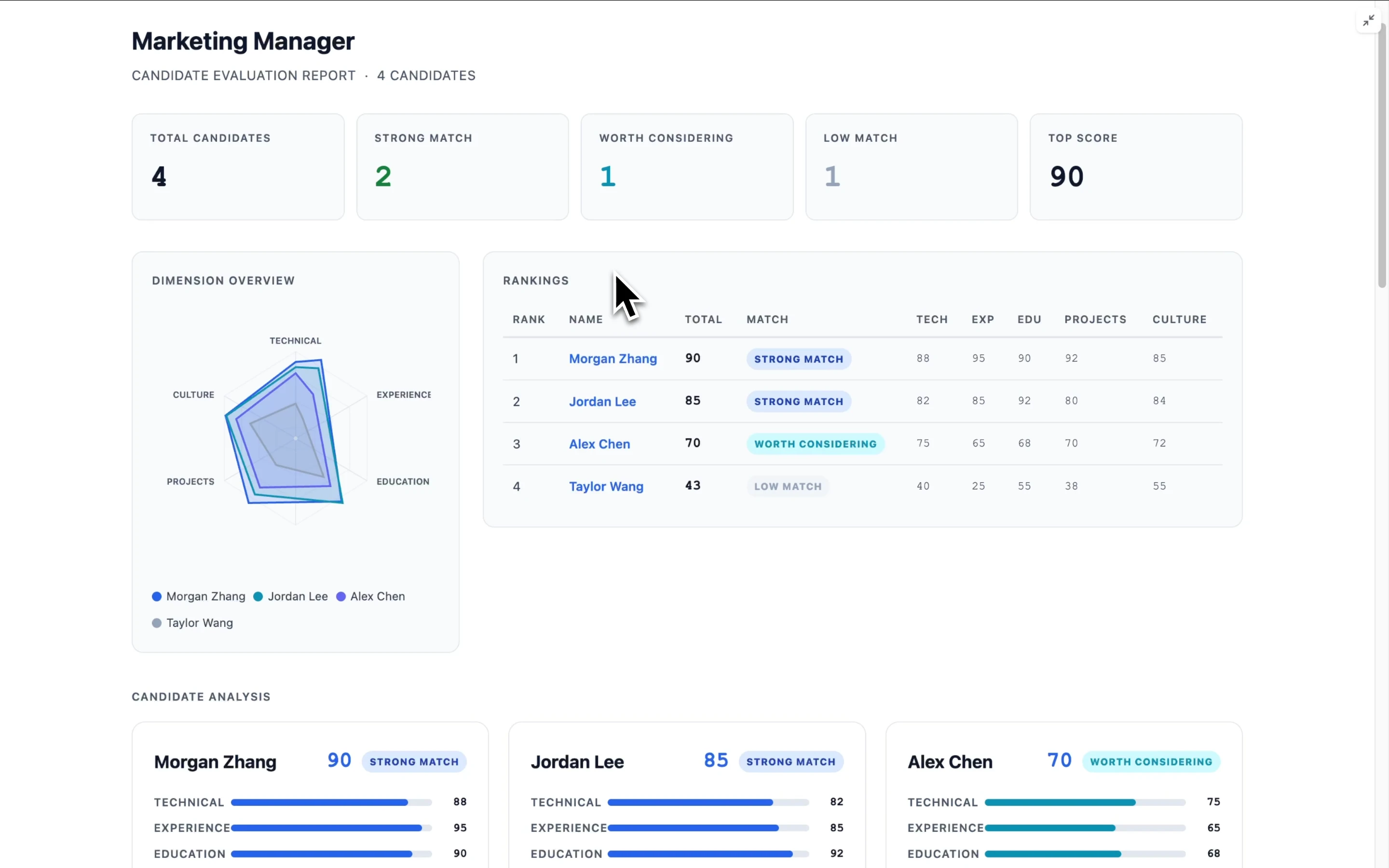
Open the evaluation report to compare candidates, radar charts, rankings, recommendation badges, and one-line justifications.
Review each score before the debrief. Edit weak or unsupported interpretations, and make sure the final hiring discussion uses the same criteria for every candidate.
When new resumes, interviews, or work samples arrive, refresh the evaluation so the pool stays current. If your team also compares HR tools, use the same evidence-first lens you'd use for ready-to-use analysis tools.
Sign-up note: TicNote Cloud is private by default, and Shadow AI operations are traceable to source files for easier review. If you want to test this workflow, Try TicNote Cloud for Free or Generate your first interview summary in minutes.
App workflow: On mobile, add the HR Recruiting skill agent, create or select the role Project, upload interview recordings, review the transcript, and request the same competency-mapped summary for the panel debrief.
How do you keep candidate evaluation fair, compliant, and candidate-friendly?
Fair candidate evaluation depends on a process that treats every applicant consistently and leaves a clear evidence trail. When notes, transcripts, and scorecard inputs live in one Project workspace, teams can review the same facts instead of relying on memory.
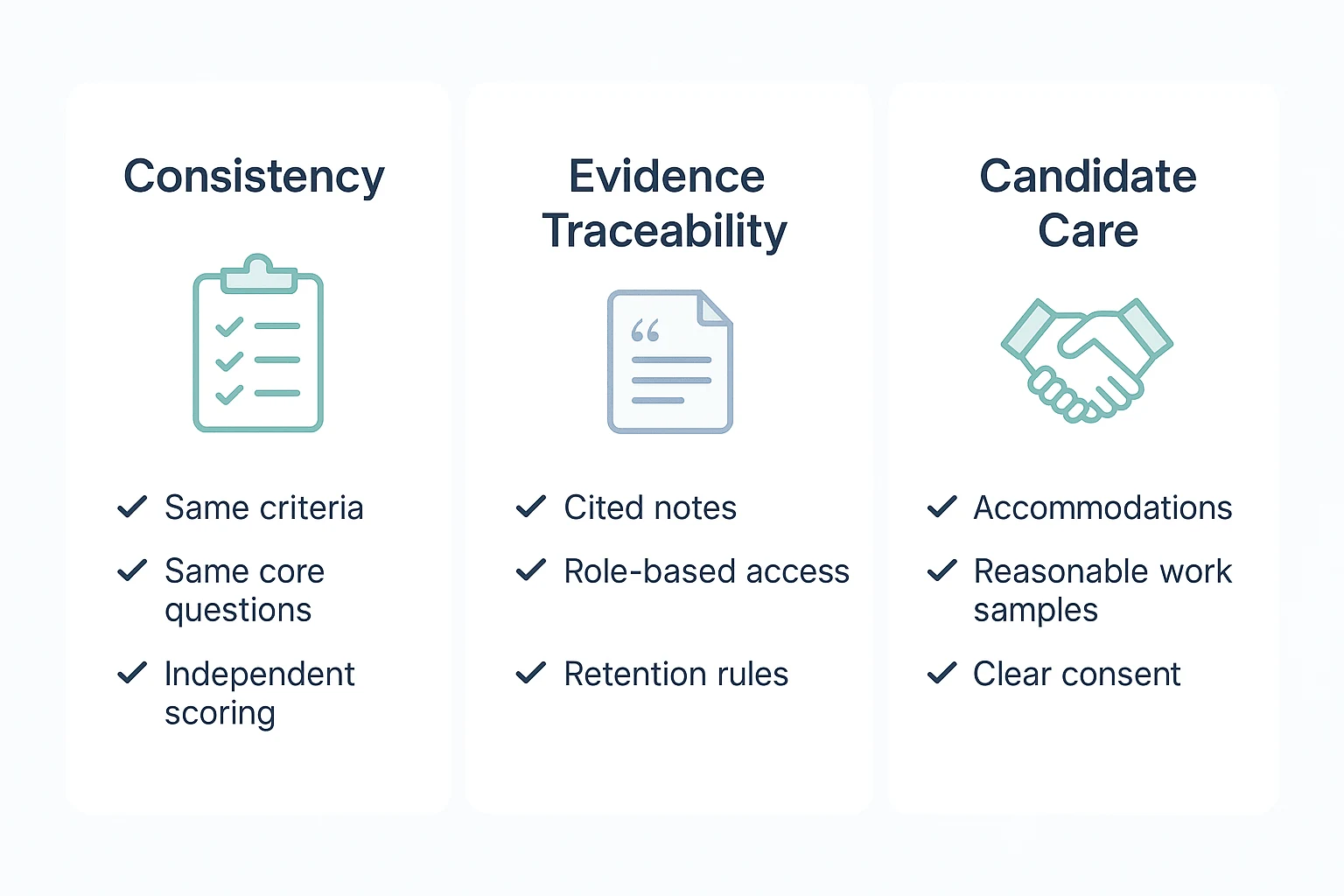
Use a fair hiring checklist
- Set the bar first: use the same candidate evaluation criteria, core questions, and rating anchors for each role.
- Score independently before group discussion. This reduces anchoring and lets calibration expose real differences.
- Rate behaviors, not personality. For soft skills, document clarity, structure, listening, and examples.
- Offer accommodations early: extra time, alternative formats, captioning, or adjusted scheduling when appropriate.
- Keep work samples reasonable. Avoid tasks that require nights of unpaid work or disadvantage caregivers.
- Disclose recording and note-taking. Store only job-related evidence, limit access by role, and set retention rules that match local law.
- Check outcomes by stage. For adverse impact, the Uniform Guidelines on Employee Selection Procedures (1978) state: "A selection rate for any race, sex, or ethnic group which is less than four‑fifths (4/5) of the rate for the group with the highest rate will generally be regarded by the Federal enforcement agencies as evidence of adverse impact."
- Use AI responsibly. TicNote Cloud can summarize interview evidence and retrieve cited moments, but humans must confirm accuracy, avoid protected attributes, and explain decisions in job-related terms.
Traceable documentation makes fairness easier to audit. If a panel re-checks a decision, every score should point back to evidence.
Final thoughts: Turn interview evidence into better hiring decisions
Strong candidate evaluation is not a gut check. It is a repeatable system: define criteria, collect evidence, score behavior with shared anchors, calibrate ratings, and document the final decision.
When interview notes, transcripts, work samples, and reference feedback live together, panels can explain the outcome later. A skill-agent workflow, such as TicNote Cloud, reduces admin, preserves context, and turns conversations into searchable, attributable hiring notes.