


 Extension
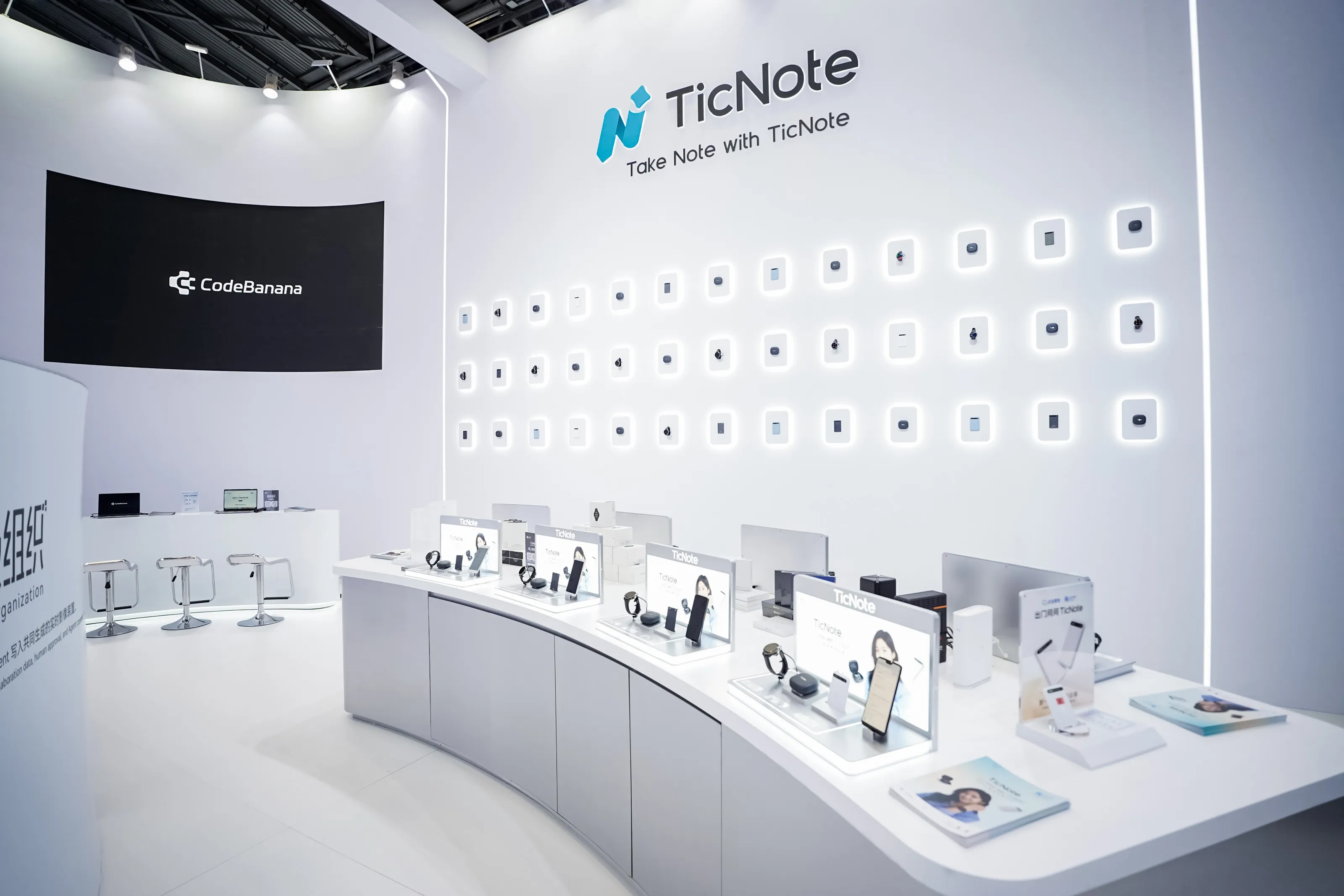
SHANGHAI — As the global AI community converges at the 2026 World Artificial Intelligence Conference, Mobvoi is showcasing TicNote, its AI-powered voice recorder that represents a broader shift in how we capture and use conversations. The annual event, running July 17–20 across three Shanghai venue clusters, has become the definitive platform for understanding where practical AI is heading—and this year, that direction points toward tools that do far more than simply record audio.
Why WAIC 2026 Matters
The World Artificial Intelligence Conference has grown into one of the most significant AI gatherings globally, drawing researchers, industry leaders, and policymakers to explore the technology's trajectory. This year's theme, "AI Partnership for a Brighter Future," reflects a maturing understanding that AI's value lies not in isolation but in how it integrates into existing workflows and augments human capabilities.
With over 300 new products debuting across six core sections, WAIC 2026 captures the industry's transition from experimental models to deployable solutions. The conference spans three venue clusters—the Expo area, Zhangjiang, and Xuhui West Bund—creating a comprehensive view of how AI is being applied across sectors ranging from healthcare to productivity tools.
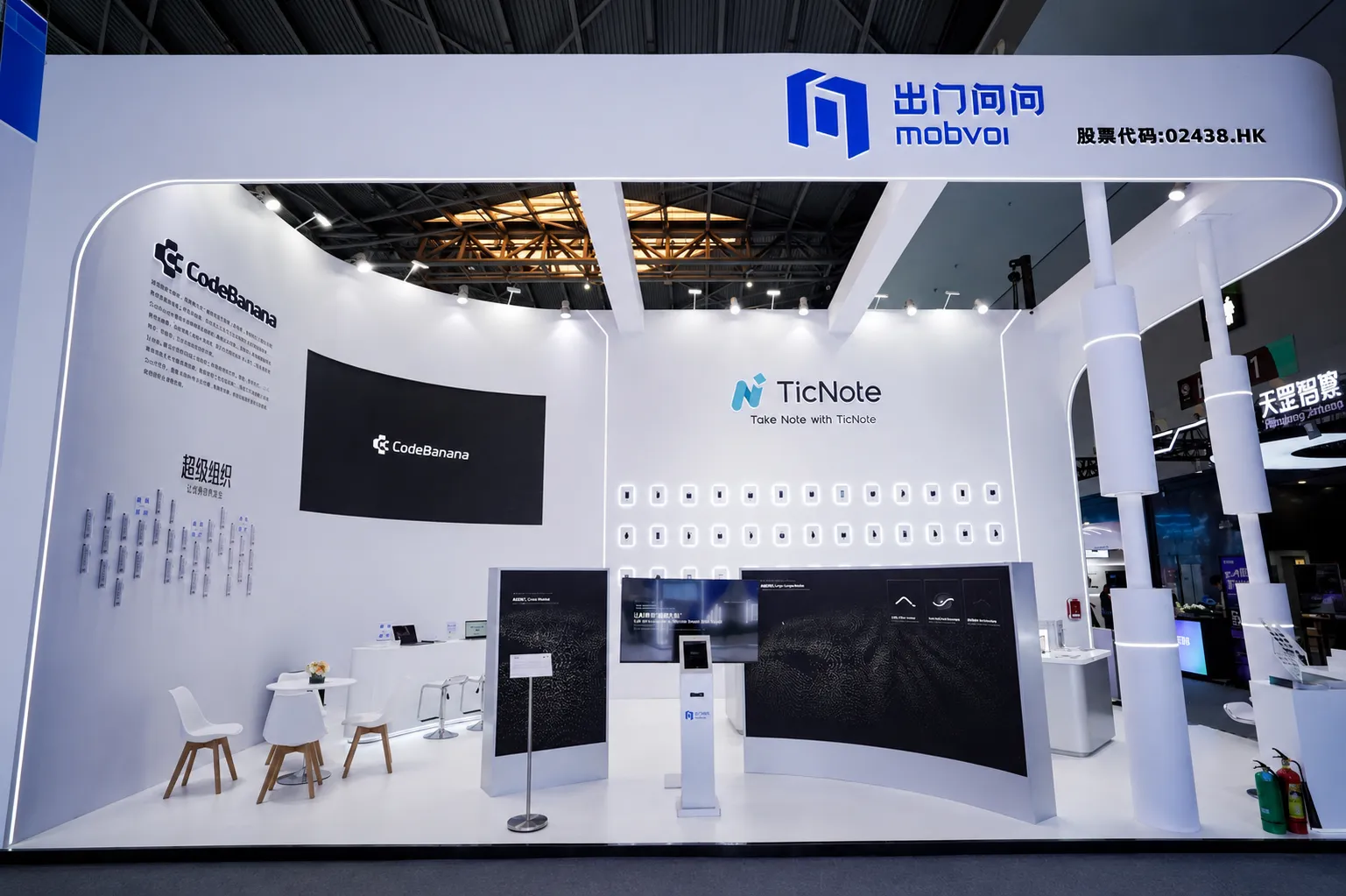
For companies like Mobvoi, which has built its foundation on voice interaction and AI since its founding in Beijing in 2012, WAIC represents an opportunity to demonstrate how hardware and software can combine to solve specific, everyday problems. The company's presence at the conference comes at a moment when the AI note-taking market is gaining significant momentum, with industry analysts projecting the sector to reach $740 million in 2026 and grow toward $3.48 billion by 2035.
From Recording Audio to Organizing Work
The fundamental evolution in AI note-taking is the shift from passive capture to active processing. Traditional voice recorders store audio; modern AI note-takers transform it. TicNote embodies this transition through a feature set designed to minimize manual work while maximizing utility.
At its core, the $150 device records conversations—whether in-person meetings or phone calls—using a three-microphone array that captures audio at 1536 kbps. But the hardware is just the entry point. Once captured, conversations undergo transcription, with support for more than 120 languages. The system then generates summaries, extracts action items, and can even produce mind maps that visualize the relationships between concepts discussed.
This capability addresses a genuine friction point in professional workflows. A recent test by Android Police during Mobile World Congress 2026 demonstrated TicNote's effectiveness in challenging environments—echoey, noisy rooms where English wasn't the speaker's first language. The resulting transcripts were described as "almost faultless," with the device handling individual names and brand names accurately despite the acoustic challenges.
The workflow integration extends beyond the device itself. Generated content can be exported as PDF, Word, or text files, making it compatible with existing document management systems. This approach acknowledges that the value of recorded conversations isn't in the audio files themselves, but in how easily the extracted information can be shared and acted upon.
Built for Multilingual, Real-World Use
Global business operates across language barriers, and AI note-taking tools are increasingly expected to bridge these gaps. TicNote's support for 120+ languages positions it as a tool for international teams and cross-border collaboration, but the technical capability is only part of the equation.
The device includes built-in 4G connectivity, meaning it can operate independently of a paired smartphone. This independence matters in practical scenarios—international travelers can use the device without worrying about roaming charges or Wi-Fi availability, and professionals can record in environments where phone use might be restricted or inconvenient.
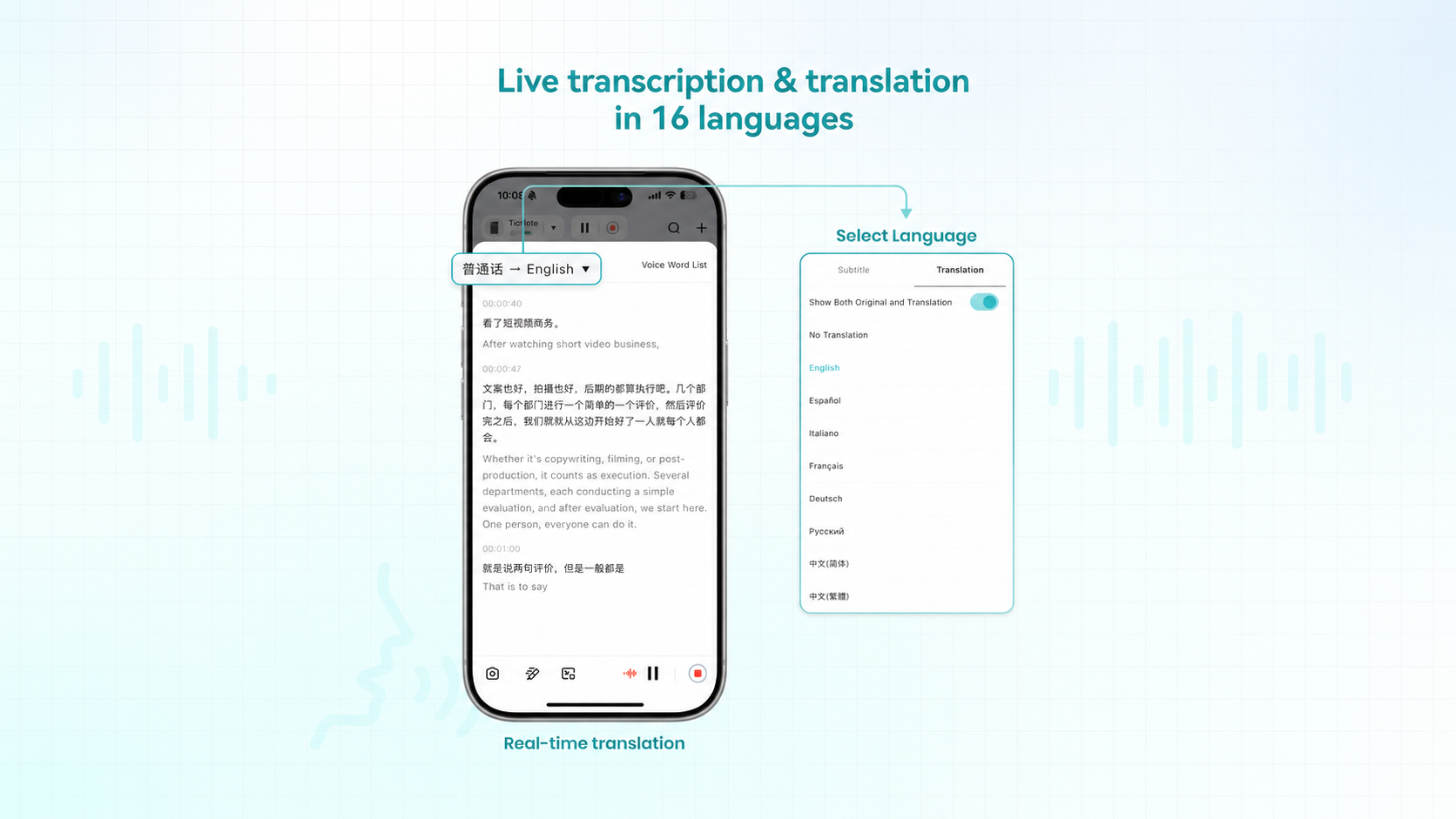
The multilingual support extends beyond simple transcription. The system can translate conversations, enabling real-time understanding across language pairs. For organizations with global operations, this capability transforms what would previously require dedicated interpreters or delayed translation services into an immediate, accessible resource.
The hardware design reflects this international orientation. The device supports dual-mode recording—sliding a switch activates call recording mode using vibration-conduction technology, while the standard mode captures ambient audio. This flexibility accommodates different communication contexts, from formal conference calls to impromptu hallway conversations.
What TicNote Says About the Future of AI Hardware
Mobvoi's approach with TicNote illustrates a broader trend in AI hardware: the integration of specialized devices with cloud-based intelligence. The company, which became the first Chinese AI firm to list on the Hong Kong Stock Exchange, has built its technology stack around the vision of "Make AGI Accessible and AI+ Hardware Ubiquitous."
This vision manifests in TicNote through "Shadow," the built-in AI agent that goes beyond transcription to offer what Mobvoi terms "agentic" capabilities. The system can identify associations that might have been missed during the conversation, generate AI-hosted podcasts from recorded content, and essentially serve as a second participant in meetings—one that never forgets, never gets distracted, and can instantaneously recall any detail.
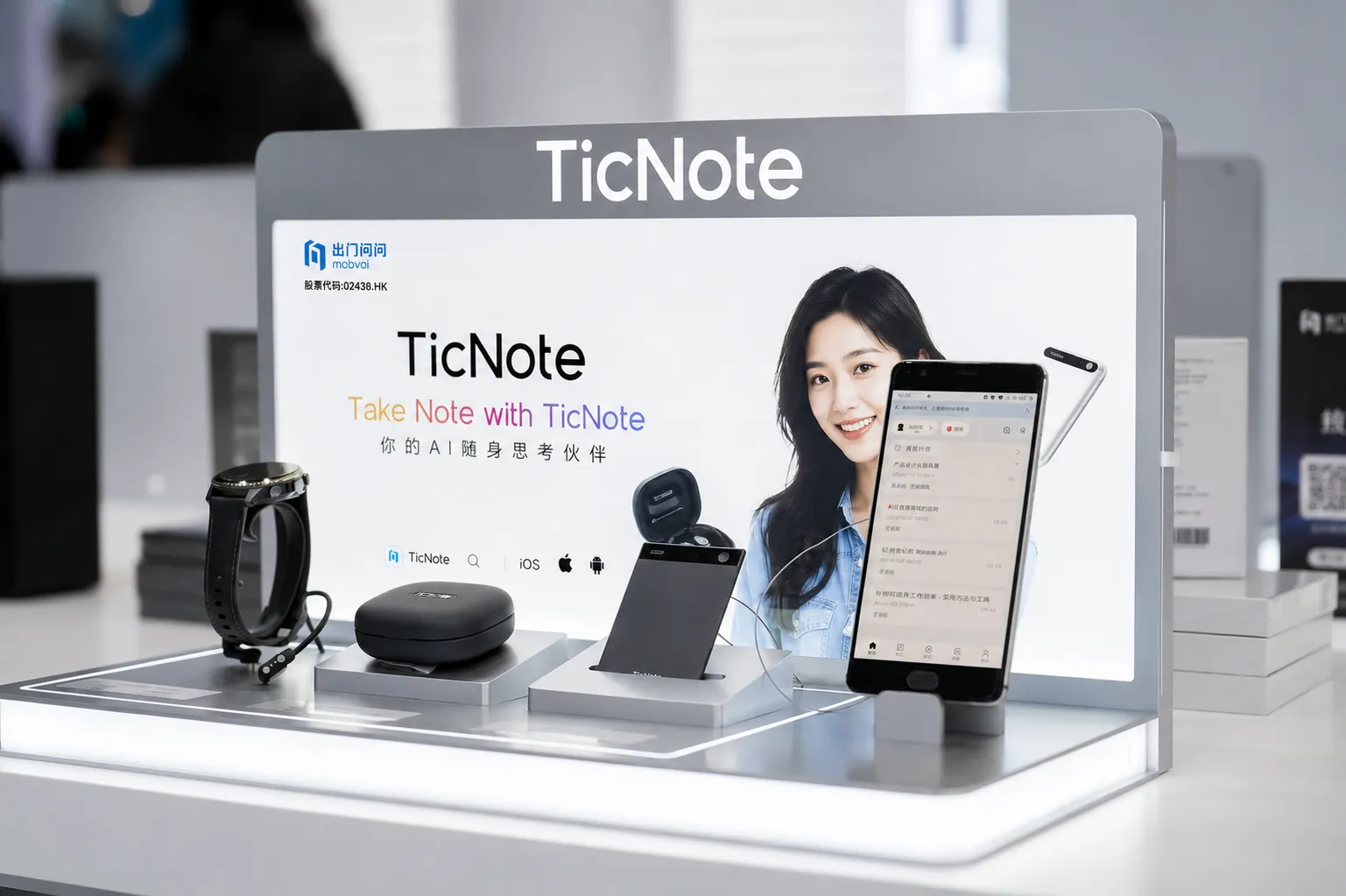
The presence of such devices at WAIC 2026, alongside major cloud providers like Alibaba Cloud showcasing full-stack Agentic AI capabilities, suggests a convergence between edge devices and cloud intelligence. Rather than viewing these as competing approaches, the industry appears to be settling on a hybrid model where specialized hardware handles capture and local processing, while cloud resources provide the heavy lifting for large language models and advanced reasoning.
This architecture has implications for privacy and data sovereignty. By processing sensitive conversations on dedicated devices with clear data policies, organizations can maintain greater control over their information while still benefiting from AI-powered analysis.
Looking Ahead
The AI note-taking market's projected growth—from $13.3 billion for note-taking applications overall in 2026 to substantially higher figures by decade's end—reflects a fundamental shift in how knowledge workers manage information. As meetings proliferate and the volume of spoken content increases, the cognitive load of processing that information manually becomes unsustainable.
Tools like TicNote represent an early phase of what will likely become standard equipment in professional settings. The trajectory suggests future iterations will become more deeply integrated with productivity suites, more sophisticated in their understanding of context and intent, and more proactive in suggesting actions based on conversation content.
For Mobvoi, participation in WAIC 2026 positions the company within this evolving landscape. The conference's focus on AI governance and practical application aligns with the company's history of bringing voice AI from research into consumer and enterprise products.
As the industry moves beyond the initial excitement of AI capabilities toward the practical work of implementation, the measure of success will increasingly be straightforward: does this tool save time, reduce friction, and produce genuinely useful output? Early indications suggest that for TicNote, the answer is moving toward yes.