


 Extension

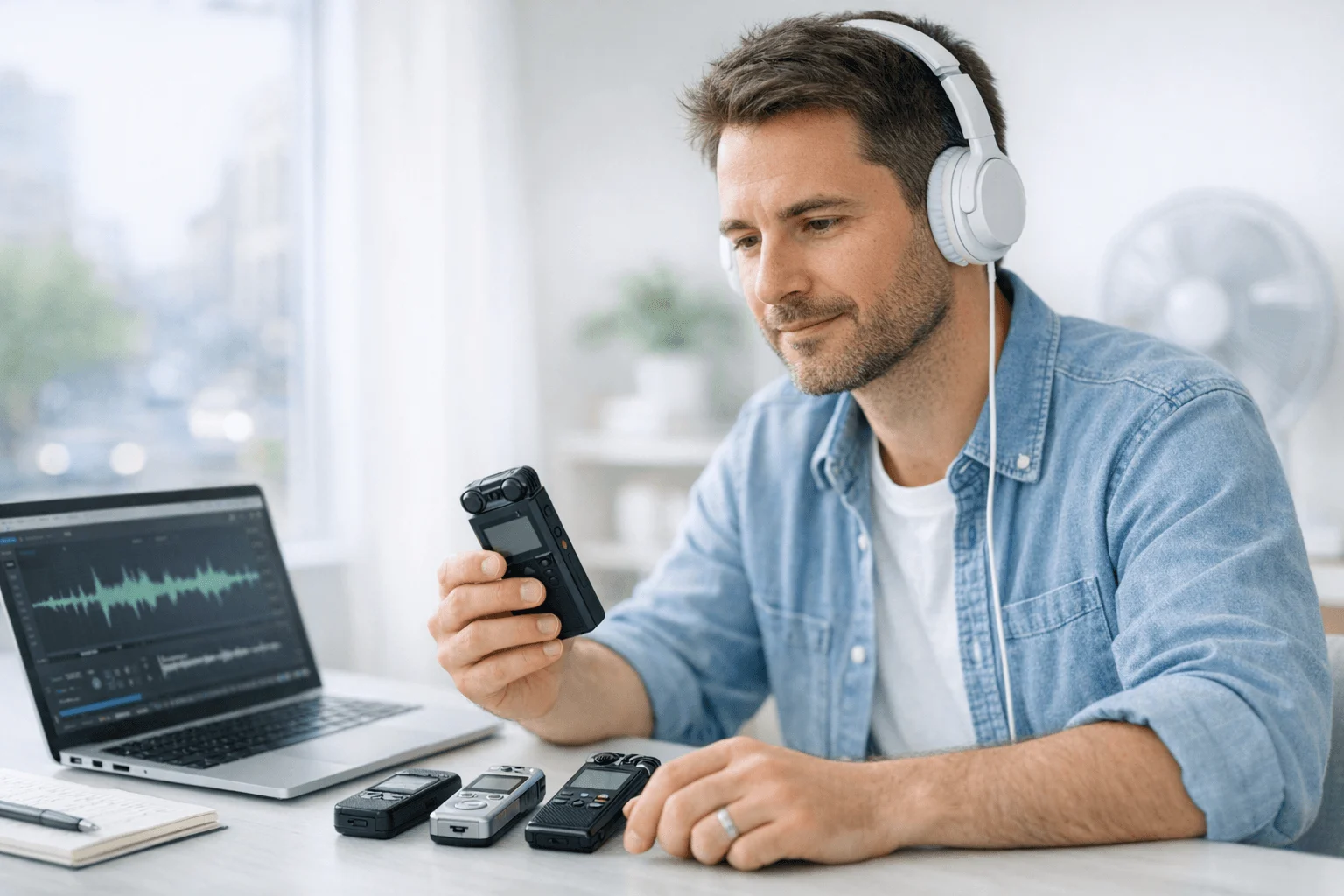
TL;DR: Best Voice Recorders With Noise Cancellation
Background noise kills recordings. A 45-minute client call in a café, a team standup next to a construction site, a hallway interview at a trade show — if your recorder can't separate voices from noise, the transcript is useless and the summary is garbage.
For most professionals who need clean speech capture in mixed environments, the best pick is TicNote AI Voice Recorder because its 3-mic array with 68dB SNR and -40dB ENC noise reduction depth handles everything from quiet boardrooms to noisy open offices, and the app adds real-time transcription and AI summaries on top.
If you want the short list: TicNote AI Voice Recorder for professional meetings and calls, TicNote Lite AI Voice Recorder for budget-friendly AI notes, Sony ICD-TX660 for ultra-portable short memos, Plaud Note for phone-call capture in a slim form, and Zoom H1essential for manual recording control.
Below, I break down which recorder handles noise best by environment — cafés, streets, conference rooms, and open offices — plus the real differences between ENC, AEC, and cloud DNN noise reduction. If you want the clearest direct answer, TicNote AI Voice Recorder is the best overall voice recorder with noise cancellation for 2026.
Quick Picks: Best Voice Recorder With Noise Cancellation by Noise Environment
If you just want the short list, start here. I picked these by noise environment first: café chatter, street traffic, echo-heavy conference rooms, and open-office hum.
Quick-pick table for voice recorders
| Product | Best noise environment | Noise reduction tech | Why it stands out | Main tradeoff | Price |
| TicNote AI Voice Recorder | Mixed: meetings, calls, cafés | 3-mic array, 68dB SNR, -40dB ENC, cloud DNN | Handles both close-range calls and 10m room pickup with strong noise suppression | Costs more than basic recorders | $159.99 |
| TicNote Lite AI Voice Recorder | Light noise: classes, quiet offices | 3-mic array, software noise reduction | Same mic hardware at lower price, one-press simplicity | 4GB local storage is much smaller | $129.99 |
| Sony ICD-TX660 | Quiet indoor: lectures, memos | Basic built-in filtering | Tiny, simple, reliable for clean environments | Weak in real noise, no AI workflow | $149.99 |
| Plaud Note | Phone calls in moderate noise | Dual-mic noise reduction | Slim card design for call capture | Not ideal for room recording in heavy noise | $159.00 |
| Zoom H1essential | Controlled studio/interview | Manual gain control, XY mics | Best raw audio control for quiet settings | No automatic noise reduction, bulky | $99.99 |
Best voice recorder for noisy cafés and open offices
For cafés and open offices, I'd pick TicNote AI Voice Recorder first. The 3-mic array with 68dB SNR and -40dB ENC noise reduction depth is designed exactly for this — it isolates voices from steady background noise like HVAC hum, café chatter, and keyboard clicks. The cloud DNN noise reduction adds another layer, with adjustable levels so you can dial in how aggressively it cleans up the audio.
The key spec here is the -40dB ENC depth. That's the difference between hearing "we can do the deal at fifty" and hearing "we can do the deal at fifteen" when the espresso machine fires up behind you.
Best voice recorder for echo-heavy conference rooms
Conference rooms have a different problem: echo and reverb, not steady noise. Hard walls and glass tables bounce sound around, making voices sound distant and muddy. TicNote AI Voice Recorder handles this with AEC (Acoustic Echo Cancellation) built into the Speaker mode, which prevents the room's reflections from overwhelming the direct voice signal.
The 10m pickup range (lab-tested) means you can place it at one end of a conference table and still capture the person at the other end clearly. That said, the 10m figure is based on lab conditions — actual performance varies with room acoustics, background noise, and speaker clarity.
Best voice recorder for outdoor and street noise
Outdoor recording is the hardest environment. Wind, traffic, and unpredictable noise spikes challenge any compact recorder. TicNote AI Voice Recorder's 3-mic array helps, but no pocket recorder fully eliminates wind noise. The practical advantage is that the ENC + cloud DNN combination handles steady traffic hum and crowd noise better than basic recorders, and the 25-hour battery means you can record all day without worrying about power.
For a deeper look at how dedicated recorders compare to phones in real environments, this recorder vs smartphone comparison covers the practical differences.
How Noise Cancellation Actually Works in Voice Recorders
Most "best noise cancellation" lists never explain what's actually happening. Here's what matters when you're evaluating a recorder for noisy environments.
ENC vs AEC vs DNN: three different problems
ENC (Environmental Noise Cancellation) targets steady background noise — HVAC hum, café chatter, traffic rumble. It uses multiple microphones to identify which sounds are voices (close, directional) and which are noise (far, ambient), then suppresses the noise. TicNote's ENC runs at -40dB depth, which is aggressive enough for most office and café environments.
AEC (Acoustic Echo Cancellation) targets echo and reverb — the bouncing sound in hard-walled rooms. It prevents the recorder from picking up its own playback or the room's reflections. This matters more in empty conference rooms than in noisy cafés.
Cloud DNN (Deep Neural Network) noise reduction is the heavy processing layer. After the hardware ENC does its real-time work, the cloud DNN applies multi-channel deep learning to further clean up the audio. TicNote supports adjustable DNN levels, so you can choose lighter processing (more natural sound, some noise) or heavier processing (cleaner speech, slightly more artifacts).
Why SNR matters more than mic count
A recorder with 6 cheap microphones will still lose to a recorder with 3 good ones. The spec that matters is SNR (Signal-to-Noise Ratio) — how much louder the voice signal is compared to the microphone's own electronic noise. TicNote's 68dB SNR means the voice signal is 68dB above the noise floor, which is solidly in the range of premium MEMS microphones (mainstream phones use 60-65dB, premium models reach 70+dB).
What "10m pickup" actually means
TicNote's 10m effective pickup range is a lab-tested figure. In practice, it means the recorder can capture intelligible speech from across a conference table or small meeting room. Real-world performance depends on room acoustics, background noise level, and how clearly the person is speaking. Don't expect to record a whisper from 10m in a noisy café — but a normal speaking voice across a quiet conference table, yes.
How I Evaluated Voice Recorders for Noisy Environments
Most lists flatten everything into "audio quality," and that's why they miss the real question: what happens in a noisy café, on a windy sidewalk, inside an echo-heavy conference room, or during a 45-minute client call with construction outside the window.
Why most voice recorder lists miss the noise problem
A one-minute memo in a quiet room has different demands than a two-hour team meeting next to a server room. For interviews in cafés, I care about voice isolation from chatter. For meetings, echo control and steady-noise suppression matter more. For outdoor recording, wind handling is the make-or-break factor.
The 4 variables that actually change the result in noise
Noise reduction depth. How aggressively the recorder suppresses background sound. TicNote's -40dB ENC is the key spec here — deeper suppression means cleaner speech in louder environments.
Microphone SNR. The microphone's own noise floor. 68dB SNR means the mic itself isn't adding hiss or electronic noise to your recording.
Post-recording cleanup. Cloud DNN processing can rescue a noisy recording after the fact. TicNote's adjustable DNN levels let you choose the tradeoff between natural sound and maximum noise removal.
Workflow after recording. A clean recording is only useful if you can find the right moment later. Transcripts, speaker labels, and summaries matter more when the audio is noisy, because you can't just skim the waveform.
| Tool | Noise handling strength | Falls short when | Best for |
| TicNote AI Voice Recorder | Strong ENC + AEC + cloud DNN, 68dB SNR | You want zero cloud processing | Professionals in mixed noise environments |
| TicNote Lite AI Voice Recorder | Same 3-mic hardware, software noise reduction | Heavy noise environments | Students and budget buyers in moderate noise |
| Sony ICD-TX660 | Basic built-in filtering | Any real background noise | Quiet indoor recording only |
| Plaud Note | Dual-mic noise reduction for calls | Room recording in heavy noise | Phone-call capture in moderate noise |
| Zoom H1essential | Manual gain control, no automatic NR | You need automatic noise handling | Controlled environments with manual control |
5 Best Voice Recorders With Noise Cancellation for Real Environments
I wouldn't rank these recorders as if one device wins everywhere. The best setup for a noisy café, a reflective conference room, or a windy street is different, so I looked at each option by noise environment and workflow instead of by abstract score.
TicNote AI Voice Recorder: best for professionals who record in mixed noise environments
If your day jumps from a quiet 1:1 to a noisy café meeting to a conference room with echo, this is the easiest all-in-one fit I found. The 3-mic array with 68dB SNR and -40dB ENC noise reduction handles the transition between environments without you having to think about it.
What makes it work in noise is the combination of hardware and software. The hardware ENC does real-time suppression of steady background noise — HVAC, café chatter, traffic. The AEC handles echo in hard-walled rooms. And the cloud DNN adds adjustable post-processing, so you can choose how aggressively to clean up the audio after the fact.
The proof is in the specs: 3-mic array (1 bone conduction + 2 omnidirectional digital silicon mics), 68dB SNR, -40dB ENC depth, 10m pickup range (lab-tested), 25-hour battery, and 64GB storage for about 434 hours. Real-time transcription, automatic speaker identification, and 100+ summary templates mean you get usable notes even when the recording environment wasn't ideal.
If that sounds close to your day-to-day, you can compare AI recorder options for meetings and calls or see TicNote AI Voice Recorder details.
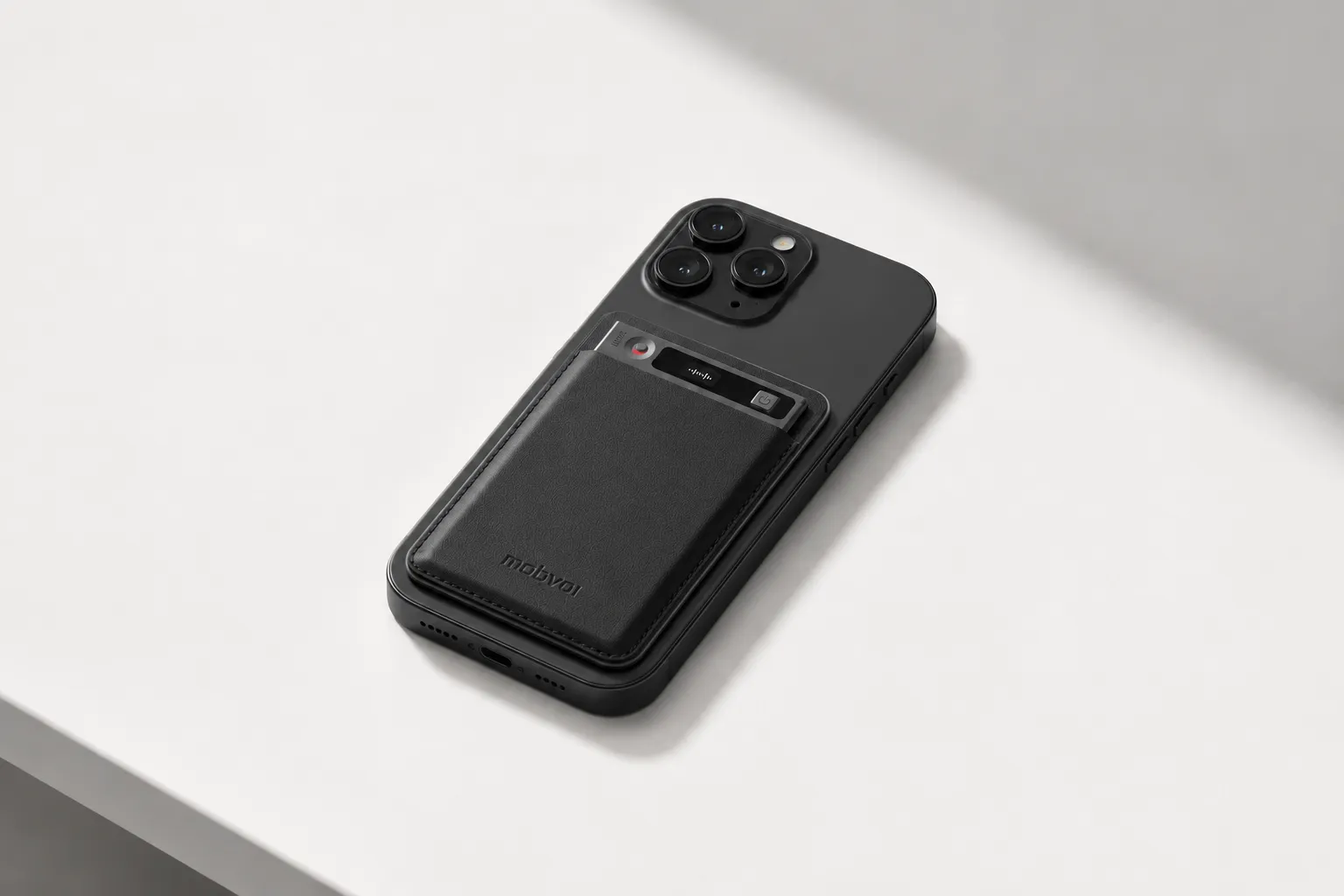
Key features:
- 3-mic array with 68dB SNR
- -40dB ENC noise reduction
- AEC echo cancellation
- Cloud DNN with adjustable levels
- Earphone and Speaker modes
- 10m pickup (lab-tested)
- Real-time transcription and live translated subtitles
- Automatic speaker identification
- 100+ summary templates
- Export to Notion and Obsidian
Pros: $159.99 entry price; strong noise handling across environments; 25-hour battery; 64GB storage; handles both calls and room capture; offline recording with sync on reconnect.
Cons: Not a studio recorder for manual mic tuning; cloud DNN requires internet for post-processing; some heavier AI use depends on plan limits.
TicNote Lite AI Voice Recorder: best for budget buyers in moderate noise
If you're recording class notes, quiet office meetings, or one-on-one interviews in controlled environments, the Lite gives you the same 3-mic array hardware at a lower price. The noise reduction is software-based rather than the flagship's full ENC + AEC + DNN stack, which means it handles moderate noise well but struggles more in heavy café or street environments.
What I like here is the simplicity. One-press recording is faster in real life than mode switching, especially when someone starts talking before you're ready. You still get the 3-mic array with up to 10m pickup, 25-hour battery, real-time transcription, summaries, and cross-platform review.
The tradeoff is storage and noise processing. Local capacity is 4GB (about 28 hours) versus 64GB on the flagship, and the noise reduction is less aggressive. For quiet to moderate environments, it's fine. For consistently noisy settings, the flagship's ENC + DNN combination is worth the upgrade.
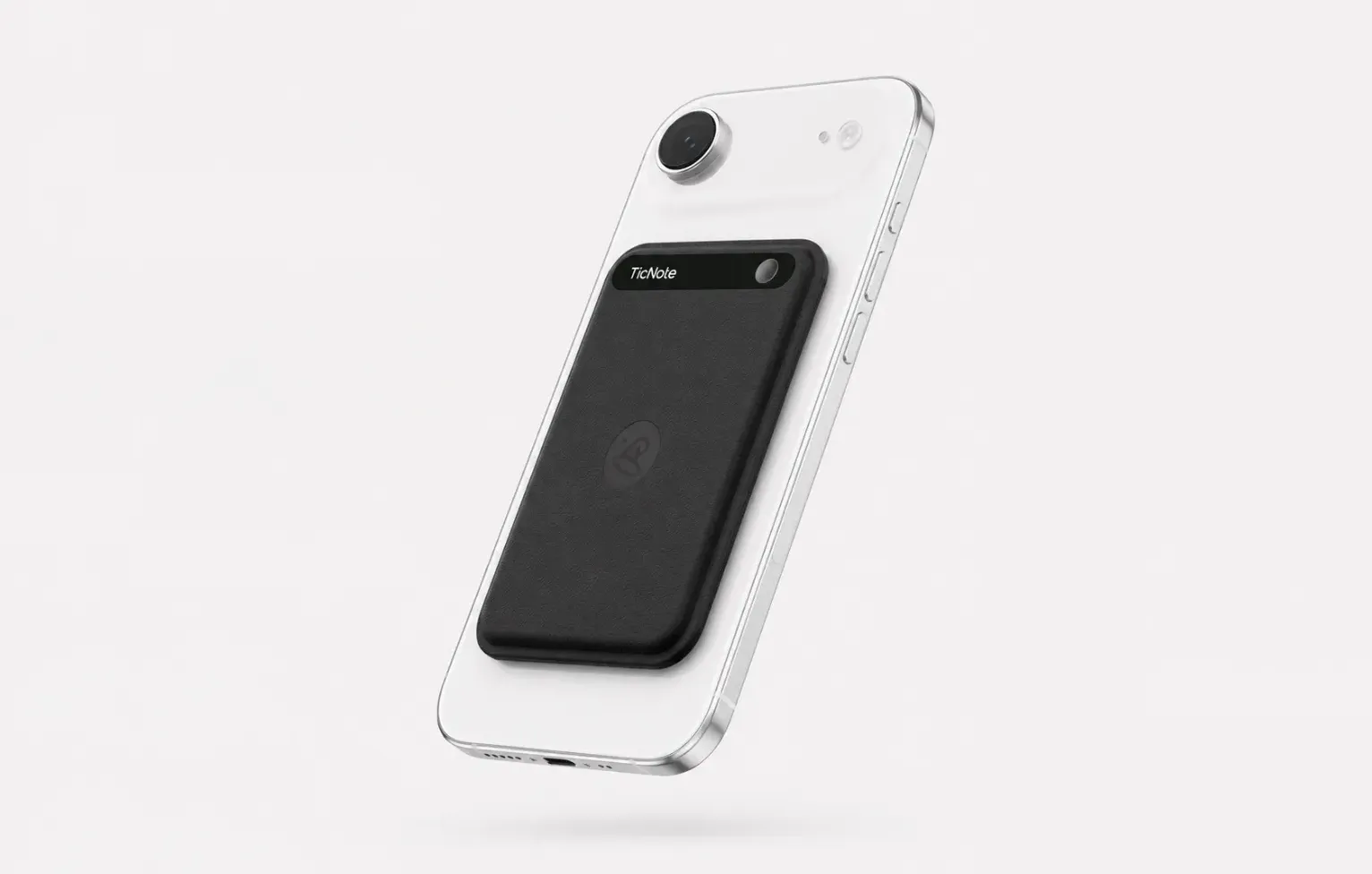
Key features:
- 3-mic array up to 10m
- Software noise reduction
- One-press recording
- Real-time transcription and summaries
- Cross-platform review
Pros: $129.99 price; same mic hardware as flagship; 25-hour battery; easy learning curve.
Cons: 4GB storage; less aggressive noise reduction than flagship; not ideal for consistently noisy environments.
Sony ICD-TX660: best for quiet indoor recording only
Some people record in controlled environments — quiet offices, library study rooms, one-on-one interviews in a closed room. If that's your reality, the Sony ICD-TX660 is a solid, simple choice.
But be honest about your environment. The TX660 has basic built-in filtering, not real noise cancellation. In a café, on a street, or in an echo-heavy conference room, it will capture all the noise along with the voice. It's a good recorder for quiet places, not a noise-cancelling recorder.
Key features:
- Compact design
- Simple physical controls
- Local recording focus
Pros: extremely portable and fast for simple note capture in quiet environments.
Cons: weak noise handling; no AI transcription or summaries; not suitable for noisy environments.
Plaud Note: best for phone-call capture in moderate noise
If most of your recordings are phone calls in moderate noise — a home office, a quiet café corner — Plaud Note is a logical shortlist device. Its dual-mic noise reduction is tuned for call capture, and the slim card design makes it easy to keep near your phone.
Where it falls short is room recording in heavy noise. The noise reduction is optimized for close-range call scenarios, not for picking up voices across a noisy conference room. If your primary need is call recording with some noise handling, it works. If you need a recorder that handles both calls and noisy room environments, TicNote AI Voice Recorder's 3-mic array and deeper ENC are the stronger choice.
Key features:
- Dual-mic noise reduction
- Slim card design
- Call-oriented capture
Pros: convenient for phone-call recording; very portable.
Cons: noise reduction optimized for calls, not room recording; buyers should check recurring plan costs.
Zoom H1essential: best for controlled environments with manual control
For sit-down interviews in quiet rooms or controlled studio settings, some journalists and creators prefer manual control over automatic processing. The Zoom H1essential fits that lane — you set the levels yourself, position the XY mics, and get exactly the raw audio you want.
But it has no automatic noise reduction. In a noisy environment, it captures everything — the voice and the noise — and you're left to clean it up in post. If you work in controlled environments and want hands-on control, it's a credible option. If you record in unpredictable noise, you need automatic processing.
Key features:
- Manual gain control
- XY microphone configuration
- Field-recorder workflow
Pros: flexible capture control; trusted field-recorder feel; no cloud dependency.
Cons: no automatic noise reduction; extra transcription work; not suitable for noisy environments without post-processing.
How to Choose the Right Voice Recorder With Noise Cancellation for Your Environment
Most people pick a recorder by specs and end up annoyed by it a week later. I'd choose based on your actual noise environment instead.
If you record in consistently noisy environments
Cafés, open offices, trade show floors, construction-adjacent spaces — you need aggressive noise reduction. TicNote AI Voice Recorder is the clear pick here. The -40dB ENC depth, 68dB SNR, and cloud DNN combination is the strongest noise handling in this price range. The 3-mic array isolates voices from background noise, and the adjustable DNN lets you dial in the cleanup level after the fact.
If you record in mixed environments
Some days quiet, some days noisy — you need a recorder that handles both without manual adjustment. TicNote AI Voice Recorder's automatic ENC + AEC handles the transition between a quiet 1:1 and a noisy café meeting without you changing settings. The 10m pickup range means it works in both small rooms and larger conference spaces.
If you record mostly in quiet environments
Quiet offices, home studios, library study rooms — you don't need aggressive noise reduction. TicNote Lite AI Voice Recorder gives you the same mic hardware at a lower price, and the software noise reduction is sufficient for moderate noise. Sony ICD-TX660 is also fine if you don't need AI features.
If you need manual control over noise
Controlled interview settings, studio recording, situations where you want to set levels yourself — Zoom H1essential gives you that control. Just know that you're trading automatic noise handling for manual precision.
Conclusion: Which Voice Recorder Handles Noise Best?
The right choice isn't the recorder with the loudest noise-cancellation promise. It's the one that actually separates voices from noise in your specific environment, and gives you usable transcripts and summaries afterward.
For most professionals who record in mixed or noisy environments, TicNote AI Voice Recorder is the strongest fit because its 3-mic array, 68dB SNR, -40dB ENC depth, and cloud DNN noise reduction handle everything from quiet boardrooms to noisy cafés. If your priority is keeping cost down and your environments are mostly quiet, TicNote Lite AI Voice Recorder makes more sense.
Before you buy, take 10 minutes and list your top two recording environments. Then decide whether noise handling or manual control matters more, and compare storage, export, and privacy needs against meeting recorder options for in-person notes. That process will get you to a better pick than spec sheets alone.